Last Updated: May 23, 2026 | By Yunenx Sales Team
📧 Email: [email protected]
🔗 Connect on LinkedIn
🌐 Visit our website: www.yunenx.com
💬 Chat on WhatsApp
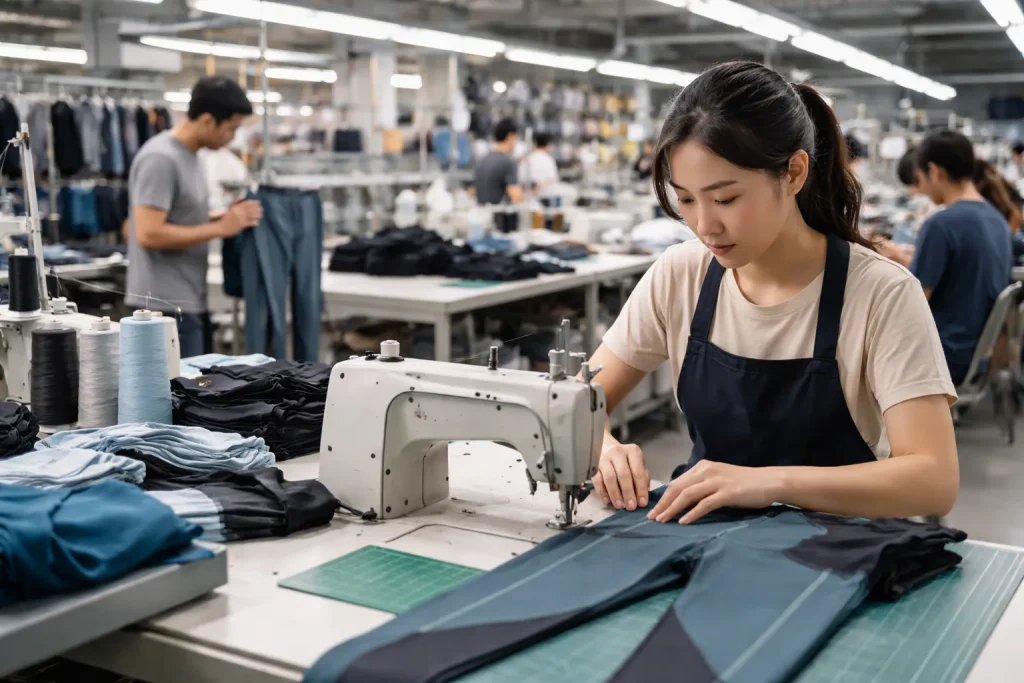
Private label compression wear manufacturing refers to OEM/ODM production where brands customize compression garments such as leggings, tops, and shorts using performance fabrics like nylon-spandex blends. Typical services include fabric sourcing, pattern development, grading, sampling, and bulk production with MOQ starting from low-volume startup batches to full-scale manufacturing for established sportswear brands.
Key Takeaways
- 75–220 GSM nylon-spandex fabrics are commonly used for compression wear depending on compression level
- 4-way stretch with 18–30% elastane ratio defines performance stability
- Flatlock stitching is critical to avoid friction during high-intensity training
- Low MOQ compression wear production can start from 100–300 pcs per style in OEM setups
- Recycled options like ECONYL and REPREVE are widely used in sustainable activewear programs
- Fit testing failure is one of the top reasons bulk production delays
What Is Private Label Compression Wear Manufacturing
What is private label compression wear manufacturing in sportswear production?
It refers to the process where a brand works with an OEM compression wear manufacturer to develop performance garments under their own label. This includes design adaptation, fabric selection, pattern engineering, sample development, and bulk production.
In recent years, compression wear has become a core segment of activewear supplier China networks, especially for gym apparel startups, yoga brands, and performance-focused athletic labels.
Industry Background
Compression wear is no longer just about athletic support. It now intersects with:
- Performance recovery science
- Seamless garment engineering
- Sustainable textile development
- Circular economy fabric sourcing
Many brands now shift toward recycled nylon systems such as ECONYL because they align with Textile Exchange sustainability goals and long-term sourcing strategies.
Market Trends in Compression Wear Production
Two key shifts are shaping OEM compression wear manufacturing:
1. Sustainable material transition
Brands increasingly require:
- GRS-certified recycled nylon
- OEKO-TEX Standard 100 compliance
- Reduced chemical dyeing processes
2. Engineering-driven performance design
Modern compression garments now focus on:
- Muscle support zoning
- Seamless knitting structures
- Moisture-wicking performance layers
According to Textile Exchange (2025), demand for recycled fibers in sportswear continues to grow as brands move toward lower-impact production systems and transparent sourcing chains.
Key Production Factors in Compression Wear Manufacturing
Compression wear is highly technical. Small mistakes in fabric or stitching can change performance completely.
Fabric Parameters
- Composition: 78% nylon / 22% spandex (typical range)
- GSM: 180–280 depending on compression level
- Stretch recovery: ≥90%
- Color fastness: Grade 4–5 standard
- Shrinkage: under 3% after wash test
Performance Requirements
- Chlorine resistance (for swim-compression hybrid products)
- UPF 50+ protection for outdoor activewear
- 4-way stretch for dynamic movement
- Compression level: light / medium / high zoning
Construction Methods
- Flatlock stitching for comfort
- Seamless knitting for premium leggings
- Reinforced waistband elastic stability
- Sublimation printing for full-coverage designs
Fabric may look similar. Performance doesn’t.
Step-by-Step Private Label Compression Wear Process
1. Material Selection
Choose between nylon-spandex, recycled nylon, or polyester blends depending on target performance.
2. Tech Pack Confirmation
Define:
- Size chart
- Stitching method
- Fabric GSM
- Compression zones
3. Lab Dip Approval
Color development stage for dye consistency.
4. Sampling Stage
First prototype development.
5. Fit Testing
Critical step often underestimated by startups.
We’ve seen buyers skip fit testing to save time. Usually that delay becomes more expensive during bulk production.
6. Bulk Production
Material locking + cutting + stitching + finishing.
7. Quality Inspection (QC)
Includes:
- Seam strength test
- Stretch recovery test
- Color deviation check
8. Shipping & Risk Control
Packaging, labeling, carton optimization, and lead time management.
Factory Reality Layer (Real Production Insights)
- A fabric may pass lab testing but still curl during stitching if elastane stability is weak
- Cheap samples often become expensive bulk orders later due to rework cycles
- One sample round often turns into three when compression zoning is not defined clearly early
Don’t rush bulk production before fit approval. Really.
Common Mistakes in Compression Wear OEM Projects
1. Skipping sampling
Leads to size inconsistency in bulk orders
2. Ignoring fabric testing
Causes unexpected shrinkage or transparency issues
3. No compression mapping definition
Results in uneven performance pressure
4. Unrealistic lead time expectations
Compression knitting + dyeing requires longer stabilization time
5. Choosing supplier only by price
Often leads to unstable elastane performance in bulk production
Cost savings in sampling usually become cost expansion in production.
B2B Comparison Table: Low MOQ vs High MOQ Production
| Factor | Low MOQ OEM | High Volume Production |
|---|---|---|
| MOQ | 100–300 pcs/style | 1000–5000+ pcs/style |
| Flexibility | High design iteration | Limited changes after approval |
| Cost per unit | Higher | Lower |
| Sampling cycles | More frequent | Fewer revisions |
| Risk level | Lower upfront risk | Higher inventory commitment |
| Best for | Startups / DTC brands | Retail chains / sports clubs |
Low MOQ is not just quantity. It is a development strategy for testing market response.
Procurement Checklist
Before bulk production, confirm:
- Fabric composition approved
- Compression level defined
- Size chart validated
- PPS sample approved
- Stitching method locked
- QC standard confirmed
- Packaging requirements clear
- Lead time aligned
Ready to develop your custom compression wear collection?
Yunenx supports low MOQ compression wear manufacturing, recycled fabric sourcing, OEM/ODM development, and bulk production management for growing sportswear and activewear brands.
Contact us to request samples or production pricing support.
FAQ
What is the MOQ for private label compression wear?
MOQ usually starts from 100–300 pieces per style depending on fabric availability and construction complexity. Recycled fabrics or seamless knitting may require higher minimums due to machine setup.
What is the lead time for compression wear production?
Typical lead time is 25–45 days after sample approval. Complex seamless structures or custom dyeing may extend timelines.
Can I fully customize compression wear?
Yes. Brands can customize fabric, compression level, stitching type, waistband design, and branding elements including sublimation or heat transfer logos.
What fabrics are used in compression wear?
Common materials include nylon-spandex blends, recycled ECONYL nylon, and REPREVE polyester depending on sustainability requirements and performance goals.
Do you support sustainable fabrics?
Yes. GRS-certified recycled nylon, OEKO-TEX certified materials, and other eco-performance fabrics are widely used in modern compression wear production.
Related Resources
- Compression Wear Manufacturing Guide
- Compression Activewear Fabric Guide
- Compression Wear Manufacturer Cost Breakdown
External references:
Explore more insights here:
https://yunenx.com/blog/
Compression wear looks simple. But tension balance inside fabric decides everything.
And honestly, most production problems start from “we didn’t define compression clearly in the beginning.”
About the Author
Yunenx Sportswear Team is a professional manufacturer specializing in custom sportswear, teamwear and swimwear for global brands and sports clubs. The team supports brands from product development to bulk manufacturing.
If you are looking for a reliable custom sportswear manufacturer,
our factory specializes in sportswear, swimwear and activewear production for growing brands.
Feel free to contact us for sampling or quotation. Connect on LinkedIn | Email | www.yunenx.com