
Last Updated: May 23, 2026 | By Yunenx Sales Team
📧 Email: [email protected]
🔗 Connect on LinkedIn
🌐 Visit our website: www.yunenx.com
💬 Chat on WhatsApp
Introduction
What is the real difference between compression and regular activewear in performance sportswear production, and why does it matter for brand development, fit consistency, and bulk manufacturing decisions?
In today’s sportswear industry, the line between compression wear and regular activewear is becoming more important for OEM/ODM development, fabric engineering, and brand positioning. Many startup brands and even experienced buyers often focus only on appearance, but overlook compression level, fabric recovery, and long-term durability in bulk production.
From swim teams to gym apparel startups and resortwear brands expanding into performance lines, the wrong fabric choice can directly lead to fit issues, returns, and production loss.
This article breaks down Compression vs Regular Activewear Differences from a real manufacturing perspective, including fabric parameters, risks, sourcing logic, and factory experience from actual production scenarios.
Quick Answer
Compression activewear is engineered with higher elastane content, tighter knit structure, and controlled stretch recovery to support muscle performance and reduce fatigue, while regular activewear prioritizes comfort, flexibility, and general movement with moderate stretch. In manufacturing, compression fabrics require stricter GSM control, seam reinforcement, and fit testing, while regular activewear allows more tolerance in grading and production.
Key Takeaways
- Compression wear typically uses 18–28% elastane vs 8–15% in regular activewear
- Compression garments require tighter fit testing and higher recovery rate (>90%)
- Regular activewear prioritizes comfort and breathability over muscle support
- Fabric stability affects bulk production consistency more than visual appearance
- Flatlock stitching is critical for compression garments to prevent seam pressure points
- Incorrect compression level selection leads to sizing returns and customer complaints
- OEM production risk increases when skipping fit testing or lab dips
What Compression vs Regular Activewear Really Means (Manufacturing View)
Compression and regular activewear are not just marketing categories—they are engineering decisions in fabric structure, tension control, and garment behavior under movement.
In production environments, we typically define them as:
Compression Activewear
Used in:
- Gym wear
- Running tights
- Recovery wear
- Swim team training suits
Key characteristics:
- High elastane ratio (18–28%)
- Strong recovery force
- Muscle support design
- Higher pressure mapping on body zones
Regular Activewear
Used in:
- Yoga wear
- Casual fitness apparel
- Athleisure sets
- Resortwear performance hybrid pieces
Key characteristics:
- Medium elastane (8–15%)
- Softer hand feel
- Lower compression force
- Comfort-oriented fit
Industry background
The growth of functional textiles is driven by sustainability and performance innovation. According to Textile Exchange (2025), recycled fiber usage in sportswear continues to increase as brands shift toward circular production systems, especially in performance apparel segments.
Sustainable compression fabrics like ECONYL regenerated nylon and REPREVE polyester are increasingly used in both compression and regular activewear lines to meet brand ESG requirements.
Key Factors in Compression vs Regular Activewear Production
When evaluating suppliers or OEM partners, these are the measurable parameters that actually matter:
| Factor | Compression Activewear | Regular Activewear |
|---|---|---|
| Fabric composition | 78–82% nylon + 18–22% elastane | 80–90% polyester/nylon + 10–15% elastane |
| Compression level | High (muscle support) | Low–medium (comfort fit) |
| GSM weight | 220–320 GSM | 160–240 GSM |
| Stretch (4-way) | High tension control required | Balanced stretch |
| Recovery rate | >90% required | 80–90% acceptable |
| Seam construction | Flatlock stitching required | Overlock or flatlock optional |
| Color fastness | Grade 4–5 (strict) | Grade 3–4 acceptable |
| UPF rating | UPF 50+ common in swim compression | Optional |
Compression fabrics require much tighter control. Even a 5–10% variation in elastane content can change garment feel completely.
Factory Reality Layer (Real Production Experience)
In actual sampling and bulk production, compression and regular activewear behave very differently:
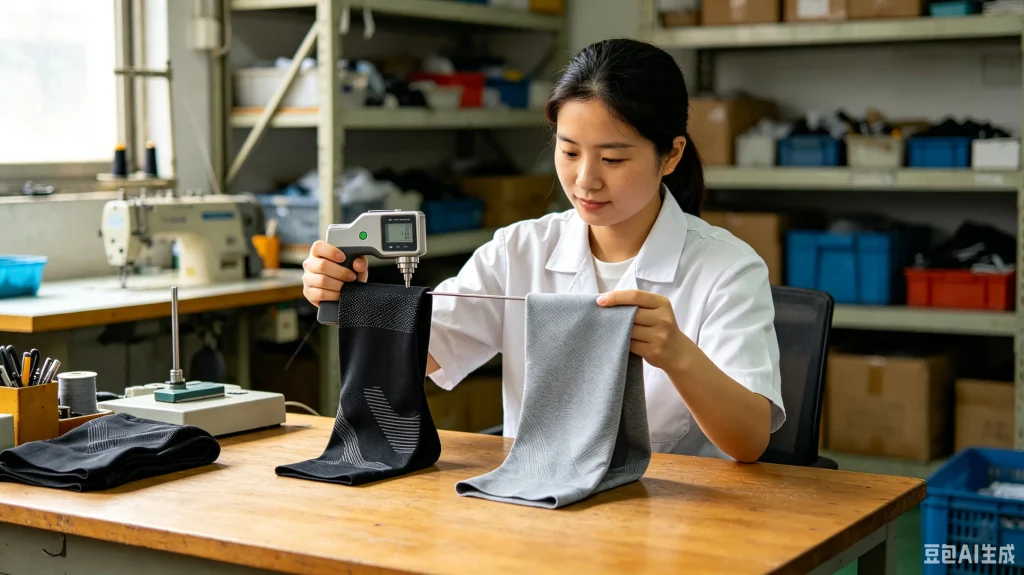
- A fabric may pass lab testing but still curl badly during stitching if elastane stability is weak.
- Cheap samples often become expensive bulk orders later because recovery rate drops after washing tests.
- Some startups underestimate fitting revisions. One sample round often turns into three.
- Compression garments exaggerate every millimeter of pattern error—what looks “small” on paper becomes visible in wear test.
We’ve seen swimwear compression suits approved in sample stage, but during bulk production the fabric tension shifted slightly between dye lots, causing inconsistent tightness across sizes.
Don’t rush bulk production before fit approval. Really.
Procurement Step-by-Step Guide (OEM/ODM Process)
- Material selection
- Tech pack confirmation
- Lab dip approval <a>lab dip</a>
- Sampling stage
- Fit testing
- Bulk production
- Quality inspection (SGS testing)
- Shipping & risk control
Each step affects compression garments more than regular activewear because tolerance is lower.
Risk Control in Compression vs Regular Activewear Production
Common risks buyers underestimate:
- Size error amplification in compression garments
- Skipping sample stage leads to irreversible bulk mistakes
- Lead time miscalculation due to fabric sourcing delays
- Fabric shrinkage after washing affecting compression level
- Color inconsistency between dye lots
- MOQ misunderstanding in OEM production setups
We’ve seen buyers skip fit testing to save time. Usually that delay becomes more expensive during bulk production.
Common Mistakes in Sourcing Activewear
- Choosing suppliers only by price
- Ignoring fabric testing (OEKO-TEX / GRS / SGS standards)
- No confirmed size spec sheet
- Unrealistic lead time expectations
- Skipping sampling stage completely
Consequences:
- Higher return rate
- Brand reputation damage
- Rework cost increase up to 20–35% in some OEM cases
Factory Reality Insight
Fabric may look similar. Performance doesn’t.
In production, even two fabrics with identical GSM can behave differently once elastane stability changes under heat setting.
Another common issue:
A “perfect” compression sample sometimes fails bulk consistency because dyeing tension slightly changes elasticity. This is why we always recommend at least one pilot bulk run for new compression programs.
Compression vs Regular Activewear Comparison (B2B Decision Table)
| Decision Factor | Compression Activewear | Regular Activewear |
|---|---|---|
| Target users | Swim team, athletes | Yoga, gym beginners |
| Production risk | High | Medium |
| MOQ sensitivity | High | Lower |
| Fit tolerance | Very strict | Flexible |
| Fabric cost | Higher | Lower |
| Return risk | Higher if misfit | Lower |
Checklist Before Bulk Production
- Fabric composition approved
- Size chart validated
- PPS sample approved
- QC standard confirmed
- Packaging requirements clear
- Lead time aligned
- Compression level confirmed (light/medium/strong)
- Washing test completed
CTA
Ready to develop your custom activewear collection?
Yunenx supports low MOQ sportswear and swimwear production, including compression fabric sourcing, OEM/ODM development, and bulk manufacturing for growing fitness, swimwear, and resortwear brands.
Contact us to request samples, fabric options, or pricing support.
FAQ
What’s the MOQ?
Most compression or regular activewear MOQ starts from 80–150 pcs per style depending on fabric availability and colorways. Compression fabrics usually require higher MOQ due to specialized yarn sourcing.
How long is the Lead time?
Sample lead time is usually 7–14 days. Bulk production is around 30–45 days depending on fabric readiness and order complexity.
Can I customize?
Yes. We support OEM/ODM customization including fabric selection, compression level adjustment, size grading, and private label production.
What’s the fabric?
Common materials include nylon-spandex blends, polyester-spandex, ECONYL regenerated nylon, and REPREVE recycled polyester depending on performance requirements.
Does the fabric eco free?
Yes. We work with GRS-certified recycled fabrics and OEKO-TEX certified materials, including ECONYL and REPREVE for sustainable activewear production.
Related Resources
- Compression Wear Manufacturing Guide
- Compression Activewear Fabric Guide
- Private Label Compression Wear Manufacturing Process
External references:
Explore more insights here:
https://yunenx.com/blog/
Compression wear looks simple. But tension balance inside fabric decides everything.
And honestly, most production problems start from “we didn’t define compression clearly in the beginning.”
About the Author
Yunenx Sportswear Team is a professional manufacturer specializing in custom sportswear, teamwear and swimwear for global brands and sports clubs. The team supports brands from product development to bulk manufacturing.
If you are looking for a reliable custom sportswear manufacturer,
our factory specializes in sportswear, swimwear and activewear production for growing brands.
Feel free to contact us for sampling or quotation. Connect on LinkedIn | Email | www.yunenx.com