
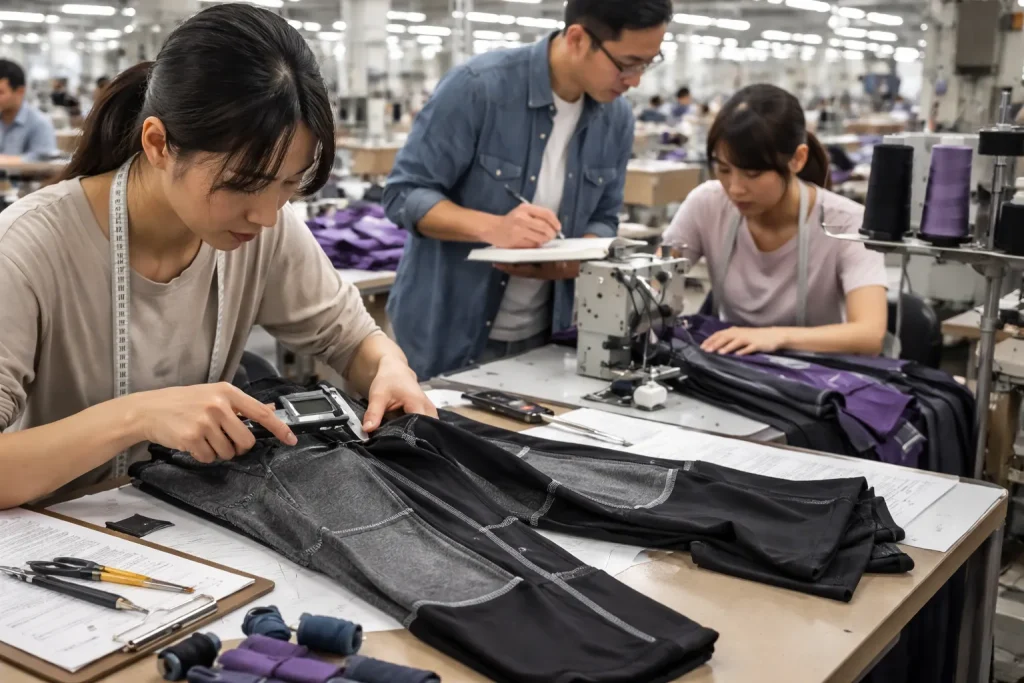
Last Updated: May 22, 2026 | By Yunenx Sales Team
📧 Email: [email protected]
🔗 Connect on LinkedIn
🌐 Visit our website: www.yunenx.com
💬 Chat on WhatsApp
What is compression wear manufacturing cost, and why do pricing differences between factories vary so much?
For startup activewear brands, gym apparel founders, and OEM sourcing managers, compression wear pricing is often confusing because quotations may look similar while the actual production standards are completely different. Fabric composition, GSM weight, compression level, seam construction, and MOQ structure all directly affect the final cost.
This article breaks down compression wear cost at factory level, including fabric pricing, sampling costs, labor structure, MOQ impact, production risks, and how OEM activewear manufacturers in China usually calculate pricing for custom compression apparel.
Quick Answer
Compression wear manufacturing costs are mainly affected by fabric composition, compression level, GSM weight, panel complexity, stitching method, and order quantity. Most OEM compression wear factories in China quote based on fabric consumption, labor intensity, logo application, and production efficiency. Low MOQ compression wear orders usually have higher unit costs because fabric sourcing, cutting waste, and sampling expenses are spread across fewer pieces.
Key Takeaways
- Compression fabric with 25–35% elastane content usually costs significantly more than regular activewear fabric
- 220–320 GSM is the most common fabric weight range for compression leggings and tops
- Flatlock stitching increases labor cost but improves durability and skin comfort
- Small MOQ orders below 150 pcs per color often face higher fabric wastage costs
- Sublimation printing reduces inventory risk but increases production setup complexity
- Fit testing is critical because compression garments have tighter tolerance requirements
- Recycled nylon fabrics such as ECONYL are increasingly used by premium fitness brands
- Poor seam recovery can destroy garment performance even if fabric passes lab testing
Why Compression Wear Costs More Than Regular Activewear
Compression apparel is not simply “tight activewear.” Real compression garments require controlled elasticity, recovery performance, and body support.
That changes the entire production process.
Most compression wear factories use higher elastane ratios, denser knitting structures, and more technical stitching methods compared with regular gym wear.
Typical compression fabric specifications:
| Item | Common Range |
|---|---|
| Fabric Composition | 72% Nylon / 28% Spandex |
| GSM Weight | 220–320 GSM |
| Stretch Direction | 4-way stretch |
| Compression Level | Medium to high |
| UV Protection | UPF 50+ |
| Color Fastness | Grade 4–4.5 |
| Stitch Type | Flatlock stitching |
Fabric may look similar. Performance doesn’t.
We’ve seen fabrics pass stretch tests but fail during sewing because elastane stability was weak. That usually leads to seam waving or panel twisting after washing.
For performance compression wear, seam recovery matters almost as much as fabric stretch.
Market Trends Driving Compression Wear Production
The global activewear market continues to grow, especially in performance-focused fitness apparel.
According to Textile Exchange, recycled synthetic fibers continue gaining adoption across sportswear categories as brands push for lower environmental impact.
Meanwhile, more boutique fitness brands are requesting:
- Recycled compression fabrics
- Seamless construction
- Sweat-wicking performance textiles
- UPF 50+ protection
- Matte compression finishes
- Eco packaging solutions
Many premium activewear startups now prefer ECONYL regenerated nylon because it aligns with sustainability positioning while still supporting strong compression performance.
Another major trend is low MOQ custom activewear manufacturing.
Smaller Shopify and Amazon brands increasingly launch with 100–300 pcs per style instead of traditional large-volume production.
That changes factory costing significantly.
Factory-Level Compression Wear Cost Breakdown
Below is a typical cost structure for OEM compression wear production.
| Cost Component | Typical Impact | Factory Reality |
|---|---|---|
| Compression fabric | 35–50% | Higher elastane = higher instability during cutting |
| Labor & stitching | 20–30% | Flatlock seams require experienced operators |
| Printing & logos | 5–15% | Silicone logos increase rejection risk |
| Sampling development | 5–10% | Compression fit revisions are common |
| Packaging | 3–8% | Eco packaging increases cost |
| QC inspection | 2–5% | Stretch measurement takes longer |
| Fabric wastage | Hidden cost | Small MOQ increases waste ratio |
Cheap samples often become expensive bulk orders later.
Factories sometimes reduce compression density or change GSM to keep pricing low. Buyers may not notice until garments become see-through during squat testing.
That happens more often than people think.
Compression Fabric Options and Pricing Logic
Nylon-Spandex Compression Fabric
Most premium compression leggings use nylon-spandex blends because they provide:
- Better recovery
- Softer handfeel
- Better moisture management
- Stronger compression support
Common specification:
- 75% nylon / 25% spandex
- 240–280 GSM
- Matte finish
- 4-way stretch
Recycled Compression Fabric
Recycled materials are increasingly requested by sustainable activewear brands.
Common options include:
- REPREVE polyester
- ECONYL regenerated nylon
- GRS-certified recycled nylon
Factories usually require higher MOQ for recycled fabrics because mills hold less ready stock.
Polyester Compression Fabric
Polyester-based compression fabric is cheaper but often less soft compared with nylon.
However, it works well for:
- Teamwear
- Running compression gear
- Sublimation printing applications
Polyester handles sublimation better than nylon.
That’s why many sports team compression uniforms still use polyester blends.
China vs Vietnam vs Bangladesh for Compression Wear Manufacturing
| Country | Strength | Weakness | Best For |
|---|---|---|---|
| China | Technical fabrics, flexible MOQ, fast sampling | Labor cost increasing | Startup and premium activewear brands |
| Vietnam | Stable large production | Higher MOQ | Scaling fitness brands |
| Bangladesh | Lower sewing cost | Limited compression textile development | Basic activewear |
| Turkey | Fast EU shipping | Higher fabric cost | European brands |
For technical compression apparel, China still dominates because fabric mills, sublimation suppliers, and stitching factories are highly integrated.
That production ecosystem matters.
Especially for low MOQ custom compression wear.
Step-by-Step Compression Wear Procurement Process
1. Material Selection
Confirm:
- GSM weight
- Compression level
- Fabric composition
- Recovery performance
- UPF rating
- Color fastness
Many buyers only test stretch. That’s not enough.
Recovery after washing is critical.
2. Tech Pack Confirmation
A proper tech pack should include:
- Measurement specs
- Panel layout
- Seam type
- Logo placement
- Tolerance standards
No size spec confirmation = production risk.
Really.
3. Lab Dip Approval
Color matching is more difficult on high-elastane fabric.
Dark colors may shift after heat setting.
Internal link suggestion:
- /blog/what-is-lab-dip-in-activewear-production
4. Sampling Stage
Compression garments usually require more fitting revisions.
One sample round often turns into three.
Especially for women’s leggings.
5. Fit Testing
Skipping fit testing to save time usually becomes more expensive later during bulk production.
We’ve seen waistband pressure issues destroy entire production runs.
6. Bulk Production
Factories monitor:
- Cutting shrinkage
- Elastic recovery
- Stitch tension
- Needle damage
Compression fabric is sensitive during sewing.
7. Quality Inspection
A proper SGS inspection process should include:
- Stretch recovery
- Seam strength
- Color fastness
- Pilling resistance
- Measurement tolerance
Internal link suggestion:
- /services/qc-inspection-activewear
8. Shipping & Risk Control
Compression garments are heavy compared with regular activewear.
Higher GSM increases shipping cost.
Lead time misjudgment is another common issue.
Fabric mills may need 20–30 days alone for custom knitting.
Common Buyer Mistakes in Compression Wear Sourcing
Choosing Suppliers Only by Price
Low pricing often means:
- Lower GSM
- Reduced spandex ratio
- Weak seam recovery
- Poor opacity
Skipping Sampling
Compression fit tolerance is much tighter than standard activewear.
Skipping samples creates expensive size problems later.
Ignoring Fabric Shrinkage
Some compression fabrics shrink unevenly after heat setting.
That affects inseam length and waistband tension.
Unrealistic Lead Time Expectations
Compression apparel production is slower because:
- Flatlock stitching takes longer
- Fabric inspection is stricter
- Fit revisions are common
Factory Reality: What Buyers Often Don’t See
A compression fabric may pass lab testing but still curl badly during stitching if yarn stability is weak.
We’ve seen startup brands request ultra-low pricing while expecting premium squat-proof performance. Usually those two goals conflict.
Some buyers focus heavily on fabric composition but ignore seam construction. In compression apparel, stitching quality directly affects support performance.
Don’t rush bulk production before fit approval. Really.
Compression Wear Production Checklist
Before bulk production, confirm:
- Fabric composition approved
- GSM confirmed
- Compression level tested
- Size chart validated
- PPS sample approved
- Logo placement confirmed
- QC standards aligned
- Packaging requirements approved
- Lead time confirmed
- Shipping method finalized
Related Resources
- Compression Wear Manufacturing Guide
- Compression Wear Fabric Guide
- How Compression Leggings Are Manufactured
External references:
Explore more insights here:
https://yunenx.com/blog/
Ready to Develop Your Compression Wear Collection?
Yunenx supports low MOQ compression wear manufacturing, recycled fabric sourcing, OEM/ODM development, sampling management, and bulk production support for growing fitness brands.
If you are developing leggings, compression tops, gym apparel, or private label activewear collections, we can help evaluate fabric options, MOQ structure, and production feasibility before sampling starts.
Please contact us to confirm current fabric availability and lead times.
FAQ
What is the MOQ for custom compression wear?
Most compression wear manufacturers in China start from 100–300 pcs per style per color. However, MOQ depends on fabric availability, logo process, and color quantity. Recycled compression fabrics or custom knitting structures usually require higher minimums because mills may not keep stock inventory.
How long does compression wear production take?
Sampling usually takes 7–15 days depending on fabric sourcing and logo methods. Bulk production commonly requires 25–45 days after sample approval. Compression garments often need additional fit testing and seam adjustment, which can extend timelines slightly.
Can compression wear be fully customized?
Yes. OEM compression wear factories typically support custom fabric selection, GSM adjustment, panel layout, sublimation printing, silicone logos, packaging, and private label branding. Some technical fabrics may require MOQ confirmation before development.
What fabrics are commonly used for compression apparel?
Most premium compression garments use nylon-spandex blends with 20–30% elastane for stronger recovery and body support. Polyester-spandex fabrics are also common for sublimation sportswear because they handle color transfer printing more effectively.
Do compression wear manufacturers support sustainable fabrics?
Yes. Many activewear suppliers now offer GRS-certified recycled fabrics, including ECONYL regenerated nylon and REPREVE recycled polyester. Availability depends on mill stock, color requirements, and order quantity.
About the Author
Yunenx Sportswear Team is a professional manufacturer specializing in custom sportswear, teamwear and swimwear for global brands and sports clubs. The team supports brands from product development to bulk manufacturing.
If you are looking for a reliable custom sportswear manufacturer,
our factory specializes in sportswear, swimwear and activewear production for growing brands.
Feel free to contact us for sampling or quotation. Connect on LinkedIn | Email | www.yunenx.com