Last Updated: March 06, 2026 Author: Yunenx Manufacturing Team
Sportswear & Swimwear Manufacturing Specialist | Connect on LinkedIn | Email | www.yunenx.com
Introduction
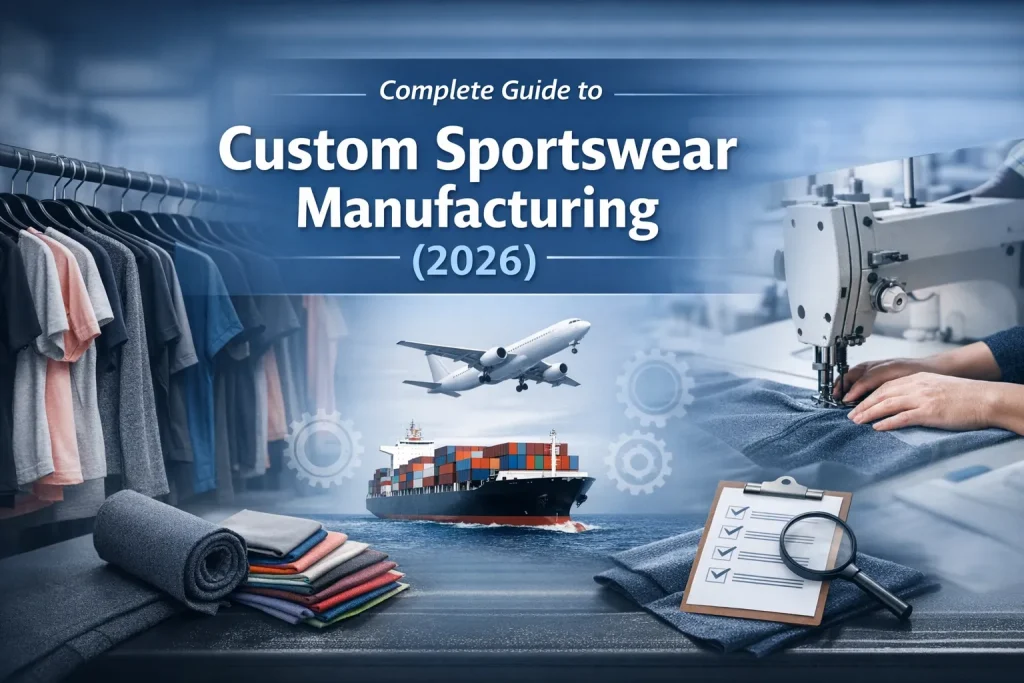
Custom sportswear manufacturing has become one of the fastest-growing sectors in the global apparel industry.
According to the Statista, the global sportswear market is expected to exceed $450 billion by 2028, driven by fitness trends, athleisure fashion, and direct-to-consumer sportswear brands.
For startups, sports clubs, and activewear brands, custom sportswear manufacturing allows companies to build unique product lines rather than selling generic wholesale items.
This guide explains everything buyers should know about:
- custom sportswear production
- MOQ requirements
- fabric selection
- printing methods
- quality control
- production timelines
- shipping options
- how to choose a reliable manufacturer
1. What Is Custom Sportswear Manufacturing?
Custom sportswear manufacturing refers to producing athletic apparel specifically designed for a brand, sports club, school, or fitness business.
Unlike wholesale sportswear, custom production allows brands to control:
- fabric selection
- garment design and fit
- logo placement and branding
- color matching
- packaging and labeling
This level of customization helps brands build strong brand identity and long-term customer loyalty.
Typical Custom Sportswear Products
Most sportswear manufacturers produce items such as:
- gym wear
- yoga wear
- running apparel
- team uniforms
- training wear
- swimwear
- compression wear
For growing brands, custom manufacturing is usually the best way to create differentiated sportswear collections.
👉 Internal Guide:
How to Choose a Sportswear Manufacturer
2. MOQ (Minimum Order Quantity) Explained
One of the biggest challenges for new sportswear brands is MOQ (Minimum Order Quantity).
Factories require MOQ mainly because:
- fabrics must be produced in bulk
- printing setup requires cost
- production lines need efficiency
Typical MOQ in Sportswear Manufacturing
| Product | Typical MOQ |
|---|---|
| T-shirts | 100–300 pcs |
| Leggings | 200–500 pcs |
| Sports bras | 200–400 pcs |
| Swimwear | 150–300 pcs |
However, some manufacturers provide low MOQ sportswear production for startups.
Many small brands negotiate MOQ during their first order to test the market.
👉 Internal Guide:
MOQ Negotiation Guide for Small Swimwear Brands
3. Fabric Selection for Sportswear
Fabric plays a critical role in sportswear performance, durability, and comfort.
According to the Textile Exchange, synthetic performance fabrics dominate the sportswear market due to their moisture management and durability.
Below are the most common fabrics used in custom sportswear manufacturing.
Polyester
Polyester is the most widely used fabric in sportswear because of its:
- moisture-wicking capability
- high durability
- color retention
- suitability for sublimation printing
It is commonly used in:
- team uniforms
- running shirts
- training apparel
👉 Internal Guide:
Why 92% of Best-Selling Sportswear Is Polyester
Nylon
Nylon is widely used in premium activewear, especially for:
- yoga wear
- leggings
- luxury gym apparel
Advantages include:
- softer hand feel
- excellent elasticity
- strong stretch recovery
Spandex / Elastane
Spandex (also called elastane) provides stretch and flexibility.
Most sportswear fabrics include 10%–25% spandex to improve mobility and body fit.
Recycled Fabrics
Sustainable sportswear is becoming increasingly important.
Organizations like Global Recycled Standard promote recycled textile certification for sustainable apparel production.
Popular recycled materials include:
- recycled polyester
- recycled nylon
👉 Internal Guide:
Recycled Fabrics Explained
4. Printing Methods for Sportswear
Branding is essential for sportswear products.
The printing method used depends on the fabric type, order quantity, and design complexity.
Sublimation Printing
Sublimation printing is ideal for:
- polyester fabrics
- team uniforms
- full-color graphics
Advantages include:
- no fading
- breathable printing
- long-lasting durability
👉 Internal Guide:
Best Fabric for Sublimation Printing
Heat Transfer Vinyl (HTV)
HTV printing is suitable for:
- numbers
- logos
- small-batch customization
It is often used for sports teams and school uniforms.
DTF Printing
DTF (Direct-to-Film) printing is gaining popularity because it supports:
- small MOQ production
- highly detailed graphics
- flexible fabric compatibility
👉 Internal Guide:
DTF Printing vs Heat Transfer Vinyl
5. Quality Control in Sportswear Manufacturing
For international buyers, quality control is one of the most critical aspects of apparel sourcing.
Common quality issues include:
- color inconsistency
- logo fading
- stitching defects
- incorrect sizing
Professional sportswear factories normally perform three stages of quality inspection:
1️⃣ Fabric Inspection
Checking fabric quality before production.
2️⃣ In-Line Production Inspection
Monitoring sewing quality during production.
3️⃣ Final Inspection
Ensuring finished products meet quality standards.
👉 Internal Guide:
The Practical Quality Control Handbook for Apparel Sourcing from China
6. Sportswear Production Timeline
Typical production timelines for custom sportswear are:
| Stage | Time |
|---|---|
| Sample development | 7–14 days |
| Sample approval | 3–5 days |
| Bulk production | 25–35 days |
Complex products like leggings, compression wear, or swimwear may require additional time due to fabric performance testing.
7. Shipping Options for Sportswear Orders
Sportswear orders are typically shipped by air freight or sea freight.
Air Freight
Best for:
- urgent orders
- small shipments
- product launches
Sea Freight
Best for:
- bulk orders
- cost efficiency
- long-term inventory planning
Most established brands choose sea freight for large-volume sportswear orders.
8. How to Choose a Reliable Sportswear Manufacturer
Selecting the right manufacturer is one of the most important decisions for a sportswear brand.
Key factors to evaluate include:
- factory experience in sportswear production
- certifications and compliance
- sample development capability
- MOQ flexibility
- communication efficiency
👉 Related Guides
- How to Choose a Sportswear Manufacturer
- How to Vet a Chinese Sportswear Manufacturer
- Low MOQ Sportswear Manufacturer Guide
Work With a Professional Sportswear Manufacturer
If you are planning to develop your own custom sportswear or swimwear brand, working with an experienced manufacturer can significantly reduce production risks.
At YunEnX, we help brands develop:
- custom gym wear
- team uniforms
- yoga apparel
- swimwear
- private label sportswear collections
🌐 https://yunenx.com
📧 [email protected]
Related Articles
- MOQ Negotiation Guide for Small Swimwear Brands
- Why 92% of Best-Selling Sportswear Is Polyester
- Best Fabric for Sublimation Printing
- DTF Printing vs Heat Transfer Vinyl
- How to Choose a Sportswear Manufacturer
About the Author
Yunenx Sportswear Team is a professional manufacturer specializing in custom sportswear, teamwear and swimwear for global brands and sports clubs.
Call to Action
If you are looking for a reliable custom sportswear manufacturer,
our factory specializes in sportswear, swimwear and activewear production for growing brands.
Feel free to contact us for sampling or quotation. Connect on LinkedIn | Email | www.yunenx.com