Last Updated: April 22, 2026 | By Yunenx Sales Team
📧 Email: [email protected]
🔗 Connect on LinkedIn
🌐 Visit our website: www.yunenx.com
💬 Chat on WhatsApp
Introduction: What is fabric breathability in running wear vs training wear?
What is fabric breathability, and why does it make such a big difference between running wear and training wear?
In the activewear industry, breathability is not just a comfort feature—it directly affects performance, body temperature control, sweat management, and even product return rates. For any Custom high-performance activewear manufacturer for running and training wear, understanding fabric behavior under different intensity levels is critical when developing collections for global sports brands.
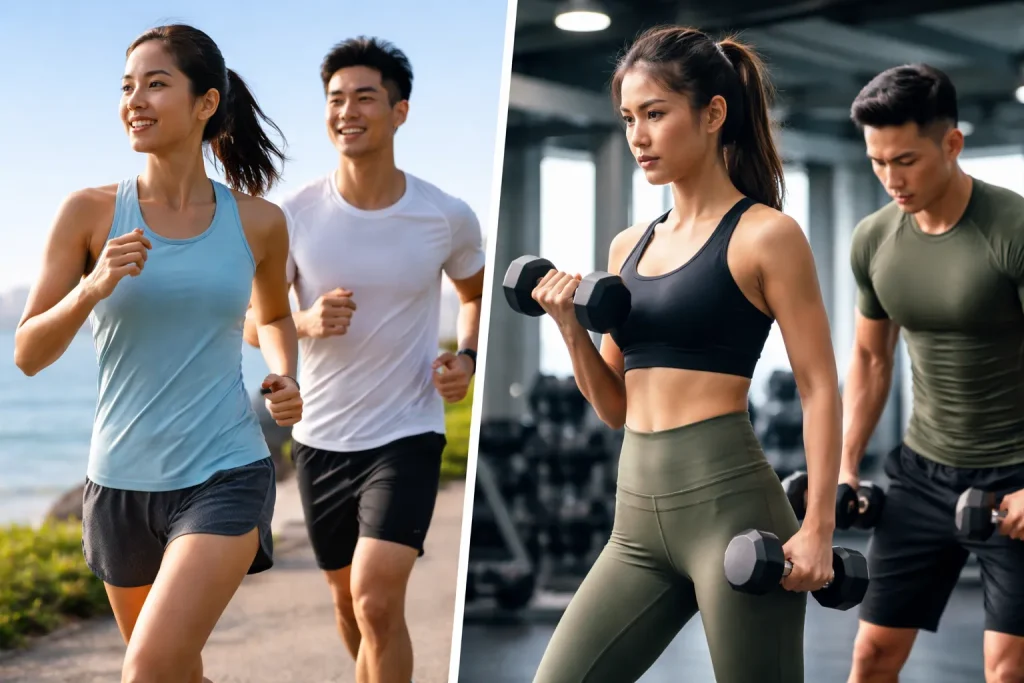
Running wear and training wear may look similar at first glance, but their fabric engineering priorities are different. Running apparel focuses on continuous airflow and moisture evacuation during sustained cardio, while training wear must balance breathability with compression, durability, and multi-directional movement support.
Key Takeaways
- Running wear prioritizes high airflow + rapid moisture wicking
- Training wear prioritizes balanced breathability + compression stability
- Fabric structure (knit density, GSM, fiber blend) affects performance more than appearance
- Mesh zoning is more critical in running wear than in training wear
- Fabric choice directly impacts athlete fatigue and heat buildup
What It Is: Understanding Breathability in Performance Sportswear
Breathability refers to a fabric’s ability to allow air circulation and moisture vapor transfer from the body to the external environment.
In modern activewear manufacturing, breathability is shaped by:
- Yarn structure (microfilament vs standard polyester)
- Fabric construction (warp knit, weft knit, interlock)
- Finishing treatments (moisture-wicking coating, hydrophilic treatment)
- Fabric weight (GSM range typically 120–280 GSM in performance wear)
Industry development over the past decade shows a clear shift toward sustainable activewear supplier networks, where brands increasingly request recycled polyester, recycled nylon, and bio-based elastane blends. According to Textile Exchange’s 2024 materials report, demand for certified and recycled performance textiles continues to grow across global sportswear categories, especially in running and fitness segments.
At Yunenx, we’ve observed that brands are no longer asking only for “breathable fabric”—they now request measurable performance indicators such as air permeability, drying time, and heat mapping results during wear testing.
Key Factors: Running Wear vs Training Wear Fabric Logic
When evaluating breathability differences, OEM/ODM decision-makers should focus on technical parameters rather than marketing descriptions.
1. Air Permeability
- Running wear: High air permeability (open mesh zones, laser-cut ventilation)
- Training wear: Medium permeability (controlled airflow for stability)
2. Moisture Management
- Running: Fast sweat dispersion, quick-dry priority
- Training: Balanced moisture control to avoid fabric saturation during strength movements
3. Fabric Weight (GSM)
- Running wear: 120–180 GSM
- Training wear: 180–280 GSM
4. Stretch Structure
- Running wear: 2-way stretch sufficient for linear movement
- Training wear: 4-way stretch required for multi-angle resistance training
5. Compression Level
- Running wear: Light compression to reduce drag
- Training wear: Medium-to-high compression for muscle support
6. Durability Requirement
- Running wear: Focus on lightweight performance cycles
- Training wear: Higher abrasion resistance due to equipment contact
For brands working with a Low MOQ activewear manufacturer China, these parameters directly affect sampling cost, fabric sourcing availability, and lead time stability.
Step-by-Step Guide: From Fabric Selection to Bulk Production
- Material Selection
- Polyester/spandex blends for running
- Nylon/spandex blends for training durability
- Tech Pack Confirmation
- Define airflow zones, mesh placement, and GSM targets
- Link: <a href=”/tech-pack-guide”>Tech Pack Guide</a>
- Lab Dip Approval
- Color fastness testing under sweat and UV exposure
- Sampling Stage
- Breathability testing using real movement simulation
- Fit Testing
- Running: stride and ventilation feedback
- Training: squat, stretch, resistance movement
- Bulk Production
- Monitor fabric consistency across dye lots
- Quality Inspection
- Check shrinkage, pilling resistance, seam stability
- Shipping & Risk Control
- Avoid lead time misalignment due to fabric sourcing delays
Risk note: Many brands skip sample testing to save 7–10 days, but in practice, this often leads to fit rework or ventilation imbalance issues in bulk production.
Common Mistakes in Breathability Development
- Skipping ventilation mapping during design phase
- Treating running and training wear as identical categories
- Ignoring GSM impact on heat retention
- Using same fabric for all sports applications
- No lab testing for moisture-wicking performance
- Over-prioritizing softness instead of airflow balance
One real sourcing issue we’ve seen (based on experience with fitness brand clients) is that brands often approve fabrics based on hand feel alone, then discover overheating problems during real training sessions.
B2B Comparison Table: Running Wear vs Training Wear Fabric Strategy
| Factor | Running Wear | Training Wear |
|---|---|---|
| Primary Goal | Cooling + airflow | Stability + support |
| Fabric Weight | 120–180 GSM | 180–280 GSM |
| Breathability Level | High | Medium |
| Stretch Type | 2-way stretch | 4-way stretch |
| Compression | Light | Medium–High |
| Durability Need | Moderate | High |
| Key Risk | Over-exposure of skin | Heat retention |
Checklist Before Bulk Production
Before placing bulk order, check:
- Fabric composition confirmed
- Breathability test passed (airflow + drying time)
- Sample approved under real movement conditions
- Size chart validated across all sizes
- Production lead time clearly confirmed
- QC standard agreed (pilling, shrinkage, seam strength)
- Color consistency checked across lab dips
FAQ: Fabric Breathability in Running vs Training Wear
1. What is MOQ for custom activewear production?
Quick Answer: Typically 200–500 pieces per style, depending on fabric availability and customization level.
2. What is production lead time?
Quick Answer: 30–45 days for bulk production after sample approval.
3. What fabrics are commonly used?
Quick Answer: Polyester-spandex for running wear, nylon-spandex for training wear.
4. Can I fully customize fabric breathability level?
Quick Answer: Yes, through knit structure, GSM adjustment, and ventilation zoning.
Build Your Performance Activewear Line
Ready to develop your running or training wear collection?
At Yunenx, we support brands with low MOQ development, fabric sourcing, sampling, and full OEM/ODM production. From recycled nylon activewear factory solutions to sustainable activewear supplier networks, we help you build performance-driven collections with real market validation.
We don’t just produce garments—we help you engineer performance.
👉 Contact us to request samples or start your tech pack review.
Conclusion
Breathability is not a generic fabric feature—it is a category-specific engineering decision. Running wear demands maximum airflow and heat release, while training wear requires controlled ventilation with structural support.
Choosing the right Custom high-performance activewear manufacturer for running and training wear means understanding this difference at the fabric level, not just the design level.
If your brand is planning to expand into performance sportswear, the real advantage comes from controlling fabric behavior early—before production, not after complaints.
External Reference
- Textile Exchange (2024), Materials Market Report: https://textileexchange.org (accessed summary insights on sustainable textile demand trends)
Related Articles
- Seamless Yoga Leggings vs Regular Leggings: What’s the Difference?
- Best Activewear Manufacturer for Startups
- Low MOQ Sportswear Factory Options in China
Author Bio:
Written by Yunenx Sportswear Team, specialists in functional activewear with over a decade of experience in moisture-wicking fabrics, 4-way stretch technology, and ethical manufacturing. We help global brands create high-performance, sustainable yoga and activewear collections.