Last Updated: April 22, 2026 | By Yunenx Production Team
📧 Email: [email protected]
🔗 Connect on LinkedIn
🌐 Visit our website: www.yunenx.com
💬 Chat on WhatsApp
Introduction
What is swimwear fabric durability against chlorine and UV exposure, and why does it define the success of a Custom high-performance swimwear manufacturer?
Swimwear is constantly exposed to some of the harshest conditions in apparel: chlorinated pool water, saltwater, and prolonged UV radiation. These factors gradually break down fibers, fade colors, and reduce elasticity—often much faster than brands expect.
For any Custom high-performance swimwear manufacturer, fabric durability is not a secondary detail. It directly determines product lifespan, customer satisfaction, and brand reputation in highly competitive swimwear markets.
At the same time, the industry is shifting toward recycled nylon swimwear factory production, low MOQ swimwear manufacturer China solutions for emerging brands, and sustainable activewear supplier strategies that combine performance with environmental responsibility.
Key Takeaways
- Chlorine and UV exposure are the two primary causes of swimwear degradation
- Solution-dyed polyester and high-grade nylon blends outperform standard fabrics
- UPF 50+ is now a baseline requirement in performance swimwear
- Fabric structure, GSM, and finishing treatments matter more than fiber name alone
- Proper sampling and lab testing are essential before bulk production
- A reliable Custom high-performance swimwear manufacturer must validate real-world durability tests
What It Is: Swimwear Fabric Durability in Real Usage Conditions
Swimwear fabric durability refers to a material’s ability to maintain:
- Elasticity and stretch recovery
- Color integrity
- Structural stability
- Surface smoothness
…under repeated exposure to chlorine, UV rays, saltwater, and mechanical stress.
In the past 10 years, swimwear expectations have changed significantly. Brands no longer accept fabrics that only “look good on arrival.” Instead, durability performance must be proven under simulated real-life conditions.
Industry trends shaping this shift include:
- Growing demand for sustainable swimwear materials
- Expansion of recycled nylon swimwear factory production
- Increased compliance with OEKO-TEX and global safety standards
- Performance-driven design replacing fashion-only swimwear
- Stronger focus on circular economy materials in activewear
According to the Textile Exchange 2024 Materials Market Report, recycled fiber adoption continues to grow across activewear and swimwear categories, driven by sustainability commitments and regulatory pressure.
Key Factors That Determine Chlorine and UV Resistance
When evaluating materials with a Custom high-performance swimwear manufacturer, these technical factors are critical:
1. Chlorine Resistance
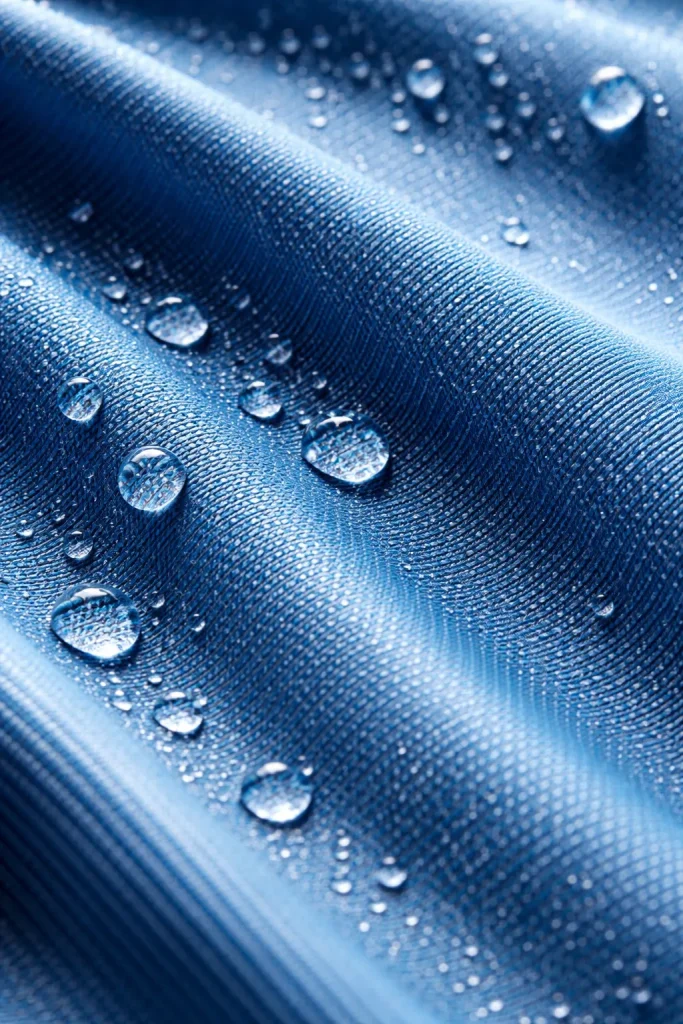
Chlorine breaks down elastane and weakens fiber bonds over time.
- Polyester-based fabrics show higher chlorine resistance
- Solution-dyed fibers maintain color stability longer
- Elastane quality determines stretch retention after repeated exposure
2. UV Protection (UPF Rating)
UV exposure causes fading and fiber degradation.
- UPF 50+ blocks approximately 98% of UV radiation
- Tighter knit structures improve UV resistance
- Darker and solution-dyed fabrics perform better under sunlight
3. Fabric Composition
Different blends produce different performance outcomes:
- Nylon + elastane: soft handfeel, moderate durability
- Polyester + elastane: higher chlorine resistance, better color retention
- Recycled nylon: performance depends heavily on yarn processing quality
4. Fabric GSM (Weight)
Fabric weight directly impacts durability and opacity:
- 180–220 GSM: lightweight fashion swimwear
- 220–280 GSM: performance swimwear standard
- Higher GSM improves durability but may reduce drying speed
5. 4-Way Stretch & Recovery
Critical for fit stability:
- Prevents sagging after swimming
- Maintains compression over time
- Essential for performance swimwear categories
Step-by-Step Guide: Swimwear Production Workflow
A structured workflow reduces production risk when working with a Custom high-performance swimwear manufacturer:
1. Material Selection
Choose between:
- Recycled nylon swimwear factory materials
- Standard polyester blends
- Performance nylon-elastane fabrics
2. Tech Pack Confirmation
Define technical specifications clearly:
- GSM weight
- Stretch ratio
- Chlorine resistance expectations
- UPF rating requirement
3. Lab Dip Approval
Color must be tested under simulated chlorine and UV conditions—not only visual approval.
4. Sampling Stage
Test real wear performance in:
- Swimming pool environments
- Saltwater exposure
- Outdoor sunlight conditions
5. Fit Testing
Evaluate:
- Wet vs dry fit differences
- Seam durability under tension
- Elastic recovery after stretching
6. Bulk Production
Ensure consistency between sample and bulk dye lots.
7. Quality Inspection
Key checkpoints:
- Color fading resistance
- Stitch strength
- Fabric pilling or deformation
8. Shipping & Risk Control
Common risks include:
- Fabric substitution
- Dye lot variation
- Incorrect size grading
Common Mistakes in Swimwear Development
Many early-stage brands underestimate technical complexity:
- Skipping sampling to save time or cost
- Assuming all nylon fabrics are chlorine-resistant
- Ignoring UPF testing requirements
- Not validating elastane recovery performance
- Miscalculating production lead times for recycled fabrics
We once worked with a startup brand that launched without chlorine testing. Within weeks, their swimwear lost elasticity in pool environments, resulting in high return rates and damaged brand perception.
B2B Comparison Table: Production Strategy Insights
| Factor | China (Low MOQ) | Vietnam | Bangladesh |
|---|---|---|---|
| MOQ Flexibility | High | Medium | Medium-Low |
| Fabric Innovation | Strong sourcing network | Growing capability | Limited |
| Lead Time | Fast | Moderate | Longer |
| Recycled Fabric Access | High | Medium | Low |
| Customization Level | High | Medium | Basic |
| Cost Efficiency | Balanced | Competitive | Lowest |
For emerging brands, a low MOQ swimwear manufacturer China setup often provides the best balance of flexibility and development speed.
Swimwear Production Checklist
Before confirming bulk production:
- Fabric composition confirmed
- Chlorine resistance tested
- UPF rating validated (if required)
- Lab dip approved under real conditions
- Sample tested in water environment
- Size chart finalized and approved
- Stitching standards documented
- Production lead time confirmed
- Packaging specifications agreed
Build Performance Swimwear with Confidence
Ready to start your custom swimwear line?
Yunenx supports brands with low MOQ production, sustainable fabric sourcing, and full OEM/ODM development—from sampling to bulk production.
We specialize in:
- Custom high-performance swimwear manufacturer solutions
- Recycled nylon swimwear factory sourcing
- Sustainable activewear supplier development
- End-to-end product development and testing
Explore materials and production support:
Let’s build swimwear that performs in real conditions, not just on paper.
FAQ + Quick Answer Box
What is the MOQ for swimwear production?
Typically 50–300 pieces per style, depending on fabric and customization level.
How long is production lead time?
Usually 30–45 days after sample approval.
What fabrics are commonly used?
Nylon-spandex and polyester-spandex blends, including recycled options.
Can swimwear be fully customized?
Yes, including fabric, color, print, labels, and packaging.
Quick Answer Box
- Chlorine resistance depends on fiber type and finishing technology
- UV protection requires UPF-rated fabric testing
- Solution-dyed polyester offers the highest durability performance
- Sampling is essential before bulk production
External Reference
- Textile Exchange (2024), Materials Market Report: https://textileexchange.org (accessed summary insights on sustainable textile demand trends)
Related Articles
- Complete Guide for Custom Swimwear Manufacturing
- Custom Swimwear Manufacturer for Brands and Swim Clubs
- How to Choose a Reliable Swimwear Manufacturer for Your Brand
Conclusion
Swimwear durability against chlorine and UV is not just a material question—it is a product strategy decision that directly affects brand survival.
Brands that invest early in proper fabric validation, testing, and structured development always outperform those that rush into production without technical validation.
A strong Custom high-performance swimwear manufacturer does not just produce garments—it ensures performance consistency across real-world conditions.
If you are building a swimwear or activewear brand, the right development process will save you far more cost than it adds.
We are ready when you are. Connect on LinkedIn | Email | www.yunenx.com | WhatsApp