Last Updated: September 24, 2026 | By Yunenx Sales Team
📧 Email: [email protected]
🔗 Connect on LinkedIn
🌐 Visit our website: www.yunenx.com
💬 Chat on WhatsApp
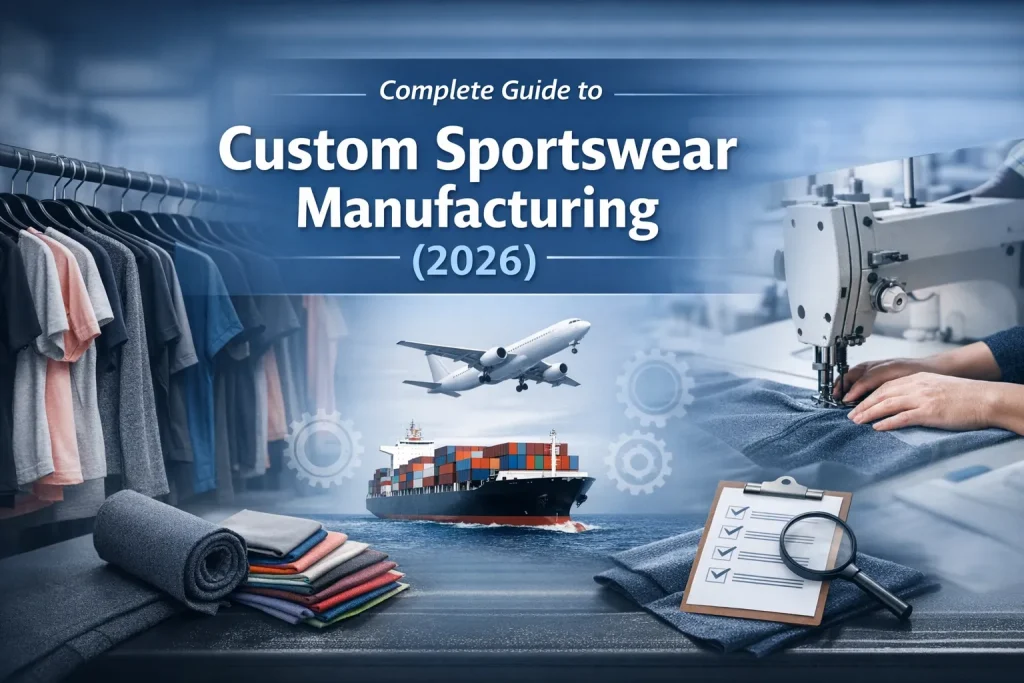
Custom sportswear manufacturing involves much more than sewing garments. From product specifications and fabric selection to sampling, production, quality control and shipping, each stage can affect the final product, cost and delivery time.
For brands, sports clubs, schools and other organizations developing custom sportswear, understanding the production process can make communication with a manufacturing partner much easier.
This guide explains the main stages of custom sportswear manufacturing, including:
- Product requirements and specifications
- Fabric and material selection
- Pattern and product development
- Printing and branding
- Sample development
- MOQ and bulk production
- Quality control
- Production lead time
- Packing and shipping
1. What Is Custom Sportswear Manufacturing?
Custom sportswear manufacturing means producing sportswear according to a customer’s specific product requirements rather than selecting finished products from a standard wholesale collection.
Depending on the project, buyers may customize:
- Fabric and material
- Garment design
- Fit and measurements
- Colors
- Prints and patterns
- Logos and branding
- Labels
- Packaging
Custom production is commonly used by sportswear brands, sports clubs, academies, schools, fitness businesses and other organizations that need products developed around their own designs or requirements.
Typical products include:
- T-shirts
- Training wear
- Running apparel
- Leggings
- Sports bras
- Team uniforms
- Football kits
- Tracksuits
- Swimwear
- Compression wear
If you are still comparing different manufacturers, see our guide on How to Choose a Sportswear Manufacturer.
2. The Custom Sportswear Manufacturing Process
A typical custom sportswear project follows several stages.
The exact process can vary depending on the product, fabric, decoration method, order quantity and development requirements.
Step 1: Product Requirements
The first stage is understanding what the buyer wants to produce.
Useful information may include:
- Product type
- Design or artwork
- Size chart
- Fabric requirements
- Color references
- Logo files
- Branding requirements
- Target quantity
- Delivery destination
- Target delivery date
The more complete the information is, the easier it is to evaluate materials, production requirements and pricing.
For complex products, a reference sample or existing garment can also help communicate the desired construction and fit.
Step 2: Fabric and Material Selection
Fabric has a major effect on the performance, appearance, comfort and cost of sportswear.
Common materials include:
- Polyester
- Nylon
- Polyester-spandex blends
- Nylon-spandex blends
- Recycled polyester
- Other performance fabrics
For example, polyester is commonly used for football kits and sublimated teamwear, while nylon-spandex blends are often used for fitted activewear.
The right fabric depends on the product and its intended use.
For a more detailed explanation, see our Sportswear Fabric Guide.
Step 3: Pattern and Product Development
Once the basic requirements and materials are confirmed, the product can move into development.
Depending on the project, this may involve:
- Creating or adjusting patterns
- Confirming measurements
- Reviewing garment construction
- Checking seams and stitching
- Confirming trims and accessories
- Preparing artwork for production
A clear size chart is especially important because sportswear often requires specific measurements for movement, fit and performance.
For a completely new product, several rounds of development may be needed before the sample is approved.
Step 4: Printing and Branding
The decoration method depends on the fabric, design, product type and order requirements.
Common methods include:
Sublimation
Sublimation is widely used for polyester sportswear and teamwear.
It is suitable for:
- Full-color designs
- Football jerseys
- Team uniforms
- Training shirts
- All-over patterns
Because the design is transferred into the fabric, sublimation can work well for breathable performance garments.
Heat Transfer
Heat-transfer methods can be used for:
- Logos
- Names
- Numbers
- Small design elements
They are commonly used for teamwear and other customized garments.
DTF Printing
Direct-to-film (DTF) printing can be useful for detailed graphics and certain smaller-batch applications.
The appropriate printing method should be selected according to the fabric and final product requirements rather than simply choosing the newest technology.
Step 5: Sample Development
Before bulk production, buyers normally need to review a sample.
A sample allows the buyer to check:
- Fabric
- Color
- Fit
- Measurements
- Construction
- Printing or embroidery
- Logo placement
- Overall appearance
For new products, the first sample may not be the final version.
Adjustments to measurements, fabric, artwork or construction may be required before approval.
Sample development time depends on the product and the amount of development work required.
Step 6: Sample Review and Approval
After receiving the sample, the buyer should compare it against the approved requirements.
Important points include:
- Size measurements
- Fabric composition and hand feel
- Color
- Logo size and position
- Printing quality
- Stitching
- Garment construction
- Overall fit
Any changes should be confirmed clearly before bulk production begins.
Once the final sample or specifications are approved, the production team can prepare the bulk order.
3. MOQ in Custom Sportswear Manufacturing
MOQ means Minimum Order Quantity.
MOQ can vary significantly depending on:
- Product type
- Fabric
- Custom dyeing requirements
- Printing method
- Number of colors
- Order quantity
- Production process
For example, custom-dyed fabrics may require higher quantities than products made from available stock fabrics.
There is therefore no single MOQ that applies to every custom sportswear project.
For a detailed explanation, see our Sportswear Manufacturing MOQ Guide.
4. Bulk Production
After the sample and specifications are approved, the project can move into bulk production.
The production stage may include:
- Fabric preparation
- Cutting
- Printing or decoration
- Sewing
- Finishing
- Inspection
- Packing
Production time depends on the order quantity, product complexity, fabric availability, decoration method and current production schedule.
For example, a simple T-shirt order and a fully customized football kit may require very different production processes.
5. Quality Control in Sportswear Manufacturing
Quality control is an important part of international sportswear production.
Common quality points include:
- Fabric quality
- Color consistency
- Measurements
- Stitching
- Seam construction
- Printing quality
- Logo placement
- Garment appearance
- Packing quantity
Quality inspection can take place at different stages of production.
Fabric Inspection
Fabric can be checked before production to identify obvious issues with color, appearance or other agreed requirements.
In-Line Inspection
Production can be checked during manufacturing to identify problems before the entire order is completed.
Final Inspection
Finished garments can be inspected before packing and shipment.
The exact inspection procedure depends on the product and buyer’s requirements.
For more information, see our Garment Quality Control Guide.
6. Custom Sportswear Production Lead Time
Production lead time depends on several factors.
Typical factors include:
- Sample development
- Fabric availability
- Custom fabric requirements
- Order quantity
- Product complexity
- Printing or embroidery
- Production schedule
- Quality inspection
- Packing requirements
A project may therefore have different timelines for sampling and bulk production.
Instead of relying on a standard number of days, buyers should confirm the estimated timeline for their specific order before placing production.
For more information, see our Sportswear Production Lead Time Guide.
7. Packing and Shipping
After production and inspection are completed, garments are packed according to the buyer’s requirements.
Packing may include:
- Individual polybags
- Size stickers
- Cartons
- Custom labels
- Custom packaging
- Assorted packing by size or color
Shipping options depend on order size, destination and required delivery time.
Air Freight
Air shipping is generally suitable when:
- The order is relatively small
- Delivery is urgent
- The buyer needs faster transportation
Sea Freight
Sea shipping is commonly considered for larger orders where transportation cost is an important factor.
The appropriate shipping method depends on the balance between cost, shipment volume and delivery time.
8. What Affects Custom Sportswear Manufacturing Cost?
The cost of custom sportswear depends on more than the garment itself.
Important factors include:
- Fabric type
- Fabric weight
- Fabric composition
- Product construction
- Number of panels
- Printing method
- Embroidery
- Logo requirements
- Labels and packaging
- Order quantity
- Shipping requirements
For this reason, it is difficult to provide a meaningful production price without knowing the product specifications.
For a more detailed explanation, see our Sportswear Manufacturer Pricing Guide.
9. How to Choose a Manufacturing Partner
Although this guide focuses on the production process, choosing the right manufacturing partner is still an important part of a custom sportswear project.
When comparing potential partners, buyers can consider:
- Relevant product experience
- Sample development capability
- Fabric and material options
- Production capacity
- Quality control procedures
- MOQ
- Lead time
- Communication
- Shipping support
You can learn more in our guide on How to Choose a Sportswear Manufacturer.
If you are specifically looking for manufacturers in China, see our guide to Sportswear Manufacturers in China.
10. How Yunenx Supports Custom Sportswear Projects
Yunenx is a sportswear sourcing and production company working with selected long-term manufacturing partners in China.
We support brands, sports organizations and other buyers with services such as:
- Product development
- Fabric sourcing
- Sample coordination
- Production follow-up
- Quality control coordination
- Custom sportswear production
- Teamwear development
- Swimwear production
- Shipping coordination
Our role is to help coordinate the production process from product requirements and sampling through bulk production and delivery.
For buyers developing a new collection, providing a clear design, size chart, target quantity and fabric requirements at the beginning can make the development process more efficient.
11. Frequently Asked Questions
What is custom sportswear manufacturing?
Custom sportswear manufacturing is the production of sportswear according to a buyer’s specific design, fabric, fit, branding and production requirements.
How long does custom sportswear manufacturing take?
The timeline depends on the product, fabric availability, sample development, order quantity and production requirements. Buyers should confirm the estimated schedule for their specific project.
What is the MOQ for custom sportswear?
MOQ varies by product, fabric, customization method and production requirements. There is no single MOQ for every sportswear project.
Can I customize the fabric?
In many projects, buyers can choose from available performance fabrics or request specific fabric requirements. Custom fabric development may involve additional MOQ and lead-time considerations.
Can I customize logos and packaging?
Yes. Depending on the product, customization can include logos, names, numbers, labels, tags and packaging.
Do I need a sample before bulk production?
For new custom products, a pre-production sample is generally useful for checking fit, measurements, materials, construction and branding before bulk production.
About the Author
Yunenx has more than 20 years of experience in apparel export, sportswear and swimwear product development, sourcing and production management.
We work with brands, importers, distributors and sports organizations to coordinate custom apparel projects with selected manufacturing partners in China.
Connect with Yunenx on LinkedIn
Final Thoughts
Custom sportswear manufacturing is a process involving product development, materials, sampling, production, quality control and logistics.
A successful project usually starts with clear product requirements and continues with careful sample review, realistic production planning and clear communication throughout the order.
Understanding each stage helps buyers ask better questions, compare production options and reduce avoidable problems during manufacturing.