
Last Updated: September 16, 2026 | By Yunenx Production Team
📧 Email: [email protected]
🔗 Connect on LinkedIn
🌐 Visit our website: www.yunenx.com
💬 Chat on WhatsApp
In apparel production, getting the sample measurements right does not always mean the bulk production will automatically be correct.
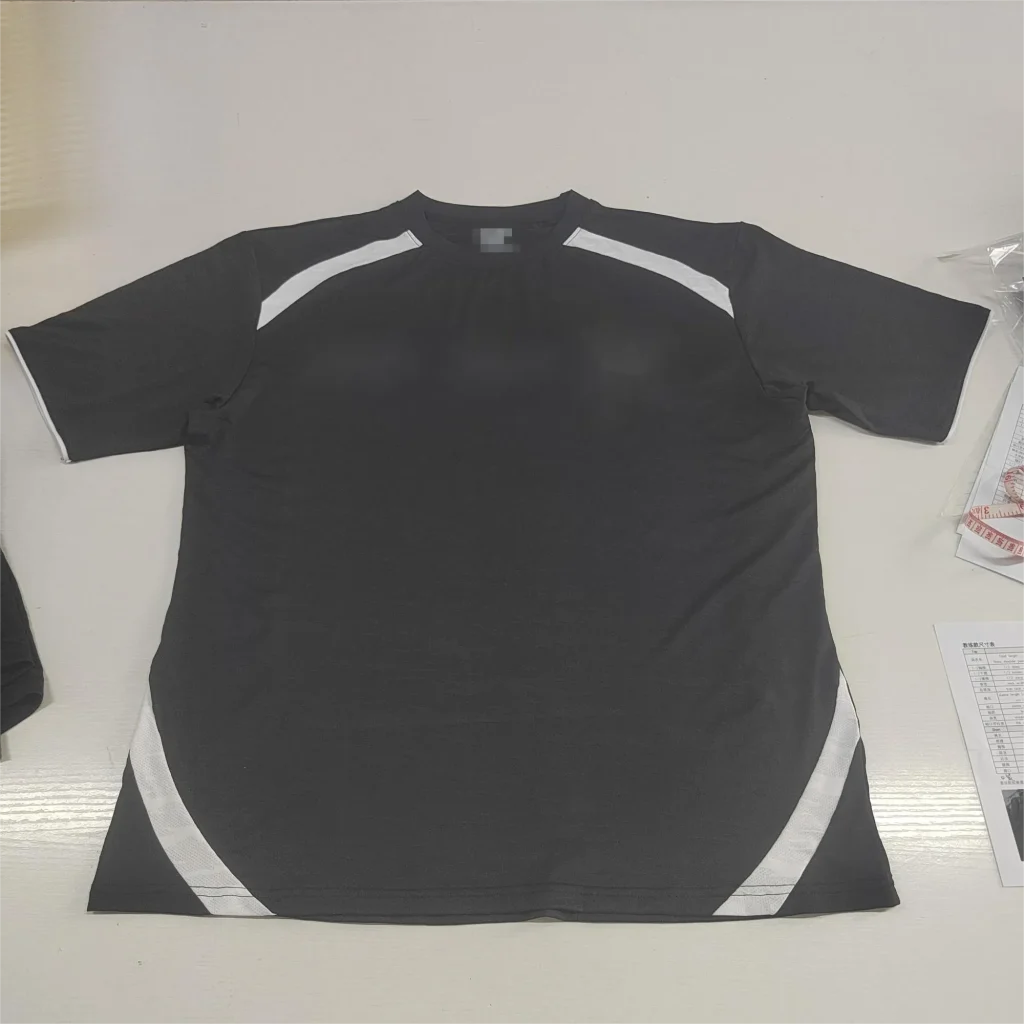
Recently, we had a sportswear order where the approved sample met the required measurements. However, during bulk production, we discovered that the finished garment was approximately 4 cm shorter in total body length than the approved sample.
The difference was obvious. The garment looked shorter and wider, even though the main construction and design had not changed.
Once we identified the problem, we immediately reported it to the customer. The customer understandably could not accept the bulk production because the measurements did not meet the approved specifications.
We took responsibility for the problem and arranged a new production batch to replace the affected garments.
For us, the most important question after such an issue is not simply who made the mistake. It is how to prevent the same problem from happening again.
Why Can Bulk Measurements Differ From the Approved Sample?
Garment measurements can be affected by many different factors during production.
Sometimes the problem starts with the wrong measurement chart being used. Sometimes the pattern is incorrect. In other cases, the fabric has not been properly relaxed before cutting, or the fabric behaves differently after washing, heat setting, printing or other production processes.
This means that controlling garment measurements is not just a matter of measuring a finished garment at the end of production.
Measurement control needs to start before cutting and continue throughout the entire production process.
Use the Correct Measurement Chart
One of the simplest but most serious mistakes is using the wrong measurement chart.
A factory may have several styles for the same customer, and different styles can have different measurement specifications.
If the wrong version of the tech pack or measurement chart is used, the pattern maker may create the pattern according to an outdated specification.
For this reason, before pattern making starts, the production team should confirm the latest approved version of the following information:
Style number
Measurement chart
Tech pack
Size range
Construction details
Fabric information
Customer comments and revisions
It is also important to make sure that the pattern maker and production team are working from exactly the same version.
A revised measurement chart should not simply be sent to one person while another department continues using an older file.
Check the Pattern Before Cutting Bulk Fabric
The pattern is the foundation of garment measurements.
If the pattern is wrong, cutting hundreds or thousands of pieces from that pattern will only multiply the problem.
Before bulk cutting, the pattern should therefore be checked against the approved sample and measurement chart.
For important dimensions such as body length, chest width, shoulder width, sleeve length and bottom opening, the production team should confirm that the pattern measurements are consistent with the approved specifications.
This is particularly important when the garment contains multiple panels or special construction details.
A four-centimeter difference in total body length may sound small on paper, but on a finished sportswear garment it can significantly change the overall appearance and proportions.
Fabric Relaxation Can Affect Measurements
Fabric preparation is another important factor.
Knitted sportswear fabrics can change their dimensions after being taken from rolls. Fabric tension created during knitting, finishing, winding and transportation may gradually relax.
If fabric is cut immediately without sufficient relaxation, the finished garments may change size after cutting, sewing or subsequent processing.
This is one reason why fabric relaxation should be considered before bulk cutting, especially for knitted fabrics with stretch.
The appropriate relaxation time depends on the fabric construction and production process.
There is no single number that applies to every fabric.
For this reason, the factory should establish a suitable relaxation procedure based on the actual fabric being used rather than assuming that every fabric behaves in exactly the same way.
Consider Shrinkage and Fabric Behavior
Shrinkage is another factor that can affect final measurements.
Different fabrics can react differently to heat, moisture, washing, drying and other processing conditions.
For example, polyester-spandex fabrics contain elastane and can have different dimensional behavior from a simple 100% polyester fabric.
Before bulk production, it is important to understand how the fabric behaves under the actual production conditions.
If the garment will be sublimated, heat pressed, washed or subjected to other heat-related processes, these processes should also be considered when establishing the final pattern and measurement control procedure.
Do Not Assume That the Approved Sample Represents Every Bulk Garment
The approved sample is extremely important, but it is not enough by itself.
A sample may be made under different conditions from bulk production.
For example, the sample may be cut from a small piece of well-relaxed fabric, while bulk production uses fabric directly from larger production rolls.
The sample may also be produced by a more experienced sample maker who pays close attention to every measurement.
Bulk production involves different operators, multiple cutting layers and much larger quantities.
Therefore, the production team needs to translate the approved sample into a repeatable bulk production standard.
The goal is not simply to make one correct sample.
The goal is to make every size in the bulk order consistently according to the approved specifications.
Create a Bulk Measurement Check Before Cutting
One useful control point is to check the pattern before bulk cutting begins.
Instead of waiting until the garments are finished, the factory can measure the production pattern and compare the key measurements with the approved measurement chart.
This gives the production team an opportunity to identify an error before hundreds or thousands of garments are produced.
For larger orders, this small additional check can potentially prevent a much larger problem later.
Check the First Bulk Production Before Continuing
Another important step is the first bulk production check.
After the first pieces of bulk production are completed, the factory should measure them against the approved specifications before continuing with the entire order.
This is especially important for styles with:
Stretch fabrics
Sublimation printing
Multiple panels
Special construction
Complicated size grading
Large quantity orders
If a problem is discovered at this stage, the production team still has an opportunity to correct the pattern or production process before the problem spreads across the entire order.
Use Measurement Tolerances Correctly
Not every garment measurement will be exactly identical.
Apparel production normally requires reasonable measurement tolerances because fabric, sewing and manual production processes naturally create small variations.
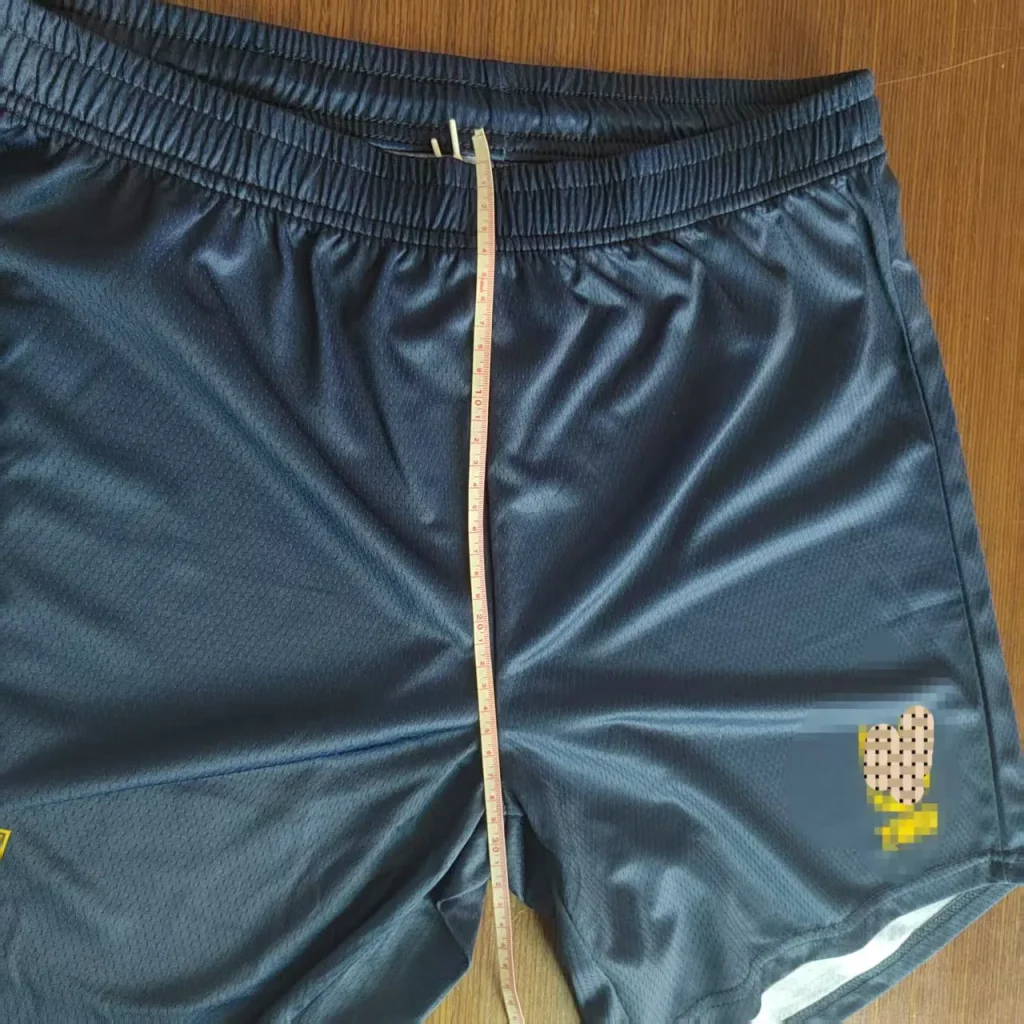
However, tolerance should not be used as an excuse for a significant deviation.
For example, if the approved body length is 70 cm and the finished garment is approximately 66 cm, this is not simply a small production variation.
The production team needs to understand why the difference occurred.
The purpose of a tolerance is to manage normal production variation, not to cover a pattern or process error.
Measure the Garment in a Consistent Way
Measurement results can also vary depending on how the garment is measured.
The factory and buyer should ideally use the same measurement method.
For example, the team should define:
Where the measurement starts
Where the measurement ends
Whether the garment is measured flat
Whether the fabric is stretched or relaxed
How curved areas are measured
How different points of measurement are identified
This becomes particularly important for stretch sportswear.
If one person measures a garment while stretching the fabric and another measures it without stretching, they may obtain very different results.
For this reason, measurement methods should be clearly defined in the tech pack or production instructions whenever necessary.
Pay Special Attention to Stretch Sportswear
Sportswear often uses fabrics such as polyester-spandex, nylon-spandex and other stretch materials.
These fabrics can provide excellent comfort and performance, but they also require careful measurement control.
The fabric can react to tension during cutting and sewing.
The finished garment can also look different depending on how it is laid flat during measurement.
For stretch garments, it is therefore important to control not only the pattern measurements but also fabric relaxation, cutting tension, sewing operations and the final measurement method.
What We Changed After This Production Problem
After discovering the 4 cm body-length difference in our recent order, we did not want to treat the problem as an isolated mistake.
We reviewed the production process and considered the different points where the measurement could have gone wrong.
The important lesson was that measurement control needs several checkpoints.
The measurement chart needs to be correct.
The pattern needs to be checked.
The fabric needs to be properly prepared.
The first bulk pieces need to be measured.
The production process needs to be monitored.
And the finished garments need to be inspected before shipment.
A final inspection is important, but it should not be the only measurement control.
Why Transparency Matters When a Production Problem Happens
When a production problem is discovered, avoiding the problem or waiting until the customer finds it usually makes the situation more difficult.
In this case, once we identified the measurement problem, we immediately informed the customer.
The customer did not accept the affected production, so we arranged a new batch to meet the required specifications.
It was not the outcome we wanted, but dealing with the problem directly allowed us to focus on the next question: how can we make sure this does not happen again?
For a sourcing partner, this is an important part of the job.
Production management is not only about finding a factory and placing an order.
It also means following the production process, identifying risks and taking corrective action when something goes wrong.
How Buyers Can Reduce Measurement Risks
For brands, importers, wholesalers, retail buyers and sports clubs, it is useful to discuss measurement control with the supplier before bulk production starts.
Some practical questions include:
Which version of the measurement chart will be used for bulk production?
Has the bulk pattern been checked against the approved sample?
How long will the fabric be relaxed before cutting?
Has fabric shrinkage or dimensional stability been considered?
Will sublimation or other heat processes affect the final measurements?
Will the first bulk garments be measured before continuing production?
What measurement tolerance will be applied?
How will the finished garments be measured during final inspection?
These questions may seem simple, but they can help identify potential problems before they become expensive production issues.
External References
- ISO 3759 – Measurement of Dimensional Change in Textiles
- AATCC TM150 – Dimensional Changes of Garments
- AATCC TM135 – Dimensional Changes of Fabrics
- ISO 5077 – Dimensional Change in Washing and Drying
Internal Resources (Yunenx Guides)
- White Surface Fuzz on Polyester-Spandex Jerseys: A Real Quality Case Study
- Sportswear Packaging Strategies for Wholesale Distribution
- Common Quality Issues Buyers Find in Activewear Production
- Swimwear Fabric Selection Guide for Buyers
Conclusion
Controlling garment measurements in bulk production is a process, not a single inspection.
The correct measurement chart, accurate pattern, fabric relaxation, shrinkage control, production conditions, sewing operations and final inspection can all influence the finished dimensions.
Our recent experience with a 4 cm body-length difference reminded us that even when an approved sample is correct, bulk production still requires its own controls.
The important thing is not to assume that a problem cannot happen because the sample was correct.
The goal is to build enough checkpoints into the production process so that if something does go wrong, it is discovered as early as possible.
And when a problem does happen, we believe the most useful response is not to avoid it.
It is to understand what happened, take corrective action and improve the process so that the same problem is less likely to happen in the next order.
About the Author
Yunenx Sportswear Team is a professional manufacturer specializing in custom sportswear, swimwear, and teamwear for established brands, importers, wholesalers, and retail programs worldwide.
We support buyers through every stage of the sourcing process — from product development and fabric selection to sampling, production, and bulk manufacturing — ensuring consistent quality and reliable delivery for long-term supply partnerships.
If you are sourcing a dependable sportswear or swimwear manufacturer for your next collection or seasonal program, our team is ready to support your product development and production needs.
Feel free to contact us for quotations, technical discussion, or sample evaluation.