
Last Updated: September 3, 2026 | By Yunenx Production Team
📧 Email: [email protected]
🔗 Connect on LinkedIn
🌐 Visit our website: www.yunenx.com
💬 Chat on WhatsApp
In sportswear manufacturing, not every quality problem can be identified before shipment.
Sometimes a fabric has been produced many times without any reported problems, the garments pass normal production inspection, and the issue only becomes visible after the customer has worn the finished product.
Recently, we experienced this situation with a batch of sports jerseys made from polyester-spandex jacquard fabric.
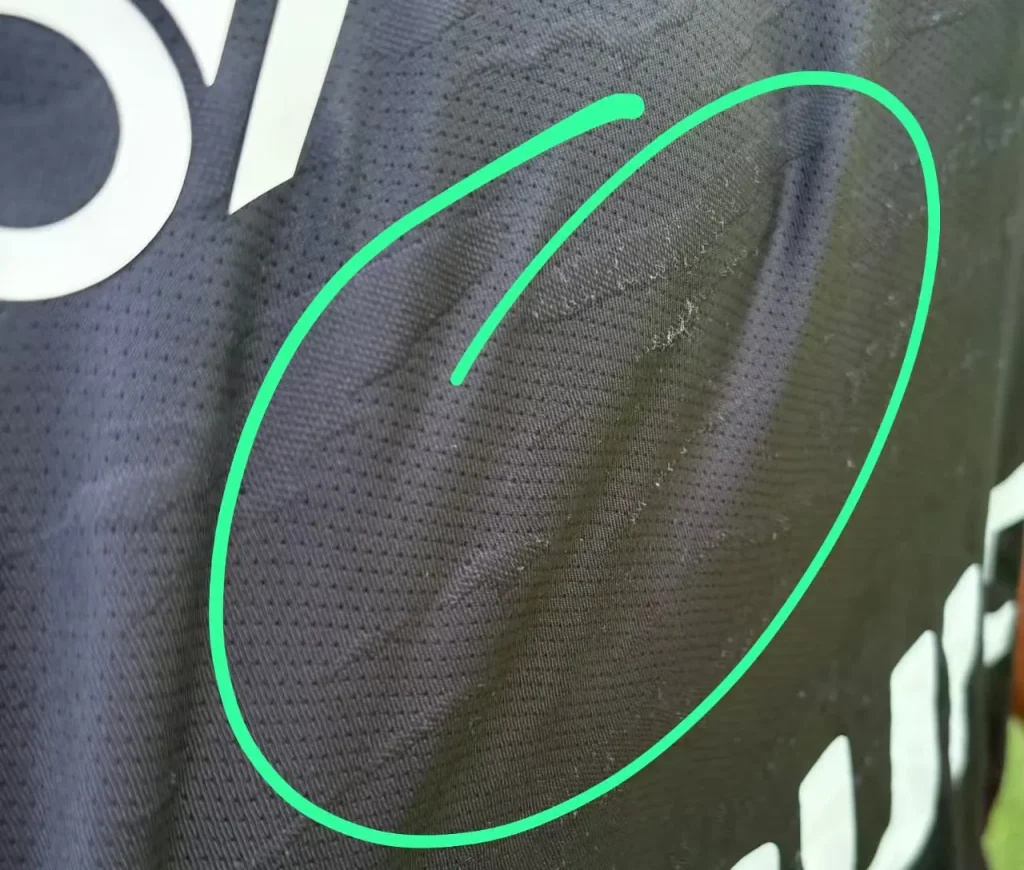
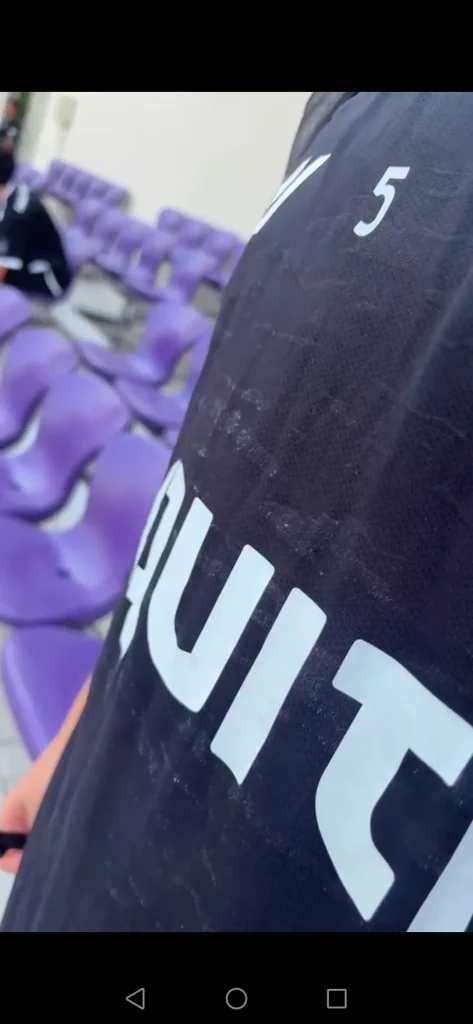
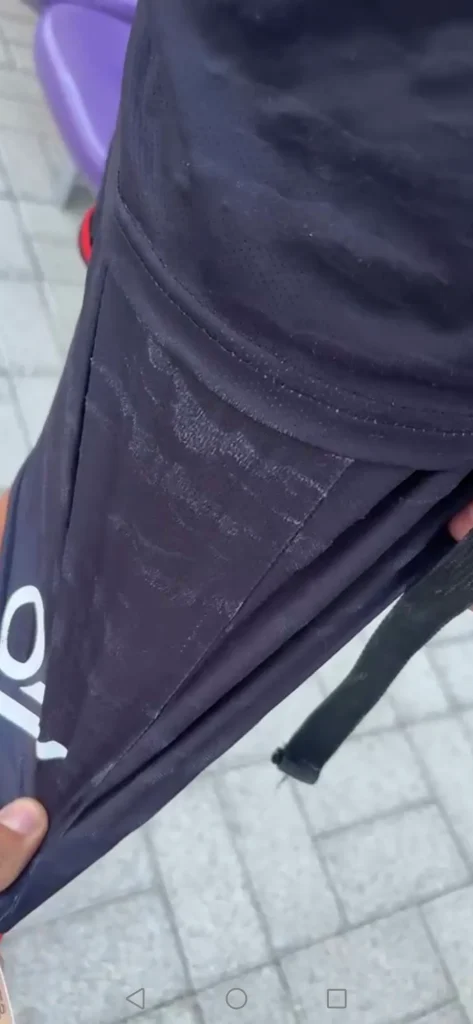
After the customer received and used the jerseys, they reported white fibers or fuzz appearing on the surface of the fabric.
The photos provided by the customer showed visible white surface fibers and areas where the fabric appearance had changed after use.
At first, it may look like a simple fabric quality problem.
However, after discussing the issue with the fabric supplier and reviewing the production process, we realized that there could be several possible causes.
This is still an ongoing investigation, so we do not want to make a conclusion before the evidence is clear.
Why This Quality Problem Is Difficult to Identify
The fabric used for this project is not a new fabric for the supplier.
The supplier has been producing this type of polyester-spandex jacquard fabric for a long time, and they had not previously received similar complaints from other orders.
This makes the investigation more complicated.
If the same fabric has been produced repeatedly without problems, it is not reasonable to immediately conclude that the fabric itself is defective.
At the same time, the customer’s feedback is real and the surface condition shown in the photos needs to be taken seriously.
For this reason, we started to look at the entire production and usage process instead of focusing on only one stage.
Possible Cause 1: Raw Material or Yarn Characteristics
The first possibility is the raw material itself.
The performance of a knitted fabric depends not only on the fiber composition but also on the yarn characteristics, yarn structure and production conditions.
Even when the nominal fabric composition is the same, differences in yarn quality or production batches can sometimes affect the final surface performance.
For example, the ability of the fabric surface to resist abrasion can be influenced by the structure and strength of the yarn as well as the way the fabric is knitted.
This is one of the areas that needs to be checked with the fabric supplier.
However, at this stage, we cannot say that the raw material is the cause.
Possible Cause 2: Knitting and Fabric Finishing
Another possibility is the fabric manufacturing process.
The knitting structure, fabric tension, heat setting, finishing process and other parameters can all influence the final surface characteristics of a fabric.
A supplier may have a standard production process, but individual production batches can still involve different production conditions.
Therefore, we are also comparing this batch with previous production records and discussing the fabric finishing process with the supplier.
The purpose is not simply to find someone responsible for the problem.
The more important question is whether there was any difference between this batch and previous successful batches.
Possible Cause 3: Sublimation Printing
Sublimation printing is another important part of the investigation.
Sports jerseys made from polyester-based fabrics are often decorated using sublimation printing, which involves high temperature and controlled processing time.
Because the fabric is exposed to heat during sublimation, we also need to consider whether the printing conditions could have affected the surface of the fabric.
Temperature, pressure and processing time all need to be reviewed.
It is important to understand that a fabric can perform normally before printing but behave differently after going through additional heat and processing.
This is why testing only the original fabric may not always tell the whole story.
Possible Cause 4: Heat Transfer After the Garments Were Delivered
There is another factor that is easy to overlook.
For team jerseys, customers or local teams sometimes add player names, numbers, sponsor logos or other markings after receiving the garments.
This may involve heat pressing or other transfer processes.
If the temperature is too high, the pressing time is too long, or the pressure is inappropriate for the fabric, the surface of the fabric could potentially be affected.
In this particular case, we therefore also need to understand what happened after the garments were delivered.
Were the jerseys used directly?
Were names or numbers added later?
Was a heat press used?
What temperature and pressing time were used?
These details can be important when trying to determine the actual cause of a fabric surface problem.
Why We Sent the Samples for Third-Party Testing
When a quality problem is difficult to identify, relying only on visual inspection or opinions from different suppliers is not enough.
For this reason, we also sent samples for testing by Bureau Veritas (BV).
Third-party testing can help us obtain more objective information and compare the affected material with the original material or other relevant samples.
The purpose of the testing is not to prove that one party is responsible.
Our goal is to understand what actually happened to the fabric and whether the problem can be connected to a specific stage of production or subsequent processing.
At the time of writing this article, the investigation is still ongoing.
We are waiting for the relevant test information and continuing discussions with the fabric supplier and the production team.
We Do Not Want to Blame the Fabric Too Quickly
One lesson from this case is that a garment quality problem is not always caused by one single factor.
A finished sports jersey goes through many stages before it reaches the wearer.
The process may include:
Yarn and raw materials
Knitting
Dyeing and finishing
Fabric inspection
Sublimation printing
Cutting
Sewing
Heat transfer or other decoration
Packing and transportation
Customer-side processing
Actual wear and washing
A problem that appears at the end of this chain may have originated from any one of these stages, or from a combination of factors.
This is why professional quality control should not stop at the factory’s final inspection.
It is also important to understand how the product will actually be used.
What We Are Learning From This Case
For us, this case is a reminder that quality control is not simply about checking whether a garment looks good before shipment.
A garment can pass a normal visual inspection and still develop a problem after repeated wear or additional processing.
For sportswear buyers, this is particularly important because sports garments are exposed to stretching, friction, sweat, washing and sometimes additional heat-transfer processes.
When developing a new fabric or a new sportswear product, it is therefore useful to consider not only appearance and hand feel, but also the fabric’s performance under the actual conditions in which the garment will be used.
For suppliers, another important lesson is the value of traceability.
When a problem occurs, we need to be able to go back through the production chain and ask:
Which fabric batch was used?
Which yarn was used?
How was the fabric produced and finished?
What printing conditions were used?
How was the garment manufactured?
Was any additional processing performed after delivery?
How was the garment actually used and cared for?
The more complete the information, the easier it becomes to identify the real cause.
The Investigation Is Still Ongoing
We have not reached a final conclusion in this case yet.
The possible causes include raw material characteristics, fabric production and finishing, sublimation processing, or subsequent heat-transfer processing.
We are working with the relevant suppliers and using third-party testing to help narrow down the cause.
Once we have clearer evidence, we will update this case with the findings and explain what we learned from it.
For us, solving a quality problem is not only about handling one customer’s complaint.
The more important goal is to understand why the problem happened and how to prevent the same issue from appearing in future production.
Conclusion
Real apparel production does not always go exactly according to plan.
Even a fabric that has been successfully produced many times can sometimes present an unexpected problem.
When this happens, the most useful approach is not to immediately assume that the fabric, factory or printing process is responsible.
Instead, we need to investigate the complete production and usage chain, test the relevant materials, communicate with the suppliers and use evidence to identify the real cause.
This is one of the reasons why experience in apparel sourcing and production matters.
A reliable supply chain is not simply about finding a factory that can make a garment at a good price.
It is also about knowing how to investigate problems when something goes wrong and how to turn those experiences into better production decisions for the next order.
External References
- Textile Exchange Industry Reports
- McKinsey Apparel Value Chain Insights
- World Trade Organization Textile Overview
- Business of Fashion Supply Chain Analysis
Internal Resources (Yunenx Guides)
- Understanding MOQ Strategy in Sportswear Production
- Sportswear Packaging Strategies for Wholesale Distribution
- Common Quality Issues Buyers Find in Activewear Production
- Swimwear Fabric Selection Guide for Buyers
About the Author
Yunenx Sportswear Team is a professional manufacturer specializing in custom sportswear, swimwear, and teamwear for established brands, importers, wholesalers, and retail programs worldwide.
We support buyers through every stage of the sourcing process — from product development and fabric selection to sampling, production, and bulk manufacturing — ensuring consistent quality and reliable delivery for long-term supply partnerships.
If you are sourcing a dependable sportswear or swimwear manufacturer for your next collection or seasonal program, our team is ready to support your product development and production needs.
Feel free to contact us for quotations, technical discussion, or sample evaluation.