
Last Updated: May 20, 2026 | By Yunenx Sales Team
📧 Email: [email protected]
🔗 Connect on LinkedIn
🌐 Visit our website: www.yunenx.com
💬 Chat on WhatsApp
Introduction
What is a custom volleyball uniform manufacturer, and why does the design process matter more today than ever before?
Modern volleyball uniforms are no longer just team apparel. They have become part of athlete performance, brand identity, fan engagement, and even retail expansion for volleyball clubs and startup sportswear brands. As more teams demand lightweight fabrics, moisture management, sublimation printing, and female-specific fit development, choosing the right volleyball uniform design partner has become a sourcing decision with long-term impact.
Many buyers searching for a Volleyball Uniform Design Guide are not only looking for design inspiration. They are trying to avoid production mistakes, fit problems, color inconsistency, delayed tournament delivery, and unreliable OEM suppliers.
That’s where technical development matters.
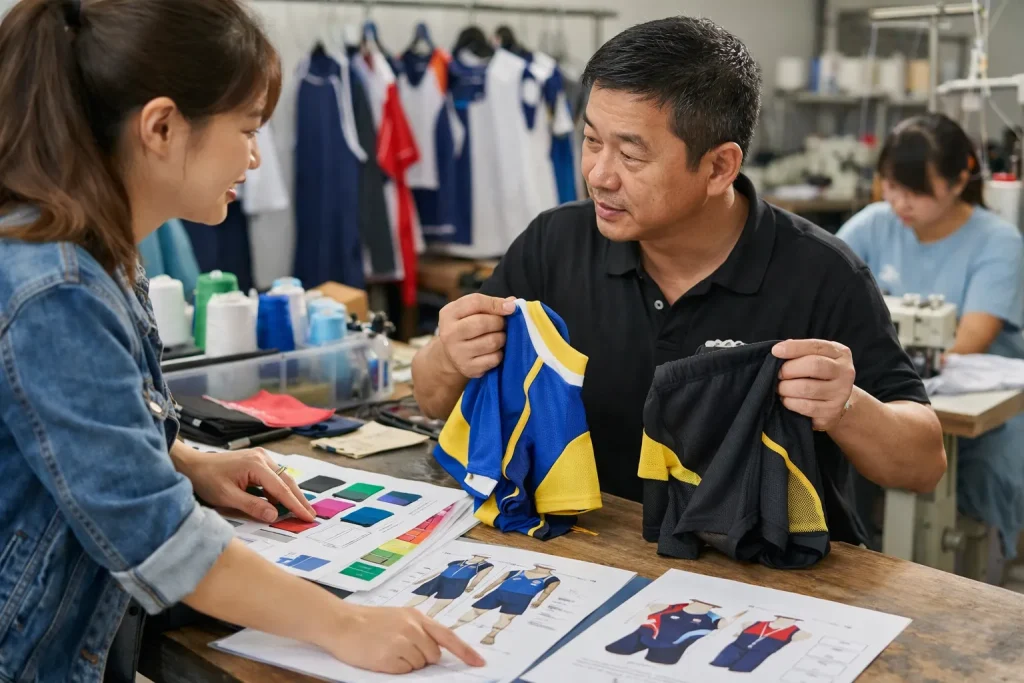
At Yunenx, we’ve seen one thing repeatedly: uniforms may look good on a mockup, but performance issues usually appear after movement testing, washing, or bulk production. Fabric may look similar. Performance doesn’t.
Quick Answer
Custom volleyball uniform manufacturers typically provide sublimation printing, lightweight moisture-wicking fabrics, 4-way stretch construction, player-specific sizing, and OEM/ODM production support for schools, clubs, volleyball teams, and startup sportswear brands. A strong volleyball uniform development process should include fabric testing, fit approval, color validation, seam construction review, and bulk quality inspection to reduce production risks and improve athlete comfort.
Key Takeaways
- Polyester-spandex volleyball jerseys commonly use 140–180 GSM moisture-wicking fabrics
- Sublimation printing helps reduce cracking and fading compared to heat transfer logos
- Flatlock stitching improves comfort during repetitive arm and shoulder movement
- UPF 50+ fabrics are increasingly requested for beach volleyball uniforms
- Recycled polyester certified by GRS or OEKO-TEX is becoming more common in teamwear production
- Fit testing is critical because volleyball uniforms require flexibility during jumping and lateral movement
- Low MOQ volleyball uniform production is possible, but fabric color consistency becomes harder in very small runs
What Makes Volleyball Uniform Design Different?
Volleyball apparel sits between performance activewear and teamwear production. Unlike fashion sportswear, volleyball uniforms require repeated explosive movement, sliding friction resistance, sweat management, and lightweight construction.
For indoor volleyball, athletes usually prioritize:
- Breathability
- Lightweight fabric
- Fast drying
- Stretch recovery
- Shoulder mobility
- Non-restrictive seam placement
Beach volleyball uniforms focus more on:
- UV protection
- Chlorine and salt resistance
- Compression support
- Sand abrasion durability
According to Textile Exchange, recycled polyester and recycled nylon continue growing across sports apparel categories as brands prioritize lower-impact textile sourcing.
Meanwhile, performance textile demand continues rising globally. According to Statista, the global sports apparel market has maintained steady growth due to fitness participation, athleisure demand, and sports team expansion.
Many volleyball brands are now combining:
- Sustainable fabrics
- Sublimation production
- Compression technology
- Seamless panel integration
- Eco packaging
- Custom private label production
Core Fabric Parameters for Volleyball Uniforms
1. Fabric Composition
Most volleyball jerseys use:
| Fabric Type | Common Composition | Application |
|---|---|---|
| Lightweight jersey knit | 88% polyester + 12% spandex | Indoor volleyball jerseys |
| Compression fabric | 75% polyester + 25% elastane | Compression shorts |
| Recycled performance knit | REPREVE recycled polyester | Sustainable teamwear |
| Beach volleyball fabric | Nylon-spandex blend | UV & stretch performance |
For higher stretch recovery, elastane stability matters a lot.
A fabric may pass lab testing but still curl badly during stitching if elastane stability is weak.
That problem usually appears during bulk production — not during fabric swatch review.
2. GSM Weight
Typical volleyball uniform GSM:
- Jerseys: 140–180 GSM
- Compression shorts: 200–260 GSM
- Warm-up jackets: 240–320 GSM
Too light:
- Fabric becomes transparent during stretching
Too heavy:
- Movement restriction increases during matches
We’ve seen startup brands choose extremely thin fabric to reduce costs. Usually returns come later because athletes complain about transparency under arena lighting.
3. Stretch & Recovery
A good volleyball uniform should include:
- 4-way stretch
- Recovery above 85%
- Moisture management
- Anti-pilling performance
- Color fastness grade 4–4.5
Compression level also matters.
Over-compression may reduce mobility for younger players.
Under-compression often causes shorts to roll during jumping.
4. Seam Construction
Flatlock stitching is commonly used in volleyball apparel because it reduces skin irritation.
Important construction options include:
- Flatlock stitching
- Reinforced shoulder seams
- Coverstitch hem finishing
- Elastic waistband stabilization
Cheap samples often become expensive bulk orders later.
Poor seam construction may survive fitting sessions but fail after tournament washing cycles.
Volleyball Uniform Design Trends in 2026
Sublimation Printing Growth
Sublimation printing has become the preferred option for volleyball jerseys because:
- Colors penetrate fabric instead of sitting on top
- Logos resist cracking
- Team graphics remain lightweight
- Large-area prints stay breathable
Many teams now request gradient effects, geometric graphics, and oversized numbering systems.
Learn more about <a href=”/blogs/sportswear-production/sublimation-printing-guide”>sublimation printing techniques</a>.
Sustainable Teamwear Development
More sportswear brands now request:
- GRS-certified fabrics
- OEKO-TEX approved materials
- Recycled polyester yarns
- Eco packaging
Many sustainable sportswear brands prefer REPREVE recycled polyester because it supports lower environmental impact goals while maintaining moisture-wicking functionality.
Female-Specific Fit Development
Women’s volleyball uniforms increasingly use:
- Curved waist shaping
- Higher stretch recovery
- Improved bust support integration
- Reduced seam pressure points
Some startups underestimate fitting revisions. One sample round often turns into three.
Don’t rush bulk production before fit approval. Really.
Step-by-Step Volleyball Uniform Procurement Guide
1. Material Selection
Confirm:
- Fabric composition
- GSM
- Stretch level
- Moisture management
- Color fastness
- Certification requirements
If using recycled fabrics, request:
- GRS documents
- OEKO-TEX compliance
- SGS testing reports
2. Tech Pack Confirmation
A proper tech pack should include:
- Measurement specs
- Logo placement
- Stitching instructions
- Color references
- Pantone codes
- Artwork format
No size spec confirmation = major production risk.
3. Lab Dip Approval
Before production:
- Confirm Pantone accuracy
- Review fabric color under lighting
- Test contrast consistency
Color inconsistency is one of the most common complaints in teamwear orders.
4. Sampling Stage
Sampling should verify:
- Fit
- Print quality
- Seam comfort
- Fabric recovery
- Transparency under stretch
Skipping samples to save time usually creates bigger delays later.
We’ve seen buyers skip fit testing to save time. Usually that delay becomes more expensive during bulk production.
5. Fit Testing
Test uniforms during:
- Jumping
- Blocking
- Diving
- Rotation movement
- Sweat exposure
Volleyball movement is aggressive. Static fitting is never enough.
6. Bulk Production
Before production begins:
- Confirm size breakdown
- Confirm packaging
- Lock artwork files
- Validate print alignment
MOQ misunderstanding creates frequent problems between startups and suppliers.
7. Quality Inspection
QC inspection should include:
- Measurement tolerance
- Print positioning
- Fabric defects
- Seam strength
- Color consistency
8. Shipping & Risk Control
Always buffer lead time for:
- Reprint risk
- Fabric delays
- Customs inspection
- Peak season congestion
Unrealistic lead time expectations damage tournament delivery schedules more often than people think.
B2B Comparison Table: Sublimation vs Heat Transfer Volleyball Uniforms
| Factor | Sublimation Printing | Heat Transfer Printing |
|---|---|---|
| Durability | High long-term durability | May crack over time |
| Breathability | Better airflow | Print layer reduces breathability |
| MOQ Flexibility | Better for team customization | Suitable for smaller logo areas |
| Color Vibrancy | Excellent full-panel graphics | Moderate |
| Cost Efficiency | Better for bulk teamwear | Better for small decoration |
| Risk Level | Requires color calibration accuracy | Peeling risk after washing |
| Athlete Comfort | Lightweight feel | Slightly heavier surface |
For most volleyball clubs and school programs, sublimation usually provides better long-term value despite higher setup preparation.
Common Mistakes in Volleyball Uniform Development
Choosing Suppliers Only by Price
Low pricing often means:
- Lower GSM fabric
- Weak stretch recovery
- Poor seam durability
- Unstable print quality
Skipping Fabric Testing
Without testing:
- Colors may bleed
- Fabric may become transparent
- Compression may weaken after washing
Ignoring Lead Time Reality
Tournament dates are fixed.
Production delays are not flexible.
No Fit Approval Before Bulk
One approved mockup does not equal production-ready sizing.
Especially for women’s volleyball uniforms.
Volleyball Uniform Production Checklist
Before bulk production, confirm:
- Fabric composition approved
- Size chart validated
- Lab dip approved
- PPS sample approved
- Print artwork locked
- Seam construction confirmed
- Packaging requirements clear
- QC standards aligned
- Lead time confirmed
- Shipping method finalized
Experienced sportswear manufacturers can maintain consistent quality across large production runs.
Explore more about our production capabilities:
https://yunenx.com/sportswear/
https://yunenx.com/activewear/
https://yunenx.com/swimwear/
CTA
Ready to develop your custom volleyball uniform collection?
Yunenx supports low MOQ volleyball uniform manufacturing, sublimation printing development, recycled performance fabric sourcing, OEM/ODM production management, and bulk quality control support for growing sportswear brands, volleyball clubs, and activewear startups.
Please contact us to request sampling support, fabric recommendations, or production guidance.
Connect on LinkedIn | Email | www.yunenx.com
FAQ
What is the MOQ for custom volleyball uniforms?
MOQ depends on fabric type, printing method, and customization complexity. For sublimation volleyball uniforms, many OEM manufacturers support low MOQ production starting from 100–300 pieces per style. Smaller quantities may increase unit cost and color consistency risk.
How long does volleyball uniform production take?
Typical lead time ranges from 25–45 days after sample approval and material confirmation. Sublimation printing, custom trims, and peak production seasons may extend timelines. Please contact us to confirm current production scheduling.
Can volleyball uniforms be fully customized?
Yes. Most OEM/ODM volleyball uniform suppliers support custom logos, Pantone colors, player names, sizing, packaging, fabric selection, and private label branding. Tech pack accuracy is important to reduce production errors.
What fabrics are commonly used for volleyball uniforms?
Most volleyball uniforms use polyester-spandex performance fabrics with moisture-wicking properties, 4-way stretch, and lightweight construction between 140–180 GSM. Compression shorts often use higher elastane content for better support.
Do you support sustainable volleyball uniform production?
Yes. Many manufacturers now offer recycled polyester, REPREVE yarns, OEKO-TEX approved fabrics, and GRS-certified material sourcing for sustainable sportswear development. Availability depends on MOQ and fabric stock conditions.
Related Articles
- Seamless Yoga Leggings vs Regular Leggings: What’s the Difference?
- Best Activewear Manufacturer for Startups
- Low MOQ Sportswear Factory Options in China
Explore more insights here:
https://yunenx.com/blog/
About the Author
Yunenx Sportswear Team is a professional manufacturer specializing in custom sportswear, teamwear and swimwear for global brands and sports clubs. The team supports brands from product development to bulk manufacturing.
If you are looking for a reliable custom sportswear manufacturer,
our factory specializes in sportswear, swimwear and activewear production for growing brands.
Feel free to contact us for sampling or quotation. Connect on LinkedIn | Email | www.yunenx.com