Last Updated: May 20, 2026 | By Yunenx Production Team
📧 Email: [email protected]
🔗 Connect on LinkedIn
🌐 Visit our website: www.yunenx.com
💬 Chat on WhatsApp
What is the basketball jerseys production process, and why does it matter for modern sportswear brands?
For startup basketball brands, school teams, Amazon sellers, and private label sportswear businesses, understanding the basketball jerseys production process is critical before placing bulk orders. Performance expectations are higher than ever. Buyers now look for moisture-wicking fabrics, sublimation durability, lightweight construction, and reliable OEM production support — not just low pricing.
At the same time, many sourcing problems still happen during production: color inconsistency, logo peeling, wrong sizing, delayed lead times, and fabric performance issues after washing. We’ve seen it many times. A jersey may look good in photos but fail after two weeks of training.
That’s why choosing the right basketball jersey manufacturer and understanding the actual production workflow matters long before bulk production starts.
Quick Answer
The basketball jerseys production process usually includes fabric sourcing, tech pack confirmation, sublimation artwork preparation, sampling, fit testing, bulk cutting and sewing, QC inspection, and shipping management. Reliable OEM sportswear manufacturers also support moisture-wicking polyester fabrics, low MOQ development, custom printing, and size grading for basketball teams and private label sportswear brands.
Key Takeaways
- Most basketball jerseys use 100% polyester mesh between 140–180 GSM for breathability and moisture management
- Sublimation printing provides better wash durability than heat-transfer logo applications
- Fit testing is essential because basketball jerseys require mobility around shoulders and armholes
- Color fastness testing helps prevent fading after repeated washing and sweat exposure
- Low MOQ basketball jersey manufacturers typically start from 100–200 pcs per style
- Compression side panels and flatlock stitching are increasingly used in premium basketball uniforms
- Recycled polyester such as REPREVE is becoming more common in sustainable sportswear production
Why the Basketball Jerseys Production Process Has Changed
The sportswear industry is evolving quickly. Basketball apparel is no longer only about team uniforms. Today’s market includes:
- Streetwear basketball brands
- Gym apparel startups
- School leagues
- E-sports merchandise collections
- Performance training wear
- Private label activewear brands
According to Textile Exchange, recycled polyester adoption in sports apparel continues to grow as brands focus on sustainability and circular textile systems. Meanwhile, moisture-management fabrics and lightweight performance textiles are becoming standard expectations rather than premium upgrades.
Another trend is customization speed.
Small brands want:
- Lower MOQ
- Faster sampling
- Flexible production runs
- Custom names and numbers
- Multiple colorways
But fast customization creates production risks too.
Fabric may look similar. Performance doesn’t.
We’ve seen cheap polyester fabrics lose shape after sublimation heating because yarn stability was weak. The print looked sharp initially. After bulk washing, the panels started twisting.
That becomes expensive later.
Core Materials Used in Basketball Jersey Manufacturing
Choosing the right fabric is one of the most important parts of the basketball jerseys production process.
Common Fabric Options
| Fabric Type | Typical GSM | Main Advantage | Risk |
|---|---|---|---|
| 100% Polyester Mesh | 140–160 GSM | Breathability | Lower durability if yarn quality is unstable |
| Interlock Polyester | 160–180 GSM | Smoother surface for printing | Less airflow |
| Recycled Polyester (REPREVE) | 150–180 GSM | Sustainability positioning | Higher material cost |
| Compression Fabric Panels | 220–260 GSM | Muscle support and fit stability | Incorrect stretch recovery can distort shape |
Important Performance Parameters
Buyers should confirm:
- 4-way stretch recovery
- Moisture-wicking performance
- Color fastness grade
- Fabric shrinkage rate
- Abrasion resistance
- Anti-pilling level
- Breathability
- GSM consistency
For competitive basketball uniforms, many brands now request:
- UPF 50+
- Anti-odor finishes
- Lightweight mesh ventilation
- Quick-dry treatment
At Yunenx, we often recommend testing both fabric weight and print performance together before approval. Some fabrics absorb sublimation ink differently depending on yarn density.
A lab test can pass. Bulk production can still behave differently during stitching.
Really.
Sublimation Printing vs Heat Transfer for Basketball Jerseys
Most modern basketball jerseys use sublimation printing because it creates long-lasting graphics directly inside the fabric fibers.
Comparison Table: Sublimation vs Heat Transfer
| Factor | Sublimation Printing | Heat Transfer |
|---|---|---|
| Durability | Excellent | Medium |
| Breathability | Better | Reduced in printed areas |
| Logo Feel | No surface layer | Raised surface |
| Best For | Team uniforms & performance wear | Small logo applications |
| Wash Resistance | High | Medium |
| MOQ Efficiency | Better for full-print production | Better for short-run logo decoration |
| Risk | Color variation during heat control | Peeling after repeated washing |
Technical entities commonly used in basketball apparel production include:
- OEKO-TEX certification
- Global Recycled Standard compliance
- Flatlock stitching
- Sublimation printing
- Compression fabric panels
Many sports brands now prefer recycled polyester certified under GRS standards because sustainability has become part of brand positioning, especially for Shopify and DTC sportswear businesses.
Step-by-Step Basketball Jerseys Production Process
1. Material Selection
The first step includes:
- Fabric composition confirmation
- GSM testing
- Mesh structure approval
- Pantone color planning
- Moisture-wicking testing
Typical composition:
- 100% polyester
- 92% polyester / 8% elastane
- Recycled polyester blends
Buyers should also confirm whether the fabric supports:
- Sublimation
- Screen printing
- Embroidery
- Heat transfer labels
2. Tech Pack Confirmation
A complete tech pack should include:
- Artwork placement
- Measurement specs
- Logo size
- Fabric details
- Stitching method
- Label requirements
- Packaging instructions
Missing measurements cause problems later.
One armhole adjustment can affect the entire grading system across XS–XXXL sizing.
We’ve seen buyers skip spec confirmation to save time. Usually that delay becomes more expensive during bulk production.
3. Lab Dip & Color Approval
For custom basketball jerseys, color accuracy matters heavily.
This stage confirms:
- Pantone matching
- Fabric dye reaction
- Sublimation output
- Print consistency
Color inconsistency is still one of the most common bulk production complaints in sportswear manufacturing.
Especially neon colors.
4. Sampling Stage
The sample stage validates:
- Construction
- Fit
- Print quality
- Fabric behavior
- Sewing accuracy
Cheap samples often become expensive bulk orders later.
A rushed sample usually creates:
- Rework
- Bulk delays
- High defect rates
- Wrong fit grading
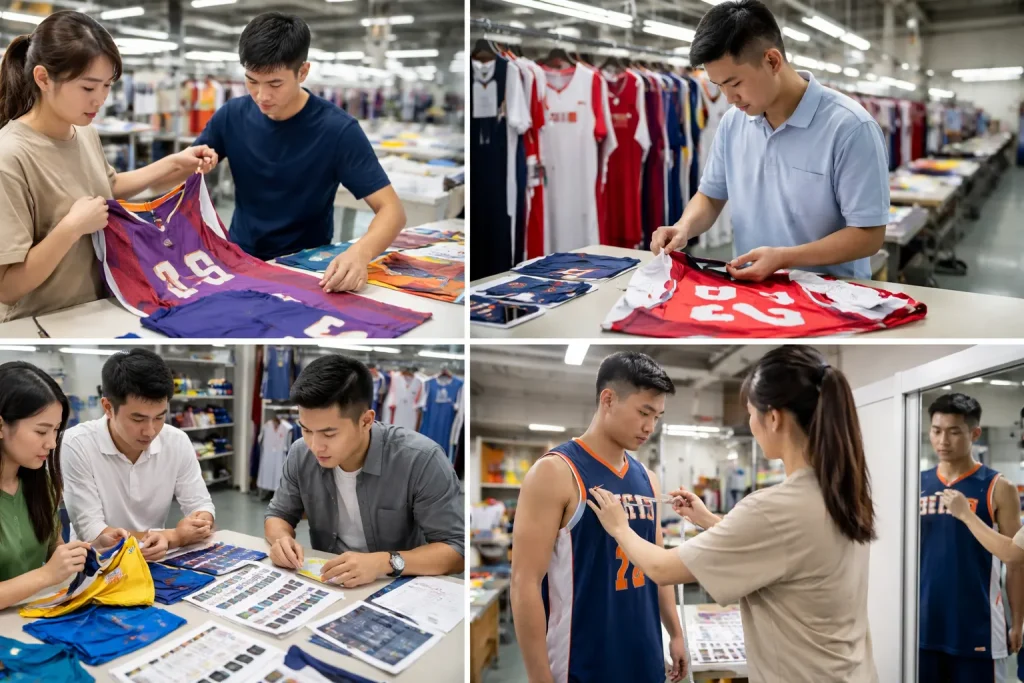
5. Fit Testing
Basketball jerseys require movement flexibility around:
- Shoulder width
- Chest ease
- Armhole depth
- Side seam mobility
Some startups underestimate fitting revisions.
One sample round often turns into three.
That’s normal in activewear development.
Many basketball brands adjust jersey length after wear testing because movement during jumping changes how the garment sits on the body.
6. Bulk Production
Bulk production usually includes:
- Fabric inspection
- Panel cutting
- Sublimation transfer
- Sewing assembly
- Trimming
- Thread cleaning
- Final pressing
Lead time generally ranges:
- 20–35 days for standard orders
- Longer during peak sports seasons
Unrealistic lead time expectations are a common sourcing mistake.
7. Quality Inspection
Professional QC inspection should cover:
- Measurement tolerance
- Print alignment
- Stitch density
- Fabric defects
- Color consistency
- Packaging accuracy
Some brands also request:
- SGS testing
- Wash testing
- Stretch recovery reports
A jersey can pass visual inspection and still fail after washing if stitching tension is unstable.
8. Shipping & Risk Control
Before shipping:
- Carton marking should be confirmed
- Barcode requirements checked
- Packaging standards aligned
- Shipping method selected
MOQ misunderstanding also causes disputes.
Some buyers assume mixed-color production counts toward MOQ equally. Some factories calculate MOQ per color instead.
Always confirm early.
Common Mistakes Buyers Make
Choosing Suppliers Only by Price
Low pricing often means:
- Lower GSM fabric
- Weak stitching quality
- Poor color fastness
- Unstable production control
Skipping Sampling
Risk:
- Incorrect sizing
- Logo placement errors
- Fabric mismatch
Cost impact:
- Expensive bulk rework
Ignoring Fabric Testing
Without testing:
- Shrinkage problems appear later
- Sweat resistance becomes unknown
- Print durability may fail
No Size Spec Confirmation
Result:
- Inconsistent grading
- High return rates
- Team fitting complaints
China vs Vietnam vs Bangladesh for Basketball Jersey Production
| Country | Main Strength | Main Risk | Best For |
|---|---|---|---|
| China | Fast development & flexible MOQ | Cost fluctuations | Startup brands & custom orders |
| Vietnam | Strong sewing quality | Longer sourcing cycle | Mid-high volume brands |
| Bangladesh | Lower labor cost | Less flexibility for small customization | Large bulk programs |
For private label basketball brands, China still offers advantages in:
- Sublimation integration
- Fast sampling
- Flexible customization
- Fabric sourcing speed
Basketball Jersey Production Checklist
Before bulk production, confirm:
- Fabric composition approved
- GSM confirmed
- Pantone colors approved
- Size chart validated
- PPS sample approved
- Print placement confirmed
- QC standard aligned
- Packaging requirements clear
- Shipping timeline realistic
- MOQ terms confirmed
For sustainability standards, refer to:
Ready to Develop Your Basketball Jersey Collection?
Yunenx supports custom basketball jersey manufacturing, low MOQ OEM/ODM development, sublimation production, recycled fabric sourcing, and bulk production management for growing sportswear brands.
Whether you are developing:
- A school team uniform
- A gym apparel startup
- A private label basketball collection
- A resort sportswear capsule
our production team can help evaluate fabrics, printing methods, sampling workflow, and production risks before bulk manufacturing begins.
Please contact us to request sampling support or production consultation.
Connect on LinkedIn | Email | www.yunenx.com | WhatsApp
FAQ About Basketball Jerseys Production Process
What is the MOQ for custom basketball jerseys?
Most OEM basketball jersey manufacturers start from 100–200 pcs per style per color. Some suppliers may support lower MOQ for sampling or startup brands, but printing methods and fabric availability can affect minimum quantities.
How long does basketball jersey production take?
Standard lead time is usually 20–35 days after sample approval and deposit confirmation. During peak sportswear seasons or for complex sublimation designs, production may take longer. Always confirm fabric availability before scheduling launches.
Do you support custom basketball jersey designs?
Yes. Most OEM/ODM sportswear suppliers support custom logos, sublimation printing, player names, numbers, colorways, labels, packaging, and sizing adjustments based on your tech pack or artwork files.
What fabrics are commonly used for basketball jerseys?
Most basketball jerseys use lightweight polyester mesh between 140–180 GSM because it offers breathability, moisture management, and printing compatibility. Some premium jerseys also use elastane panels for mobility and compression support.
Do you support sustainable basketball jersey production?
Yes. Many sportswear factories now offer recycled polyester such as REPREVE and GRS-certified materials. Sustainable basketball apparel production is becoming increasingly common for Shopify brands, teamwear programs, and modern activewear startups.
Related Articles
- Seamless Yoga Leggings vs Regular Leggings: What’s the Difference?
- Best Activewear Manufacturer for Startups
- Low MOQ Sportswear Factory Options in China
Ready to develop your custom activewear collection?
Yunenx supports low MOQ manufacturing, moisture-wicking fabric sourcing, OEM/ODM development, recycled textile options, and bulk production management for growing fitness brands and private label sportswear companies.
Please contact us to request fabric samples, tech pack support, or production pricing confirmation. Connect on LinkedIn | Email | www.yunenx.com | WhatsApp