Last Updated: May 16, 2026 | By Yunenx Production Team
📧 Email: [email protected]
🔗 Connect on LinkedIn
🌐 Visit our website: www.yunenx.com
💬 Chat on WhatsApp
Introduction
What is moisture-wicking technology in activewear manufacturing?
Moisture-wicking technology refers to functional textile engineering that moves sweat away from the skin and spreads it across the fabric surface for faster evaporation. For brands looking for a reliable moisture-wicking activewear manufacturer, this technology has become a core requirement in modern gym wear, performance apparel, and OEM sportswear production.
As fitness apparel demand continues to grow, buyers are no longer only comparing prices. They are comparing sweat performance, fabric recovery, odor management, durability after washing, and customer retention rates. A gym apparel startup may launch with stylish designs, but poor moisture management usually leads to bad reviews very quickly.
Fabric may look similar. Performance doesn’t.
According to Textile Exchange, performance textiles using recycled synthetic fibers continue to expand as brands prioritize both functionality and sustainability. Meanwhile, functional activewear remains one of the fastest-growing segments in global apparel sourcing.
Quick Answer
Moisture-wicking activewear manufacturers typically use polyester blends, recycled nylon, elastane, and engineered knit structures to improve sweat evaporation and wearer comfort. Reliable OEM activewear suppliers also support compression performance, UPF 50+ protection, color fastness testing, and custom production services for fitness brands, gym apparel startups, and private label sportswear companies.
Key Takeaways
- Moisture-wicking fabrics move sweat away from the skin instead of absorbing it like cotton
- Common fabric compositions include 75% polyester + 25% spandex or 78% recycled nylon + 22% elastane
- Functional textiles often include UPF 50+, anti-odor finishing, and 4-way stretch
- Compression level, GSM weight, and seam construction directly affect activewear performance
- Flatlock stitching helps reduce skin irritation during high-movement training
- Recycled materials such as REPREVE and ECONYL are increasingly used in sustainable activewear production
- Sampling and fit testing remain critical before bulk production
- Cheap samples often become expensive bulk orders later
Why Moisture-Wicking Technology Matters in Modern Activewear
A professional moisture-wicking activewear manufacturer does far more than sew garments together. Performance activewear production today combines textile engineering, stretch recovery testing, garment construction, and functional finishing technologies.
Traditional cotton absorbs moisture and dries slowly. In contrast, moisture-wicking gym wear fabrics use capillary action to pull sweat outward, helping athletes stay dry during workouts.
This matters especially for:
- High-intensity gym apparel
- Running wear
- Yoga apparel
- Compression leggings
- Training tops
- Team sports uniforms
Many growing brands now request:
- 4-way stretch
- Anti-pilling performance
- UPF 50+
- Chlorine resistance
- Quick-dry finishing
- Compression support
- Matte fabric appearance
Some buyers focus heavily on GSM only. That’s risky.
A 220 GSM fabric may still feel heavy and trap heat if the yarn structure is poor.
Industry Trends Driving Moisture-Wicking Apparel
1. Sustainable Functional Textiles
Sustainability and performance are now closely connected in sportswear sourcing.
Many OEM activewear suppliers now offer:
- Recycled polyester
- GRS-certified fabrics
- Bio-based stretch fibers
- Eco dyeing processes
- Reduced-water sublimation printing
According to Textile Exchange official website, recycled polyester continues to dominate sustainable sportswear material development globally.
Brands increasingly request fabrics certified by:
- Global Recycled Standard
- OEKO-TEX
- SGS
2. Compression Technology Growth
Compression activewear has expanded beyond professional athletes into mainstream fitness brands.
Typical compression fabric specifications include:
| Feature | Typical Range | Risk If Ignored |
|---|---|---|
| Elastane content | 18%–28% | Weak recovery |
| GSM weight | 220–320 GSM | Transparency or overheating |
| Stretch recovery | ≥90% | Bagging after wear |
| Color fastness | Grade 4+ | Dye migration |
| UPF rating | UPF 50+ | Outdoor performance complaints |
A fabric may pass lab testing but still curl badly during stitching if elastane stability is weak.
That problem shows up during sewing. Not during sourcing meetings.
Key Fabric Technologies Used in Moisture-Wicking Activewear
Polyester Performance Knits
Polyester remains one of the most common moisture-management fibers because of:
- Fast drying speed
- Lower water absorption
- Good durability
- Sublimation printing compatibility
Many activewear supplier China factories use:
- Interlock knit
- Jersey knit
- Bird-eye mesh
- Warp knit compression fabrics
Recycled Nylon Fabrics
Recycled nylon is increasingly used for premium fitness apparel and yoga wear.
Benefits include:
- Soft handfeel
- Better matte appearance
- Strong stretch recovery
- Sustainable branding advantages
Many sustainable activewear brands prefer ECONYL regenerated nylon because it supports circular production goals and aligns with Textile Exchange sustainability initiatives.
Seam Construction Matters Too
Moisture-wicking performance is not only about fabric.
Seam construction affects:
- Skin friction
- Durability
- Stretch recovery
- Athlete comfort
Common techniques include:
- Flatlock stitching
- Coverstitch
- Bonded seams
- Seamless knitting
Flatlock seams are widely used in compression leggings because they reduce chafing during repetitive movement.
Real Factory Observations Buyers Often Miss
Fit Revision Usually Takes Longer Than Expected
Some startups underestimate fitting revisions.
One sample round often turns into three.
Especially for:
- Compression leggings
- Sports bras
- Racerback tops
Small adjustments in waist tension or armhole depth can completely change fit performance.
Moisture-Wicking Testing Can Be Misleading
Some suppliers only test fabric swatches.
But finished garments behave differently after:
- Heat transfer logos
- Sublimation printing
- Silicone gripper application
- Elastic attachment
We’ve seen buyers skip fit testing to save time. Usually that delay becomes more expensive during bulk production.
Cheap Fabric Alternatives Create Long-Term Problems
Low-cost fabrics may initially feel acceptable.
Problems usually appear later:
- Pilling after washing
- Shine inconsistency
- Weak opacity
- Stretch deformation
- Sweat marks becoming visible
Price matters. Return rate matters more.
Step-by-Step Procurement Guide for Moisture-Wicking Activewear
1. Material Selection
Confirm:
- Fabric composition
- GSM weight
- Compression level
- Moisture management performance
- Color fastness
- Shrinkage rate
Typical activewear compositions:
| Application | Fabric Composition |
|---|---|
| Yoga leggings | 75% nylon + 25% spandex |
| Running tops | 90% polyester + 10% elastane |
| Compression shorts | 78% recycled nylon + 22% elastane |
| Teamwear | 100% polyester mesh |
2. Tech Pack Confirmation
Include:
- Stitch details
- Logo placement
- Measurement tolerance
- Seam construction
- Label requirements
Missing size tolerance information causes many bulk production disputes.
Really.
3. Lab Dip Approval
Before dyeing bulk fabrics:
- Confirm shade accuracy
- Check color consistency
- Verify lighting conditions
Color inconsistency becomes very expensive after cutting starts.
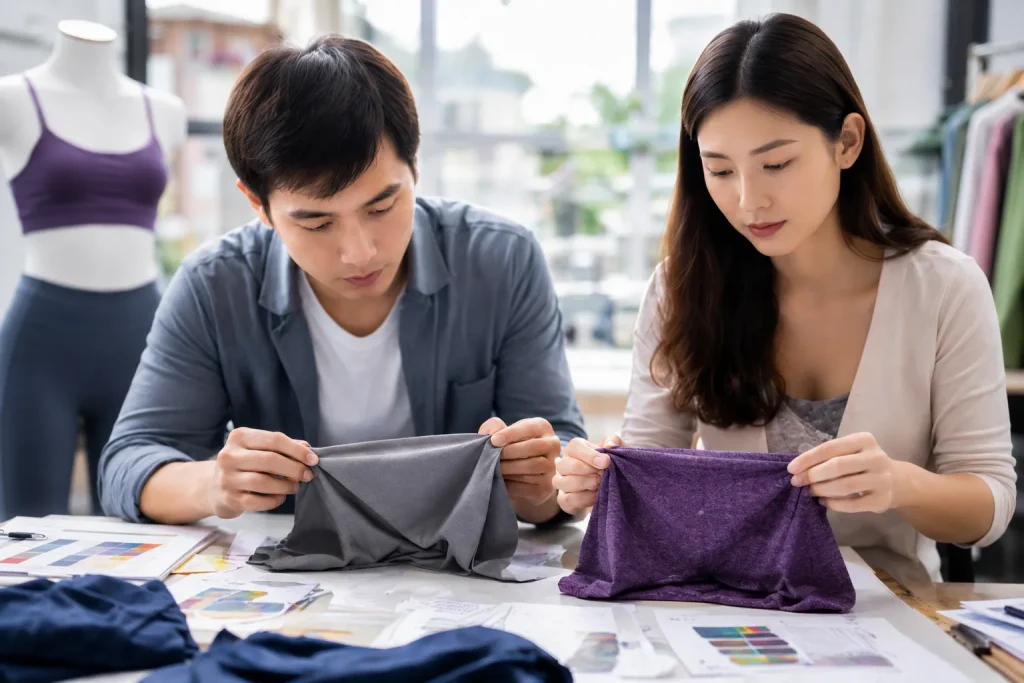
4. Sampling Stage
Never skip this stage.
Sampling helps verify:
- Fit balance
- Fabric behavior
- Compression feel
- Print placement
- Sewing quality
5. Fit Testing
Test garments during real movement:
- Squats
- Running
- Stretching
- Cycling
Static fitting alone is not enough for performance apparel.
6. Bulk Production
Monitor:
- Fabric lot consistency
- Needle damage
- Heat press quality
- Elastic recovery
7. Quality Inspection
A proper QC inspection should include:
- Measurement tolerance
- Seam strength
- Color fastness
- Print adhesion
- Fabric defects
8. Shipping & Risk Control
Always confirm:
- Carton dimensions
- Packaging method
- Delivery schedule
- Buffer production time
Lead time misunderstanding is one of the biggest sourcing problems for new brands.
Common Mistakes When Sourcing Moisture-Wicking Activewear
| Mistake | Consequence | Cost Impact |
|---|---|---|
| Choosing supplier only by price | Poor fabric performance | High return rate |
| Skipping sample approval | Fit issues in bulk | Reproduction cost |
| Ignoring shrinkage testing | Size inconsistency | Customer complaints |
| Unrealistic lead time expectations | Delayed launches | Lost sales |
| No QC standard confirmation | Inconsistent quality | Refund disputes |
| MOQ misunderstanding | Production delays | Budget problems |
Recycled Nylon vs Polyester for Moisture-Wicking Apparel
| Factor | Recycled Nylon | Polyester |
|---|---|---|
| Handfeel | Softer | Slightly firmer |
| Drying speed | Fast | Very fast |
| Compression performance | Better | Moderate |
| Cost | Higher | Lower |
| Sustainability image | Strong | Moderate |
| Sublimation compatibility | Moderate | Excellent |
| Common application | Yoga & premium wear | Running & teamwear |
For many startup brands, polyester is still the safer entry point because MOQ and cost are easier to control.
Production Checklist Before Bulk Order
Before bulk production, confirm:
- Fabric composition approved
- Compression level tested
- Size chart validated
- PPS sample approved
- Color fastness confirmed
- Packaging requirements clear
- QC standards aligned
- Lead time confirmed
- Shipping method approved
- Logo application tested
Related Articles
- Seamless Yoga Leggings vs Regular Leggings: What’s the Difference?
- Best Activewear Manufacturer for Startups
- Low MOQ Sportswear Factory Options in China
CTA
Ready to develop your custom activewear collection?
Yunenx supports low MOQ activewear manufacturing, moisture-wicking fabric sourcing, OEM/ODM development, recycled textile options, and bulk production management for growing fitness brands and private label sportswear companies.
Please contact us to request fabric samples, tech pack support, or production pricing confirmation.
Connect on LinkedIn | Email | www.yunenx.com | WhatsApp
FAQ
What is the MOQ for moisture-wicking activewear manufacturing?
MOQ depends on fabric type, color quantity, and garment complexity. Many activewear manufacturers support low MOQ production starting from 100–300 pieces per style for startups, while customized fabrics or seamless construction usually require higher volumes.
How long does activewear production usually take?
Most OEM activewear production takes around 30–60 days after sample approval and material confirmation. Complex compression garments, custom dyeing, or peak-season fabric sourcing may increase lead time. Please contact us to confirm current schedules.
Can moisture-wicking activewear be fully customized?
Yes. Most OEM and private label activewear suppliers support custom fabric selection, logo placement, sublimation printing, packaging, labels, colorways, and fit adjustments based on tech packs and sampling approval.
What fabrics are commonly used in moisture-wicking apparel?
Common fabrics include polyester-spandex blends, recycled nylon-elastane fabrics, warp knit compression textiles, mesh fabrics, and brushed performance knits. Fabric choice depends on sweat performance, compression level, and intended training use.
Are sustainable fabric options available?
Yes. Many activewear manufacturers now provide recycled polyester, GRS-certified materials, ECONYL regenerated nylon, and OEKO-TEX-certified fabrics to support sustainable apparel development and lower environmental impact goals.
If you’re serious about launching or scaling your sportswear or swimwear line, this is where the real work begins.
And yes—don’t skip sampling. You’ll thank yourself later.
Connect on LinkedIn | Email | www.yunenx.com | WhatsApp
Author: Yunenx Team
Last Updated: May 2026