Last Updated: May 20, 2026 | By Yunenx Production Team
📧 Email: [email protected]
🔗 Connect on LinkedIn
🌐 Visit our website: www.yunenx.com
💬 Chat on WhatsApp
Quick Answer
Custom high-performance yoga wear manufacturers usually focus on fabric systems that balance 4-way stretch, compression control, moisture management, and durability under repeated stretching cycles. For yoga wear brands, the right manufacturing partner will support OEM development, recycled nylon sourcing (like ECONYL or REPREVE), OEKO-TEX certified fabrics, and construction techniques such as flatlock stitching to prevent skin friction during movement-intensive sessions.
Introduction
What is a Custom high-performance yoga wear manufacturer for yoga wear brands and why does fabric selection matter so much today?
In the yoga wear industry, fabric is no longer just a material choice—it directly defines product performance, brand positioning, and customer retention. As yoga evolves from basic fitness into performance-driven disciplines such as power yoga, hot yoga, and hybrid gym wear training, brands are under pressure to deliver apparel that performs under real stress conditions. This is where a specialized manufacturer becomes critical.
A Custom high-performance yoga wear manufacturer for yoga wear brands is responsible for selecting and engineering fabrics that meet strict performance standards like stretch recovery, sweat management, compression balance, and sustainability certifications. At the same time, brands must consider rising demand for recycled materials, circular production systems, and certification-backed sourcing.
The key challenge for most startup and mid-size brands is simple: fabric samples often look identical, but behave very differently in real movement, especially after washing and stretching cycles.
Key Takeaways
- 78% recycled nylon blends with elastane are now widely used in premium yoga wear due to durability and stretch recovery
- Flatlock stitching reduces skin irritation in high-flex zones such as waistbands and inner thighs
- ECONYL and REPREVE are leading recycled fiber systems used in sustainable yoga collections
- Fabric GSM (180–320 gsm) directly impacts compression level and opacity during movement
- OEKO-TEX and GRS certifications are becoming baseline requirements for global yoga brands
- Poor fabric testing often leads to deformation after 3–5 wash cycles
- Sampling and fit testing are more important than fabric appearance during sourcing decisions
What It Is: Yoga Wear Fabric Engineering in Modern Manufacturing
Industry Background
Yoga wear has shifted from casual loungewear to performance-driven activewear. Global demand for functional textiles continues to grow as consumers expect yoga apparel to support both studio practice and gym training environments.
Market Trends
The current yoga wear fabric evolution is driven by:
- Sustainability adoption in activewear supply chains
- Recycled fabric integration in mass production
- Seamless construction techniques for performance comfort
- Compression engineering for muscle support
- Eco packaging aligned with brand ESG goals
Many sustainable yoga brands now prefer ECONYL regenerated nylon because it supports circular production goals and aligns with Textile Exchange sustainability frameworks.
Industry Data
According to Textile Exchange (2024–2025 Materials Market Report), recycled fibers in apparel continue to increase globally as brands shift toward lower-impact production systems. Sportswear and activewear remain the fastest-growing segment for recycled polyester and nylon adoption.
Additionally, SGS testing data (SGS Textile Testing Services) shows that stretch recovery and color fastness are two of the most frequent failure points in poorly engineered yoga wear fabrics.
External reference:
SGS Textile Testing Standards
Key Factors in Yoga Wear Fabric Selection
A professional yoga wear sourcing decision must go beyond “softness” or “feel.” Below are measurable parameters used in OEM production:
- Chlorine resistance (for hybrid swim-yoga collections)
- UPF 50+ protection for outdoor yoga lines
- 4-way stretch ratio (minimum 40% horizontal/vertical recovery expected)
- Compression level (light / medium / high support zones)
- Fabric GSM weight (typically 180–320 gsm depending on product type)
- Fabric composition (nylon/spandex ratios like 78/22 or 75/25)
- Color fastness (wash and sweat resistance ≥ Grade 4 standard)
- Seam construction (flatlock stitching recommended for stretch zones)
A fabric may pass lab testing but still curl badly during stitching if elastane stability is weak. This is something buyers usually only discover during bulk production—not sampling.
Experienced sportswear manufacturers can maintain consistent quality across large production runs.
Explore more about our production capabilities:
https://yunenx.com/sportswear/
https://yunenx.com/activewear/
https://yunenx.com/swimwear/
Step-by-Step Procurement Guide
- Material selection (recycled nylon / polyester / blends)
- Tech pack confirmation (OEM specification sheet review)
- Lab dip approval (color standard validation)
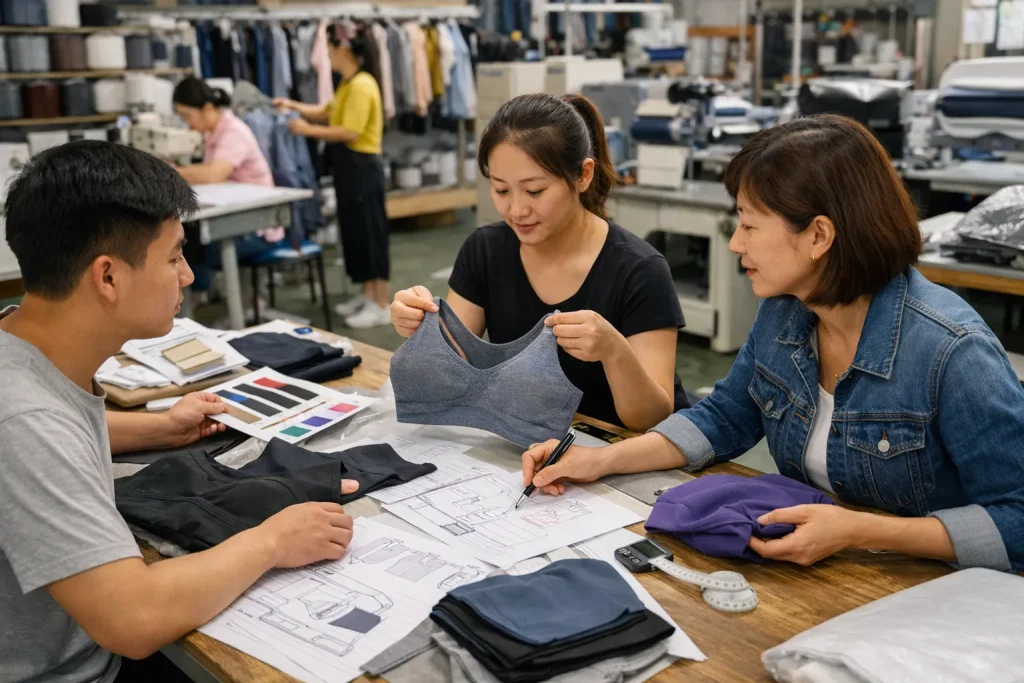
- Sampling stage (fit and movement testing)
- Fit testing (dynamic yoga movement simulation)
- Bulk production planning
- Quality inspection (SGS or internal QC systems)
- Shipping & risk control
Don’t rush bulk production before fit approval. Really.
Factory Reality Layer (Based on Production Experience)
- Cheap samples often become expensive bulk orders later because fabric performance changes under repeated stretching.
- Some startups underestimate fitting revisions. One sample round often turns into three.
- A fabric may feel perfect in hand but fail during downward dog stretch due to poor recovery structure.
We’ve seen buyers skip fit testing to save time. Usually that delay becomes more expensive during bulk production.
Common Mistakes in Yoga Wear Fabric Sourcing
- Skipping sampling stage to accelerate launch
- Ignoring fabric testing reports (especially stretch recovery)
- No size spec confirmation before bulk cutting
- Unrealistic lead time expectations (especially for recycled yarn sourcing)
- Choosing suppliers only by price instead of technical capability
Impact:
These mistakes often result in high return rates, rework costs, and inconsistent sizing across production batches.
B2B Comparison Table: Fabric & Supplier Decision Logic
| Category | Recycled Nylon (ECONYL) | Polyester (REPREVE) | Standard Nylon |
|---|---|---|---|
| Sustainability | High circular value | Medium | Low |
| Stretch Recovery | Excellent | Good | Excellent |
| Compression Control | Strong | Medium | Strong |
| Cost Level | High | Medium | Low |
| Best Use Case | Premium yoga leggings | Entry-level activewear | Basic yoga sets |
| Risk Factor | Longer lead time | Color variance | Limited eco certification |
Key insight: Many brands mix recycled and standard fibers to balance performance and cost, especially in early-stage collections.
Checklist Before Bulk Production
- Fabric composition approved
- Size chart validated for movement range
- PPS sample approved
- QC standard confirmed (SGS or internal)
- Packaging requirements clear
- Lead time aligned with yarn availability
- Color consistency confirmed via lab dip
Ready to develop your custom yoga wear collection?
Yunenx supports low MOQ yoga wear manufacturing, recycled fabric sourcing, OEM/ODM development, and full production management for growing activewear brands and yoga wear startups.
Contact us to request fabric samples, technical support, or production pricing guidance.
Connect on LinkedIn | Email | www.yunenx.com | WhatsApp
FAQ
What is the MOQ for yoga wear production?
MOQ typically starts from 100–300 pieces per style depending on fabric type, color requirements, and customization level. Recycled fabrics may require slightly higher MOQ due to yarn allocation.
What is the lead time for production?
Standard lead time is 30–45 days after sample approval. Recycled yarn sourcing or complex designs may extend timeline slightly.
Do you support custom yoga wear design?
Yes. Full OEM/ODM support is available including fabric sourcing, tech pack development, sampling, and bulk production.
What fabrics are commonly used in yoga wear?
Common fabrics include nylon-spandex blends, recycled ECONYL nylon, REPREVE polyester, and brushed interlock fabrics with 4-way stretch performance.
Do you support eco-friendly fabrics?
Yes. We support GRS-certified recycled fabrics, OEKO-TEX certified materials, and circular production systems using ECONYL and REPREVE fibers.
External Authority Reference
- Textile Exchange
https://textileexchange.org
Related Articles
- Seamless Yoga Leggings vs Regular Leggings: What’s the Difference?
- Best Activewear Manufacturer for Startups
- Low MOQ Sportswear Factory Options in China
Explore more insights here:
https://yunenx.com/blog/
About the Author
Yunenx Sportswear Team is a professional manufacturer specializing in custom sportswear, teamwear and swimwear for global brands and sports clubs. The team supports brands from product development to bulk manufacturing.
If you are looking for a reliable custom sportswear manufacturer,
our factory specializes in sportswear, swimwear and activewear production for growing brands.
Feel free to contact us for sampling or quotation. Connect on LinkedIn | Email | www.yunenx.com