
Last Updated: May 11, 2026 | By Yunenx Production Team
📧 Email: [email protected]
🔗 Connect on LinkedIn
🌐 Visit our website: www.yunenx.com
💬 Chat on WhatsApp
What is stitching methods in sportswear?
What is the difference between flatlock stitching, overlock seams, coverstitch, and bonded seams in sportswear manufacturing?
For many startup activewear brands and sourcing managers, stitching is often overlooked during product development. Most buyers focus heavily on fabric, printing, or logo placement first. But in reality, seam construction directly affects comfort, durability, stretch recovery, and even return rates.
A sports bra with poor seam elasticity may crack after several workouts. A swimsuit with incorrect stitching tension can lose shape after chlorine exposure. We’ve observed this many times during sample revisions for new brands.
As performance apparel continues evolving toward lightweight construction, seamless comfort, and sustainability, choosing the right stitching method has become a technical decision — not just a factory detail.
According to Textile Exchange, performance and sustainable textiles remain one of the fastest-growing segments in the apparel supply chain in 2025. Meanwhile, more brands are requesting compression garments, recycled fabrics, and seamless construction technologies to improve product differentiation.
This guide explains the most common stitching methods used in sportswear manufacturing, how to select the right seam type, and what B2B buyers should check before moving into bulk production.
Key Takeaways
- Stitching affects stretch performance, durability, comfort, and garment lifespan
- Flatlock seams are commonly used for yoga wear and compression garments
- Coverstitch is ideal for hems and stretch recovery areas
- Overlock stitching remains the most cost-efficient method for mass production
- Bonded seams create premium seamless aesthetics but require higher MOQ and technical capability
- Seam construction must match fabric GSM, stretch ratio, and end-use scenario
- Skipping seam testing during sampling often leads to costly bulk production issues
What Are the Main Stitching Methods in Sportswear Manufacturing?
In sportswear production, stitching methods are selected based on garment function, fabric behavior, and performance requirements.
Different seam structures serve different purposes. There’s no “best stitching” universally. It depends on whether the garment is made for yoga, running, swimwear, training, or compression performance.
1. Overlock Stitching
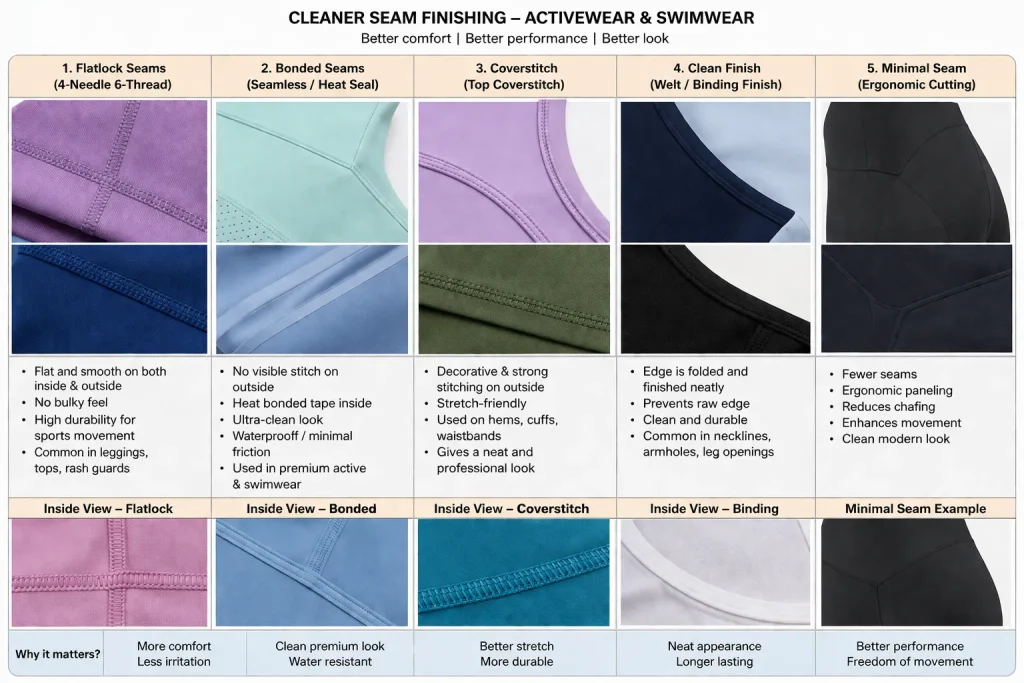
Overlock stitching is the most commonly used seam method in activewear manufacturing.
It is efficient, durable, and suitable for medium-to-high stretch fabrics.
Typical applications:
- Leggings side seams
- T-shirts
- Basic gym wear
- Entry-level activewear collections
Technical features:
- Good seam elasticity
- Fast production speed
- Cost-efficient
- Suitable for 180–300 GSM fabrics
Potential risk:
- Seams may create friction during high-intensity workouts if poorly positioned
We’ve seen some startup brands choose extremely cheap factories that use incorrect thread tension on overlock seams. The garments looked acceptable initially, but seam popping appeared after fit testing. This happens more often than people think.
2. Flatlock Stitching
Flatlock seams are widely used in premium sportswear because they reduce skin irritation.
Instead of overlapping fabric layers, flatlock stitching joins panels edge-to-edge, creating a flatter seam profile.
Best for:
- Compression wear
- Yoga apparel
- Cycling wear
- Running tops
Technical advantages:
- Low friction
- Better comfort during movement
- Cleaner interior appearance
- Suitable for 4-way stretch fabrics
Typical fabric range:
- Nylon-spandex blends
- Polyester-elastane
- Recycled performance fabrics
Many European activewear brands specifically request flatlock construction for premium leggings because consumers now expect “second-skin comfort.”
The downside? Production efficiency is slower, and operator skill matters a lot.
3. Coverstitch
Coverstitch is mainly used for hems and finishing areas where stretch recovery is critical.
You’ll commonly see it on:
- Sleeve hems
- Leg openings
- Waistbands
- Tank tops
Technical features:
- High elasticity
- Clean exterior appearance
- Professional retail finish
Typical specifications:
- 2-needle or 3-needle construction
- Works well with lightweight fabrics under 250 GSM
A common mistake is confusing coverstitch with flatlock stitching. They serve different purposes. Flatlock focuses more on seam comfort; coverstitch focuses on stretchable finishing.
4. Bonded Seams
Bonded seams use heat adhesive technology instead of traditional stitching.
This construction is becoming increasingly popular in:
- Premium running apparel
- High-performance swimwear
- Technical outerwear
Advantages:
- Minimal bulk
- Modern seamless appearance
- Reduced friction
- Lightweight construction
Challenges:
- Higher production cost
- Strict temperature control
- Fabric compatibility limitations
Not every fabric supports bonding well. Some recycled fabrics react differently under heat lamination. Please contact us to confirm compatibility before development.
Key Factors When Choosing Stitching Methods for Sportswear
Fabric Stretch Performance
Seam construction must match fabric elasticity.
For example:
- 4-way stretch fabrics usually pair better with flatlock or coverstitch
- Compression garments require higher seam recovery strength
- Swimwear needs chlorine-resistant thread compatibility
GSM Weight
Fabric weight affects seam durability.
| Fabric Weight | Recommended Stitching |
|---|---|
| 160–220 GSM | Coverstitch |
| 220–300 GSM | Overlock / Flatlock |
| 300+ GSM | Reinforced Flatlock |
Using lightweight seams on heavy compression fabrics can cause seam deformation after repeated wear.
End-use Scenario
Sportswear used for yoga has different seam requirements compared with competitive swimwear.
Example:
- Yoga apparel prioritizes comfort
- Running wear prioritizes anti-chafing
- Swimwear prioritizes chlorine resistance and shape retention
- Gym compression wear prioritizes durability
One client developing a CrossFit collection originally wanted bonded seams everywhere because they looked premium online. After wear testing, they switched back to reinforced flatlock seams for high-stress areas like underarms and inseams. Bonded seams looked clean, but durability under intense training became an issue.
Step-by-step Guide: How to Control Stitching Quality in Bulk Production
1. Material Selection
Confirm:
- Fabric composition
- Stretch ratio
- GSM weight
- Recovery performance
Recommended parameters:
- 4-way stretch
- UPF 50+
- Chlorine resistance for swimwear
2. Tech Pack Confirmation
Clearly define:
- Seam type
- Stitch density
- Thread color
- Needle specifications
Never rely only on reference photos.
3. Lab Dip Approval
During the lab dip approval stage, confirm thread color consistency against fabric dye lots.
Small mismatch? It becomes very obvious on dark activewear.
4. Sampling Stage
This is where most problems appear.
Check:
- Seam elasticity
- Thread tension
- Needle damage
- Chafing risk
Skipping samples to “save time” usually creates larger problems later. Honestly, the sampling cost is always cheaper than bulk rework.
5. Fit Testing
Test garments during actual movement:
- Squats
- Stretching
- Running
- Swimming
Static fitting alone is not enough.
6. Bulk Production
Before mass production:
- Approve PPS sample
- Lock seam specifications
- Confirm operator setup
7. Quality Inspection
Inspect:
- Seam strength
- Stitch consistency
- Thread trimming
- Needle marks
- Measurement tolerance
Recommended tolerance:
- ±1 cm for activewear
8. Shipping & Risk Control
Avoid:
- Excessive compression packing
- Moisture exposure during sea shipment
- Delayed QC approvals
Lead time misunderstanding is still one of the biggest sourcing problems in sportswear production.
Common Mistakes Buyers Make
Skipping Fabric Testing
Not all stretch fabrics behave the same after sewing.
Some fabrics curl heavily during stitching and require machine adjustment.
No Size Spec Confirmation
We’ve observed many startup brands revise size charts after bulk production begins. That becomes expensive very quickly.
Choosing Seam Type Only Based on Appearance
A seam that looks premium online may fail during performance testing.
This happens frequently with bonded activewear.
Ignoring Thread Quality
Cheap thread can break before fabric does.
For chlorine-resistant swimwear, thread selection matters almost as much as fabric.
B2B Comparison Table: Which Stitching Method Fits Your Brand?
| Stitching Method | Cost Level | Comfort | Durability | Best Use | MOQ Impact |
|---|---|---|---|---|---|
| Overlock | Low | Medium | High | Basic activewear | Low MOQ friendly |
| Flatlock | Medium | High | High | Yoga & compression | Medium MOQ |
| Coverstitch | Medium | High | Medium | Hem finishing | Low MOQ friendly |
| Bonded Seam | High | Very High | Medium | Premium technical wear | Higher MOQ required |
Production Checklist for Sportswear Buyers
Before placing bulk order, check:
- Fabric composition confirmed
- Stretch performance tested
- Stitching method approved
- Sample approved after fit test
- Thread quality validated
- Size chart confirmed
- Lead time clearly agreed
- QC standards documented
- Packaging requirements approved
Ready to Start Your Custom Sportswear Collection?
Yunenx supports sportswear and swimwear brands with:
- Low MOQ development
- Custom seam construction
- Recycled fabric sourcing
- OEM/ODM production support
- Sampling and bulk production management
If you’re developing leggings, gym wear, or technical swimwear, our team can help you select the right stitching method based on performance goals and target price point.
Contact us to request a quote or sample.
FAQ + Quick Answer Box
Quick Answer Box
| Question | Quick Answer |
|---|---|
| What is the best stitching for sportswear? | Flatlock is popular for comfort; overlock is best for cost efficiency |
| What MOQ is typical? | Usually 100–300 pcs per style depending on construction |
| How long is production lead time? | Around 25–45 days after sample approval |
| What fabrics are commonly used? | Nylon-spandex, polyester-elastane, recycled performance fabrics |
| Do you support customization? | Yes, including seam type, logo, labels, and packaging |
FAQ
What stitching method is best for leggings?
Flatlock stitching is commonly preferred for leggings because it reduces friction and improves comfort during movement.
Is bonded seam sportswear more durable?
Not always. Bonded seams provide cleaner aesthetics and lightweight construction, but durability depends heavily on fabric compatibility and production quality.
Can low MOQ brands use flatlock stitching?
Yes. However, some factories may require slightly higher MOQ because flatlock production is slower and more technical.
What thread is used in swimwear stitching?
Most swimwear uses polyester stretch thread with chlorine-resistant properties. Please contact us to confirm exact specifications based on your fabric choice.
Related Articles
- Seamless Yoga Leggings vs Regular Leggings: What’s the Difference?
- Best Activewear Manufacturer for Startups
- Low MOQ Sportswear Factory Options in China
If you’re serious about launching or scaling your sportswear line, this is where the real work begins.
And yes—don’t skip sampling. You’ll thank yourself later. Connect on LinkedIn | Email | www.yunenx.com | WhatsApp