Last Updated: March 08, 2026 Author: Yunenx Sales Team
Sportswear & Swimwear Manufacturing Specialist | Connect on LinkedIn | Email | www.yunenx.com
Introduction
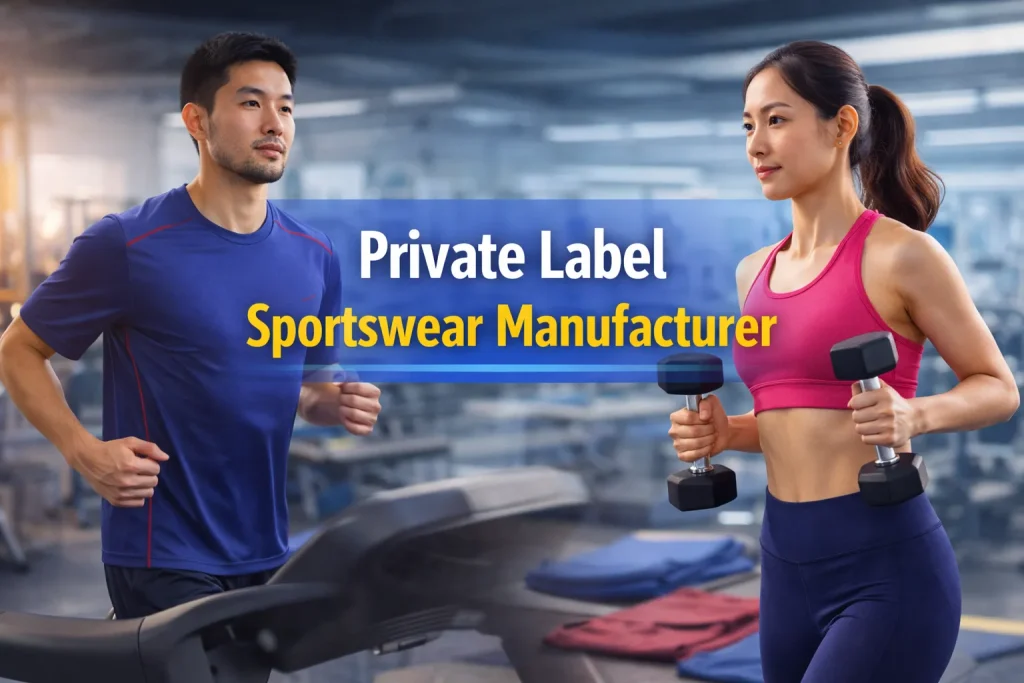
The global sportswear industry has grown rapidly over the past decade as fitness, wellness, and athleisure trends continue to expand. Many new brands, gyms, influencers, and sports clubs are launching their own product lines through private label sportswear manufacturing.
According to the Statista sportswear market report, the global sportswear market is expected to exceed $450 billion in the coming years, driven by growing demand for fitness apparel, gym wear, and athleisure clothing.
For entrepreneurs and established brands alike, partnering with a reliable private label sportswear manufacturer allows them to create branded products without investing in their own production facilities.
This guide explains what private label sportswear manufacturing is, how the process works, and how to choose the right supplier for your brand.
Quick Answer: What Is a Private Label Sportswear Manufacturer?
A private label sportswear manufacturer is a factory that produces athletic clothing for brands and allows them to sell the products under their own brand name and logo.
These manufacturers typically produce items such as:
- custom sportswear
- gym wear and activewear
- teamwear uniforms
- yoga apparel
- training and fitness clothing
Instead of manufacturing products themselves, brands collaborate with a private label activewear manufacturer that handles production, fabric sourcing, and product development.
What Is Private Label Sportswear Manufacturing?
Private label sportswear manufacturing refers to the process where a factory produces sportswear that is branded and sold by another company.
This model is widely used by:
- startup activewear brands
- fitness influencers
- gym chains
- sports teams and clubs
- online apparel retailers
Working with a custom sportswear factory allows brands to focus on marketing, brand building, and customer experience while the manufacturer manages production.
Typical private label sportswear products include:
- leggings and yoga pants
- sports bras
- gym T-shirts and tank tops
- teamwear uniforms
- running and training apparel
If you are building a brand, you may also find these guides useful:
- How to Choose a Sportswear Manufacturer
- Best Fabrics for Activewear Production
- Sportswear Production Process Guide
Key Factors When Choosing a Private Label Sportswear Manufacturer
Selecting the right manufacturing partner is critical for product quality and brand reputation.
1. Fabric Quality and Performance
High-quality fabric is essential for sportswear performance.
Common sportswear fabrics include:
| Fabric | Features | Applications |
|---|---|---|
| Polyester | Moisture-wicking and durable | Training wear |
| Nylon | Soft and flexible | Premium activewear |
| Spandex / Elastane | High stretch | Yoga and compression wear |
| Recycled polyester | Sustainable option | Eco-friendly sportswear |
Organizations such as Textile Exchange report growing demand for sustainable materials in activewear manufacturing.
2. Manufacturing Experience
A professional private label sportswear manufacturer should have experience producing various activewear products.
Experienced factories understand:
- stretch fabric construction
- ergonomic pattern making
- sportswear stitching techniques
- performance garment testing
Factories specializing in teamwear, gym wear, and activewear manufacturing usually produce higher-quality garments.
3. MOQ (Minimum Order Quantity)
MOQ varies depending on product complexity and customization level.
Typical MOQ for private label sportswear:
| Product | Typical MOQ |
|---|---|
| Sports T-shirts | 100 pcs |
| Gym leggings | 150–300 pcs |
| Sports bras | 150–300 pcs |
| Teamwear uniforms | 100–200 sets |
Lower MOQ options are sometimes available for startup brands.
4. Production Lead Time
Understanding production timelines helps brands plan product launches.
Typical timeline:
| Production Stage | Time |
|---|---|
| Sample development | 7–15 days |
| Bulk production | 25–40 days |
| Shipping | 5–30 days depending on method |
Step-by-Step Guide: Private Label Sportswear Production
Understanding the production process helps brands collaborate more efficiently with manufacturers.
Step 1: Design and Product Development
The process begins with design creation.
Brands provide:
- design sketches
- logo files
- color references
- size charts
These details are compiled into a tech pack, which acts as the blueprint for manufacturing.
Step 2: Fabric Sourcing
The manufacturer selects suitable fabrics based on the product requirements.
Important factors include:
- breathability
- stretch performance
- moisture management
- durability
Many factories test fabrics according to standards from the International Organization for Standardization (ISO).
Step 3: Pattern Making
Pattern makers develop the garment structure.
This step determines:
- garment fit
- size grading
- comfort during movement
Well-designed patterns are crucial for high-performance sportswear.
Step 4: Sampling
Before bulk production, a sample garment is created.
Brands evaluate the sample for:
- fit and comfort
- fabric quality
- logo placement
- stitching details
Sampling usually takes 7–15 days.
Step 5: Fabric Cutting
After sample approval, fabric is cut using industrial cutting machines to ensure precision.
Step 6: Sewing and Assembly
Garment pieces are assembled using specialized sewing techniques.
Sportswear commonly uses:
- flatlock stitching
- reinforced seams
- elastic waistband construction
These methods improve durability and comfort.
Step 7: Logo Printing and Branding
Private label sportswear typically includes custom branding such as:
- screen printing
- heat transfer logos
- silicone printing
- embroidery
These techniques allow brands to build strong product identity.
Step 8: Quality Inspection
Quality control ensures product consistency.
Inspection includes:
- size measurement checks
- stitching strength testing
- logo alignment
- fabric defect inspection
Many manufacturers follow AQL quality inspection standards.
Step 9: Packaging and Shipping
After final inspection, products are packed according to brand requirements.
Common packaging options include:
- polybag packaging
- branded labels
- barcode stickers
- export cartons
Production for private label sportswear usually takes 25–40 days.
Explore our product collection here:
👉 Custom Sportswear Product Page
Common Mistakes When Choosing a Private Label Sportswear Manufacturer
Many brands encounter problems due to avoidable mistakes.
1. Choosing the Cheapest Manufacturer
Low prices may lead to poor product quality or production delays.
2. Not Requesting Samples
Sampling helps identify design or fit issues before mass production.
3. Ignoring Fabric Testing
Sportswear requires performance fabrics that withstand stretching and washing.
4. Poor Communication With Suppliers
Clear communication about design details and timelines helps prevent production mistakes.
Conclusion
Private label sportswear manufacturing allows brands to launch and scale their own product lines without building their own factories.
By understanding the sportswear production process, brands can:
- ensure consistent product quality
- reduce sourcing risks
- build long-term partnerships with reliable manufacturers
Working with an experienced private label sportswear manufacturer can help your brand grow faster in the competitive activewear market.
FAQ: Private Label Sportswear Manufacturing
1. What is private label sportswear?
Private label sportswear refers to athletic apparel produced by a manufacturer and sold under another brand’s name.
2. What is the MOQ for private label sportswear?
Most manufacturers require 100–300 pieces per design, depending on product type and customization.
3. How long does sportswear production take?
Typical production timeline:
- Sample development: 7–15 days
- Bulk production: 25–40 days
4. Can startups launch private label sportswear?
Yes. Many manufacturers offer low-MOQ production for startup activewear brands.
5. What products can be private labeled?
Common private label sportswear products include:
- leggings
- sports bras
- gym T-shirts
- teamwear uniforms
- yoga apparel
Industry Data
- Global sportswear market projected to exceed $450 billion in the next few years.
- Demand for private label activewear brands continues to grow worldwide.
- Sustainable fabrics such as recycled polyester are becoming more common in sportswear production.
Sources:
Related Articles
- Sportswear Production Process Guide
- Best Fabrics for Activewear Manufacturing
- Gym Leggings Manufacturer Guide
About the Author
Yunenx Sportswear Team is a professional manufacturer specializing in custom sportswear, teamwear and swimwear for global brands and sports clubs.
If you are looking for a reliable custom sportswear manufacturer,
our factory specializes in sportswear, swimwear and activewear production for growing brands.
Feel free to contact us for sampling or quotation. Connect on LinkedIn | Email | www.yunenx.com