Last Updated: June 9, 2026 | By Yunenx Sales Team
📧 Email: [email protected]
🔗 Connect on LinkedIn
🌐 Visit our website: www.yunenx.com
💬 Chat on WhatsApp
What is importing private label swimwear?
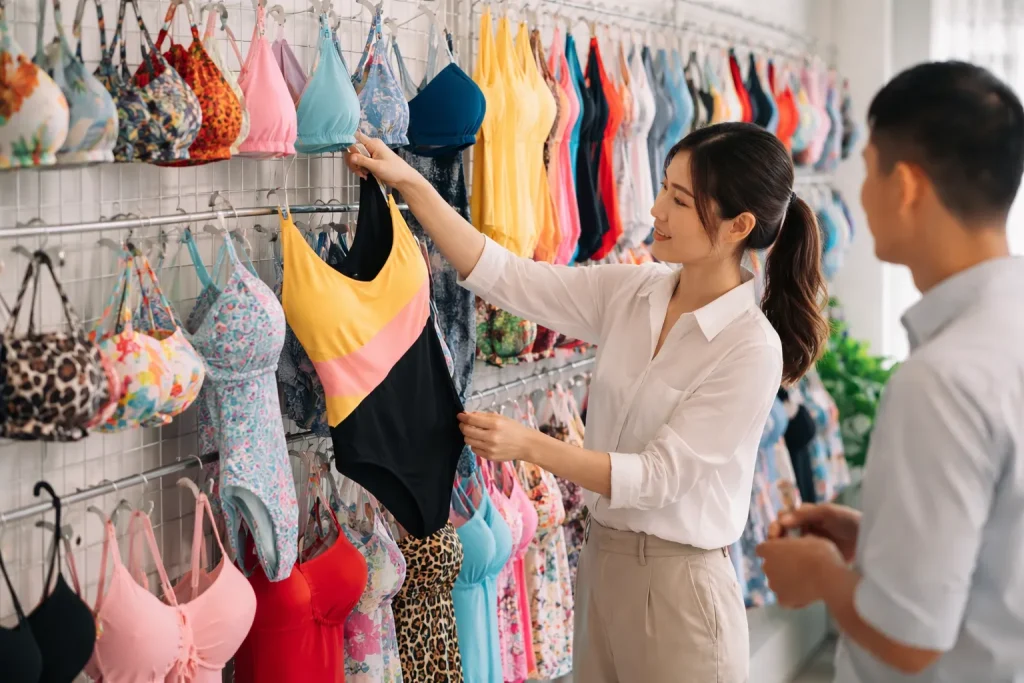
Importing private label swimwear means sourcing swimwear products from a manufacturer that produces garments under your own brand name, labels, packaging, and specifications. As more swimwear brands seek differentiation, sustainability, and supply chain flexibility, private label production has become a preferred strategy for retailers, wholesalers, distributors, and resortwear brands worldwide.
However, many buyers discover that launching a swimwear collection is more complex than selecting attractive designs. Fabric performance, MOQ requirements, fit development, testing standards, and production lead times can significantly affect cost, delivery, and product quality.
If you are evaluating an OEM swimwear manufacturer or planning your first private label swimwear production, this guide explains what buyers should focus on before placing bulk orders.
Importing private label swimwear successfully requires evaluating four critical factors: fabric performance, minimum order quantity (MOQ), sampling process, and production lead time. Buyers who validate fabric specifications, approve samples carefully, and align production schedules early are significantly less likely to face quality issues, shipment delays, or unexpected costs during bulk production.
Why More Brands Are Choosing Private Label Swimwear
The global swimwear market continues to expand as consumers increasingly demand performance, sustainability, and unique brand positioning.
According to Statista, the global swimwear market continues to show steady growth driven by e-commerce expansion, travel recovery, and increasing demand for performance swimwear products. At the same time, recycled materials are becoming a key sourcing requirement for many retailers and brands.
Textile Exchange reported that polyester accounted for approximately 57% of global fiber production in 2023, while recycled polyester represented only around 12.5% of total polyester production, highlighting the growing but still limited availability of recycled materials.
For private label swimwear buyers, this means sourcing decisions now involve more than aesthetics:
- Sustainability requirements
- Certification compliance
- Performance testing
- Brand differentiation
- Supply chain reliability
How to Evaluate a Private Label Swimwear Manufacturer
Choosing a production partner is often more important than choosing the design itself.
When evaluating a swimwear supplier, buyers should focus on:
1. Fabric Development Capability
Ask suppliers:
- Can they source recycled nylon or recycled polyester?
- Do they offer ECONYL® fabrics?
- Are OEKO-TEX® certified materials available?
- Can they provide UPF 50+ fabrics?
- Do they have chlorine-resistant options?
Many swimwear factories can sew garments.
Far fewer can support fabric development and performance testing.
2. Sample Development Process
A professional OEM swimwear manufacturer should provide:
- Tech pack review
- Fabric recommendations
- Fit sample development
- Pre-production sample approval
Factory observation:
Most production issues originate during sample approval, not during sewing.
Skipping revisions to save time often increases bulk-order costs later.
3. Production Transparency
Ask for information regarding:
- Production capacity
- Lead times
- Quality control procedures
- Fabric testing methods
- Packaging options
Experienced suppliers should be able to explain the entire workflow clearly.
The Most Important Decision in Private Label Swimwear
Fabric may look similar.
Performance doesn’t.
This is one of the most common mistakes buyers make.
Common Swimwear Fabric Options
| Fabric Type | Typical Composition | Main Benefit | Common Application |
|---|---|---|---|
| Recycled Nylon | 78% Nylon / 22% Spandex | Soft hand feel, premium fit | Fashion swimwear |
| Recycled Polyester | 82% Polyester / 18% Spandex | Better print retention | Team swimwear |
| Chlorine Resistant Polyester | 100% Polyester or blended | Long pool durability | Swim teams |
| Compression Fabric | High elastane content | Body shaping | Performance swimwear |
Key Performance Specifications Buyers Should Verify
Instead of asking for “high-quality fabric,” request measurable data:
- Fabric weight (180-250 GSM)
- Chlorine resistance
- UPF 50+
- 4-way stretch
- Color fastness
- Pilling resistance
- Recovery rate after stretching
- Shrinkage rate
A specification sheet tells buyers far more than marketing descriptions.
MOQ and Cost: Understanding the Real Trade-Off
Many buyers focus only on achieving the lowest MOQ.
That is not always the lowest-cost solution.
Low MOQ vs Standard MOQ
| Factor | Low MOQ | Standard MOQ |
| Initial Investment | Lower | Higher |
| Unit Cost | Higher | Lower |
| Fabric Options | Limited | More Flexible |
| Customization | Restricted | Extensive |
| Production Efficiency | Lower | Higher |
Factory observation:
Cheap samples often become expensive bulk orders later.
Very small orders frequently require compromises in fabric sourcing, labeling, or packaging that increase long-term costs.
For established brands, balancing MOQ against scalability is usually more effective than pursuing the lowest possible entry quantity.
Common Risks When Importing Private Label Swimwear
Risk 1: Size Inconsistency
Cause
- Incomplete measurement charts
- Insufficient fit testing
- Pattern adjustments skipped
Consequence
- High return rates
- Retail complaints
- Re-order delays
Prevention
Conduct at least one full fit approval round before bulk production.
Risk 2: Fabric Performance Failure
Cause
- Inadequate chlorine testing
- Unverified stretch recovery
- Unapproved fabric substitutions
Consequence
- Shape loss
- Transparency issues
- Customer dissatisfaction
Prevention
Request lab testing reports before production.
Risk 3: Lead Time Delays
Factory observation:
Most delays happen during approvals, not sewing.
Many buyers assume manufacturing causes delays.
In reality:
- Artwork approvals
- Label confirmations
- Sample revisions
- Packaging approvals
often create larger schedule disruptions.
Prevention
Finalize approvals before booking production slots.
Sustainability Requirements Are Becoming a Buyer Standard
Many retailers now require certifications and traceability.
OEKO-TEX reported issuing more than 57,000 certifications in its latest reporting year, reflecting increasing industry demand for independently verified textile compliance.
Common certifications requested by buyers include:
- OEKO-TEX STANDARD 100
- Global Recycled Standard (GRS)
- OEKO-TEX MADE IN GREEN
- SGS testing reports
For swimwear brands using recycled materials, common fiber options include:
- ECONYL® regenerated nylon
- GRS-certified recycled nylon
- REPREVE® recycled polyester
Buyers should understand that OEKO-TEX certification focuses on chemical safety, while GRS verifies recycled content and supply chain traceability. They serve different purposes and should not be considered interchangeable.
Three Lessons Learned from Swimwear Production
After years of private label swimwear production, several patterns appear consistently.
Lesson 1
Fabric swatches do not represent finished garment performance.
Always test the actual garment.
Lesson 2
Fit development usually takes longer than brands expect.
Especially for new swimwear collections.
Lesson 3
The most expensive mistake is often skipping a development step to save time.
The cost typically reappears during bulk production.
Need Help Evaluating a Swimwear Production Plan?
Whether you are launching a new resortwear brand, expanding a retail chain program, or sourcing for a swim team collection, the key objective is reducing risk before bulk production begins.
A reliable production partner should help buyers evaluate fabric suitability, MOQ options, certification requirements, and realistic lead times before manufacturing starts.
You can also explore our:
- Best Shipping Methods for Sportswear Imports Explained
- Importing Swimwear Step-by-Step Guide
- What Buyers Expect from Swimwear Suppliers
- Custom Swimwear Manufacturing
To better understand the development process before requesting quotations.
Conclusion
Importing private label swimwear is not simply about finding a supplier with the lowest price. The most successful buyers focus on fabric performance, sample development, certification requirements, MOQ planning, and production risk management.
By selecting an experienced swimwear manufacturer, validating specifications early, and investing time in approvals, brands can reduce costly mistakes, improve product consistency, and build a more reliable supply chain for long-term growth.
References
- Textile Exchange Market Reports
- OEKO-TEX Standard 100
- SGS Textile Testing Services
- Global Recycled Standard (GRS)
- McKinsey (2025) Activewear Growth Report
Explore more insights here:
https://yunenx.com/blog/
About the Author
Yunenx Sportswear Team is a professional manufacturer specializing in custom sportswear, swimwear, and teamwear for established brands, importers, wholesalers, and retail programs worldwide.
We support buyers through every stage of the sourcing process — from product development and fabric selection to sampling, production, and bulk manufacturing — ensuring consistent quality and reliable delivery for long-term supply partnerships.
If you are sourcing a dependable sportswear or swimwear manufacturer for your next collection or seasonal program, our team is ready to support your product development and production needs.
Feel free to contact us for quotations, technical discussion, or sample evaluation.