Last Updated: May 4, 2026 | By Yunenx Sales Team
📧 Email: [email protected]
🔗 Connect on LinkedIn
🌐 Visit our website: www.yunenx.com
💬 Chat on WhatsApp
Introduction
What is a custom football jersey?
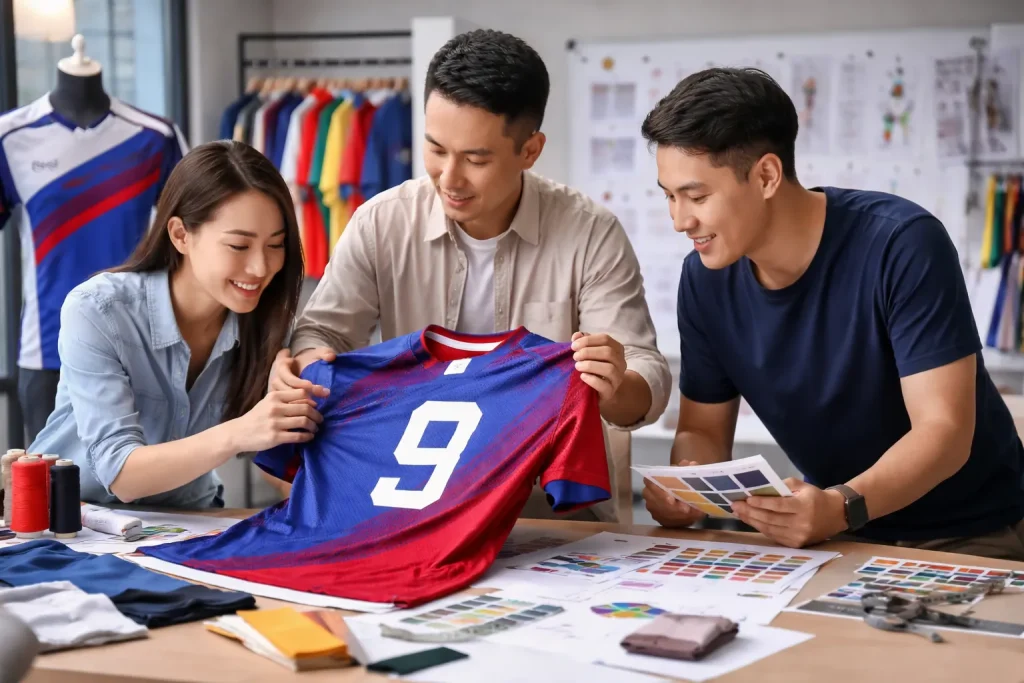
A custom football jersey is a fully personalized sports garment designed for teams, brands, or organizations, combining performance fabrics, team identity, and production scalability.
In today’s sportswear market, demand is shifting fast—clubs want unique designs, startups want low MOQ flexibility, and brands want performance + sustainability together. The challenge? Balancing design freedom, technical performance, and reliable manufacturing without costly mistakes.
Key Takeaways
- Custom football jersey sourcing is not just about design—it’s about performance specs and production control
- Fabric selection (e.g., moisture-wicking polyester, GSM, stretch) directly impacts wearability
- Sampling and fit testing are non-negotiable stages
- MOQ, lead time, and supplier type significantly affect cost and flexibility
- Skipping technical steps leads to expensive bulk mistakes
What It Is: Custom Football Jersey in Today’s Market
Custom football jerseys sit at the intersection of performance sportswear and brand identity.
Industry Context
- According to Statista (2024), the global sports apparel market continues steady growth driven by teamwear and athleisure crossover demand
- Increasing adoption of recycled polyester and sustainable dyeing processes (Textile Exchange, 2023)
- Clubs and brands now prioritize:
- Breathability
- Durability under repeated washing
- Colorfastness for sublimation prints
Product Positioning
Custom jerseys are typically:
- 100% polyester or polyester-spandex blends
- Designed for high sweat environments
- Produced via sublimation printing or cut-and-sew panels
From our experience, brands today don’t just ask for “a jersey”—they ask:
“Can this hold color after 30 washes?”
“Will players feel lighter during matches?”
That’s where technical understanding matters.
Key Factors When Sourcing Custom Football Jerseys
1. Fabric Performance Parameters
Avoid vague terms. Focus on measurable specs:
- Moisture-wicking rate: Fast drying within 20–30 minutes
- GSM weight: 120–180 GSM (lighter for match jerseys, heavier for training)
- Breathability: Mesh panels or micro-perforation
- 4-way stretch: Optional, improves mobility
- Colorfastness: Grade 4–5 (important for sublimation)
- Durability: Minimum 30–50 wash cycles without deformation
2. Printing Technology
- Sublimation printing (most common)
- No cracking or peeling
- Best for complex designs
- Screen printing
- Suitable for simple logos
- Heat transfer
- Lower cost, but less durable
3. Fit & Pattern
- Athletic fit vs relaxed fit
- Shoulder mobility design
- Sleeve length variations
We’ve observed that fit complaints are one of the top reasons for reorder failure.
Step-by-Step Guide: From Idea to Bulk Production
Step 1: Material Selection
Choose fabric based on:
- Match vs training use
- Climate (hot/humid vs mild)
Step 2: Tech Pack Confirmation
Include:
- Artwork files (AI/PDF)
- Size chart
- Logo placement
Step 3: Lab Dip Approval
<a href=”/lab-dip-guide”>Lab dip approval</a> ensures color accuracy before production.
Risk: skipping this leads to color mismatch in bulk.
Step 4: Sampling Stage
- Proto sample
- Pre-production sample
Real issue:
A client once skipped sampling to save time. Bulk arrived—logo position off by 3cm. Entire batch unusable.
Step 5: Fit Testing
Test on real body types, not mannequins.
Step 6: Bulk Production
OEM/ODM production begins after approval.
Step 7: Quality Inspection
Check:
- Stitching
- Print alignment
- Measurement tolerance (±1–2 cm)
Step 8: Shipping & Risk Control
- Confirm packing method
- Buffer time for delays
Common Mistakes in Custom Football Jersey Production
1. Skipping Sampling
Trying to save $100 can cost thousands later.
2. Misunderstanding Lead Time
Production ≠ total time
Include:
- Sampling
- Fabric sourcing
- Shipping
3. Ignoring Fabric Testing
No testing = unpredictable performance
4. No Size Spec Confirmation
Different markets = different sizing standards
B2B Comparison Table: Supplier Types
| Factor | Factory Direct | Trading Company |
|---|---|---|
| Price | Lower | Slightly higher |
| Communication | Slower | Faster |
| Flexibility | Limited | Higher |
| MOQ | Usually higher | Often lower |
| Development Support | Basic | Strong |
Our view:
If you are a startup, flexibility matters more than saving a few cents.
External Reference
- Textile Exchange (2024), Materials Market Report: https://textileexchange.org (accessed summary insights on sustainable textile demand trends)
Checklist Before Placing Bulk Order
- Fabric composition confirmed
- Sample approved
- Size chart validated
- Printing method confirmed
- Production lead time clear
- QC standard agreed
- Packing details finalized
Visual Guide: Production Flow
Alt text: custom football jersey production process
Design → Fabric Selection → Lab Dip → Sampling → Fit Testing → Bulk Production → QC → ShippingFAQ + Quick Answer Box
Quick Answer Box
- MOQ: Usually 100–300 pcs/style
- Lead time: 25–40 days
- Fabric: Polyester or polyester blends
- Customization: Full OEM/ODM supported
FAQ
Q1: What is the MOQ for custom football jerseys?
Typically 100–300 pieces depending on complexity.
Q2: How long does production take?
Around 25–40 days including production. Sampling adds extra time.
Q3: What fabrics are used?
Mainly moisture-wicking polyester, sometimes with spandex for stretch.
Q4: Can I fully customize design and logo?
Yes. Full customization including color, print, and fit is standard.
Ready to start your custom football jersey project?
Yunenx supports low MOQ production, performance fabric sourcing, and full development from sampling to bulk.
Let’s turn your design into a product your players actually want to wear.
[Contact us to request a quote or sample]
Conclusion
Building a custom football jersey line isn’t complicated—but it is technical.
The difference between a jersey that “looks good” and one that performs well comes down to fabric specs, fit control, and process discipline.
If you’re serious about launching or scaling your sportswear line, this is where the real work begins.
And yes—don’t skip sampling. You’ll thank yourself later. Connect on LinkedIn | Email | www.yunenx.com | WhatsApp
Related Articles
- Seamless Yoga Leggings vs Regular Leggings: What’s the Difference?
- Best Activewear Manufacturer for Startups
- Low MOQ Sportswear Factory Options in China
Author & Publishing Info
Author: Yunenx Team
Last Updated: May 2026