Last Updated: July 1, 2026 | By Yunenx Sales Team
📧 Email: [email protected]
🔗 Connect on LinkedIn
🌐 Visit our website: www.yunenx.com
💬 Chat on WhatsApp
A color can become a bestseller—or a warehouse liability.
We’ve seen brands launch beautiful collections using trending shades from social media, only to discover six months later that customers were already looking for something new.
Another common issue is relying on digital color references alone. A color that looks perfect on screen may appear completely different after dyeing, heat transfer, or compression fabric finishing.
After working with sportswear brands for over 20 years, we’ve learned that successful color planning isn’t about chasing every trend. It’s about choosing colors that fit your market, production timeline, and customer expectations.
Key Takeaways
- Fashion colors move faster than basic colors.
- Core colors should remain the foundation of every activewear collection.
- Earth-inspired tones continue gaining popularity across yoga and wellness markets.
- Bright accent colors work best as seasonal highlights instead of entire collections.
- Retailers should validate color availability with fabric suppliers before finalizing designs.
The Direction of Activewear Colors in 2026
Industry forecasts show consumers continue balancing performance with lifestyle aesthetics.
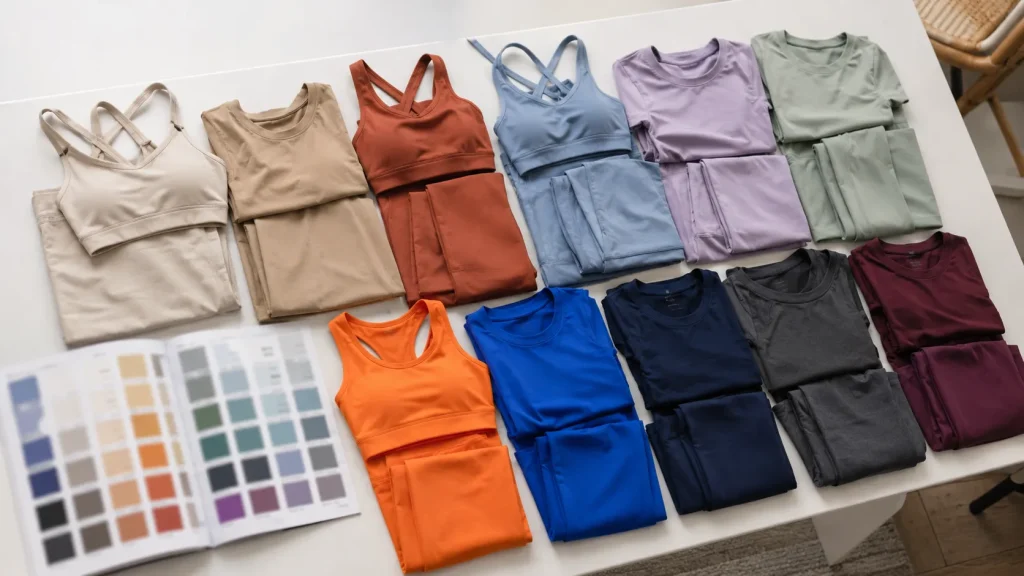
Instead of loud neon collections dominating every season, brands are combining timeless essentials with one or two fashion-forward accent colors.
Popular directions include:
Core Commercial Colors
- Black
- Navy
- Charcoal
- White
- Dark Olive
These remain safe choices for year-round sales.
Soft Wellness Colors
- Sage Green
- Dusty Blue
- Clay
- Sand
- Lavender
These shades are especially popular in yoga, pilates, and studio wear.
Energy Accent Colors
- Electric Blue
- Coral
- Citrus Yellow
- Bright Red
Rather than building entire collections around these shades, many retailers use them to create seasonal excitement.
One customer requested six fashion colors for an initial order of only 300 pieces.
Although each color looked attractive individually, splitting production across too many shades increased dyeing costs, complicated inventory management, and extended delivery time. Eventually, they reduced the launch to two fashion colors plus three core colors, resulting in a smoother production schedule and stronger sell-through.
Fashion Colors vs Core Colors
| Factor | Fashion Colors | Core Colors |
|---|---|---|
| Trend lifespan | Short | Long |
| Inventory risk | Higher | Lower |
| Repeat orders | Less predictable | More consistent |
| Fabric availability | Sometimes limited | Usually stable |
| MOQ flexibility | Lower | Better |
| Best for | Seasonal launches | Permanent collections |
Suitable For
Fashion Colors
- Boutique retailers
- Capsule collections
- Limited editions
- Social media campaigns
Core Colors
- Established brands
- Wholesale programs
- Large-volume purchasing
- Replenishment programs
Our View
The strongest collections usually combine both—not choosing one over the other.
Color Isn’t Just a Design Decision
Many buyers assume selecting a Pantone number is the final step.
Production tells a different story.
We’ve seen situations where:
- the requested color wasn’t available in stock fabric
- dye lots varied between production batches
- recycled fabrics produced slightly different shades
- sublimation colors looked different on polyester than expected
These issues rarely appear during design discussions but can become expensive after production begins.
For this reason, we always recommend confirming available fabric colors before approving the final tech pack.
Reducing Inventory Risk for a Growing Fitness Brand
A startup fitness brand planned to launch ten colors across four leggings.
The projected order quantity was only 800 pieces.
After reviewing supplier capabilities, we suggested:
- 4 core colors
- 2 seasonal colors
- keeping additional colors for the second production run
The result:
- lower MOQ pressure
- easier inventory management
- faster sampling
- shorter production lead time
Most importantly, the retailer was able to identify the best-selling colors before expanding the collection.
Sustainability Is Influencing Color Choices
Consumer interest in sustainability is affecting color decisions as well.
Natural-looking shades often align better with recycled fabrics and wellness branding.
Many brands are moving away from overly saturated palettes in favor of softer, versatile colors that work across multiple product categories.
This trend also helps retailers reduce SKU complexity by allowing one color to be shared across leggings, sports bras, jackets, and shorts.
Trend Forecasts Don’t Replace Supply Chain Planning
Trend reports are valuable inspiration.
However, production realities matter just as much.
We’ve experienced cases where a highly promoted seasonal color became difficult to source because fabric mills prioritized larger orders.
Retailers that confirmed fabric availability early secured production slots, while others faced unexpected delays.
Color forecasting should always be combined with supplier communication—not treated as a standalone buying strategy.
Procurement Tips for Retail Buyers
When planning your next activewear collection, consider asking suppliers:
- Is this color available as stock fabric?
- Will dyeing require custom MOQ?
- Can multiple styles share the same fabric color?
- Are color lab dips included before bulk production?
These simple questions often prevent costly production changes later.
Final Thoughts
Following activewear color trends is important, but successful retail collections depend on more than trend forecasts.
From our experience supporting sportswear brands for over two decades, the most successful buyers balance market trends with practical sourcing decisions. They build collections around dependable core colors, introduce carefully selected seasonal shades, and verify fabric availability before development begins.
That approach not only reduces inventory risk but also shortens development cycles and improves production efficiency.
Recommended Reading
Internal Resources
- OEM Activewear Manufacturing Services
- Sportswear Fabric Guide
- Hidden Costs When Importing Activewear
- Top Activewear Trends for Wholesale Buyers
Authoritative Sources
- WGSN Color Forecasts:https://www.wgsn.com/
- Pantone Color Institute:https://www.pantone.com/
- Coloro Forecast System:https://coloro.com/
- Textile Exchange Materials Resources:https://textileexchange.org/
About the Author
Yunenx Sportswear Team is a professional manufacturer specializing in custom sportswear, swimwear, and teamwear for established brands, importers, wholesalers, and retail programs worldwide.
We support buyers through every stage of the sourcing process — from product development and fabric selection to sampling, production, and bulk manufacturing — ensuring consistent quality and reliable delivery for long-term supply partnerships.
If you are sourcing a dependable sportswear or swimwear manufacturer for your next collection or seasonal program, our team is ready to support your product development and production needs.
Feel free to contact us for quotations, technical discussion, or sample evaluation.