Last Updated: June 19, 2026 | By Yunenx Sales Team
📧 Email: [email protected]
🔗 Connect on LinkedIn
🌐 Visit our website: www.yunenx.com
💬 Chat on WhatsApp
A color may look perfect in a digital mockup and still become a slow-moving product after launch.
We’ve seen it happen more than once.
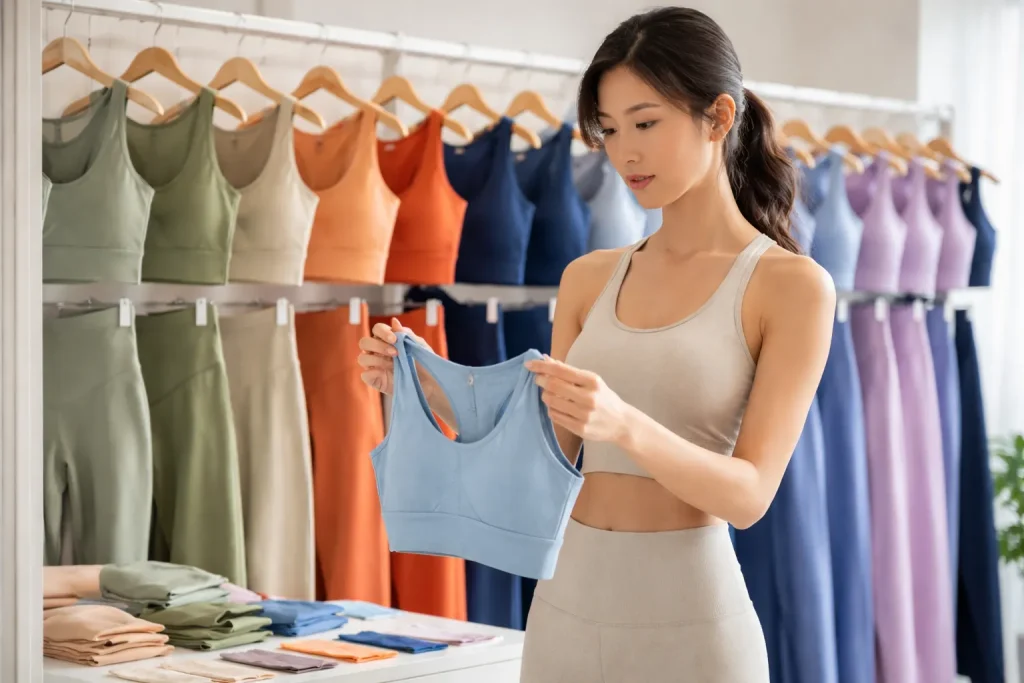
At Yunenx, we regularly work with activewear startups, established sportswear brands, and wholesalers across North America, Europe, and Australia. One interesting pattern we’ve observed is that color trends often influence sales more than fabric innovations or minor design changes.
In several projects, changing only the color palette increased reorder rates while keeping the same style, fabric, and fit.
For wholesale buyers, understanding color trends is not simply a design decision—it is a purchasing strategy.
Key Takeaways
- Earth-inspired tones continue gaining popularity in premium activewear markets.
- Soft neutrals remain one of the safest options for wholesale programs.
- Bright performance colors are returning in running and teamwear categories.
- Regional preferences vary significantly between North America, Europe, and emerging markets.
- Color planning should begin before fabric sourcing to reduce MOQ risks and inventory pressure.
- Successful brands balance trend colors with proven core colors.
Why Color Matters More Than Ever in Wholesale Sportswear
The sportswear market has become increasingly crowded.
Consumers are exposed to hundreds of activewear products every day through social media, fitness influencers, and e-commerce platforms.
As a result, color often becomes the first factor attracting attention before customers evaluate:
- Fabric performance
- Fit
- Construction
- Brand story
According to trend reports from the Pantone Color Institute, color plays a critical role in consumer purchasing decisions across fashion categories.
External Reference:
- Pantone Color Institute
https://www.pantone.com/
For wholesalers and private label brands, selecting the right color direction can improve sell-through rates while reducing excess inventory.
The Most Popular Sportswear Colors in 2026
1. Elevated Earth Tones
The shift toward wellness and outdoor lifestyles continues to influence activewear.
Popular shades include:
- Clay Brown
- Terracotta
- Sand Beige
- Olive Green
- Dusty Sage
These colors perform particularly well in:
- Yoga apparel
- Women’s activewear
- Athleisure collections
One European yoga brand we supported originally planned six bright colorways.
After reviewing market feedback from retailers, they reduced the collection to three earth tones.
The result was a higher reorder rate and fewer discounted products at season end.
2. Soft Luxury Neutrals
Neutral colors remain among the safest wholesale investments.
Current best sellers include:
- Stone
- Warm Gray
- Ivory
- Taupe
- Mushroom
These colors work well because they:
- Match easily with existing wardrobes
- Reduce style obsolescence
- Support premium positioning
Many buyers now prioritize versatility over seasonal fashion statements.
3. High-Energy Performance Colors
While neutrals dominate yoga and athleisure, performance categories are seeing a return of energetic colors.
Examples include:
- Electric Blue
- Neon Lime
- Racing Red
- Digital Orange
These colors remain popular in:
- Running apparel
- Cycling wear
- Team sports uniforms
- Fitness competitions
Trend Colors vs Core Colors
| Factor | Trend Colors | Core Colors |
|---|---|---|
| Sales Potential | High | Stable |
| Inventory Risk | Higher | Lower |
| Reorder Predictability | Medium | High |
| Retail Differentiation | Strong | Moderate |
| MOQ Management | More Difficult | Easier |
| Long-Term Demand | Uncertain | Consistent |
Suitable Buyers
Trend Colors
Best for:
- Fashion-driven activewear brands
- DTC startups
- Seasonal launches
Core Colors
Best for:
- Wholesalers
- Distributors
- Large inventory programs
Expert Opinion
Most successful sportswear brands maintain approximately:
- 70% core colors
- 30% trend colors
This approach balances inventory security and market excitement.
How Color Simplification Reduced Inventory Risk
A startup activewear brand approached us with plans for:
- 5 styles
- 8 colors per style
The original development plan required dozens of fabric dye lots and significantly increased MOQ pressure.
After reviewing supplier capabilities and projected sales volume, we recommended:
- 3 core colors
- 2 trend colors
Benefits included:
- Lower fabric minimums
- Faster production
- Easier inventory control
- Reduced dead stock risk
Within the first season, the client reordered the core colors while replacing only one trend color.
The sourcing strategy proved more sustainable than launching every available color option.
Regional Color Preferences Are Becoming More Distinct
One mistake many buyers make is assuming global color trends apply equally across all markets.
Our sourcing experience suggests otherwise.
North America
Popular choices:
- Black
- Navy
- Olive
- Stone
Focus:
- Versatility
- Athleisure
Northern Europe
Popular choices:
- Sage
- Dusty Blue
- Taupe
- Charcoal
Focus:
- Sustainability aesthetics
- Minimalism
Middle East
Popular choices:
- Burgundy
- Emerald
- Royal Blue
Focus:
- Premium appearance
- Strong visual identity
Australia
Popular choices:
- Sand
- Ocean Blue
- Coral
- Natural Green
Focus:
- Outdoor lifestyle
- Coastal influence
Understanding regional demand before development helps avoid unnecessary inventory risks.
Building a Color Strategy Before Production
Instead of choosing colors at the end of development, experienced buyers often follow a structured sourcing process.
Step 1
Review market trend forecasts.
Recommended sources:
- WGSN
- Pantone
- Coloro
Step 2
Identify core colors from historical sales data.
Step 3
Confirm available fabric dye capabilities with suppliers.
Step 4
Evaluate MOQ impact for each additional color.
Step 5
Launch trend colors in controlled quantities.
This process helps reduce development costs while maintaining product freshness.
Related reading:
- Build Your Own Sportswear Brand with OEM & ODM Experts
- Sportswear Wholesale Profit Margin Breakdown: What Buyers Often Overlook
- How Wholesalers Choose Sportswear Suppliers
- Sportswear Products with High Repeat Sales for OEM Buyers & Brands
Buyer Checklist
Before finalizing a sportswear color program, ask:
✓ Which colors generated the highest sell-through rates last season?
✓ Are fabric suppliers able to achieve color consistency across production batches?
✓ Will adding more colors increase MOQ requirements?
✓ Do target markets have regional color preferences?
✓ Are trend colors supported by actual sales data or only social media popularity?
✓ Is there a backup plan if a trend color underperforms?
The Real Challenge Is Not Finding Trend Colors
The real challenge is selecting colors that can generate repeat orders.
We’ve seen brands launch exciting color collections that attracted attention online but struggled to convert into long-term sales.
We’ve also seen relatively simple collections built around black, navy, olive, and neutral tones become reliable revenue drivers year after year.
For wholesale buyers, successful color planning sits at the intersection of:
- Market trends
- Supplier capabilities
- MOQ management
- Inventory control
- Customer demand
The brands that consistently grow are rarely the ones chasing every new color trend. They are the ones building a disciplined color strategy supported by real market data and reliable manufacturing execution.
References
- Textile Exchange Market Reports
- OEKO-TEX Standard 100
- SGS Textile Testing Services
- Global Recycled Standard (GRS)
- McKinsey (2025) Activewear Growth Report
- Fashion United
Explore more insights here:
https://yunenx.com/blog/
About the Author
Yunenx Sportswear Team is a professional manufacturer specializing in custom sportswear, swimwear, and teamwear for established brands, importers, wholesalers, and retail programs worldwide.
We support buyers through every stage of the sourcing process — from product development and fabric selection to sampling, production, and bulk manufacturing — ensuring consistent quality and reliable delivery for long-term supply partnerships.
If you are sourcing a dependable sportswear or swimwear manufacturer for your next collection or seasonal program, our team is ready to support your product development and production needs.
Feel free to contact us for quotations, technical discussion, or sample evaluation.