Last Updated: March 08, 2026 Author: Yunenx Sales Team
Sportswear & Swimwear Manufacturing Specialist | Connect on LinkedIn | Email | www.yunenx.com
Introduction
The global yoga apparel market has expanded rapidly as yoga and fitness lifestyles become mainstream worldwide. According to Statista, the global yoga clothing market is projected to grow steadily in the coming years, driven by the rising demand for comfortable, performance-focused activewear.
For brands entering the fitness apparel industry, choosing the right custom yoga wear manufacturer is one of the most important decisions. A reliable manufacturer can help ensure product quality, manage production timelines, and scale your brand efficiently.
This guide explains how custom yoga wear is manufactured, what factors influence production quality, and how brands can avoid common sourcing mistakes.
Quick Answer: What Is a Custom Yoga Wear Manufacturer?
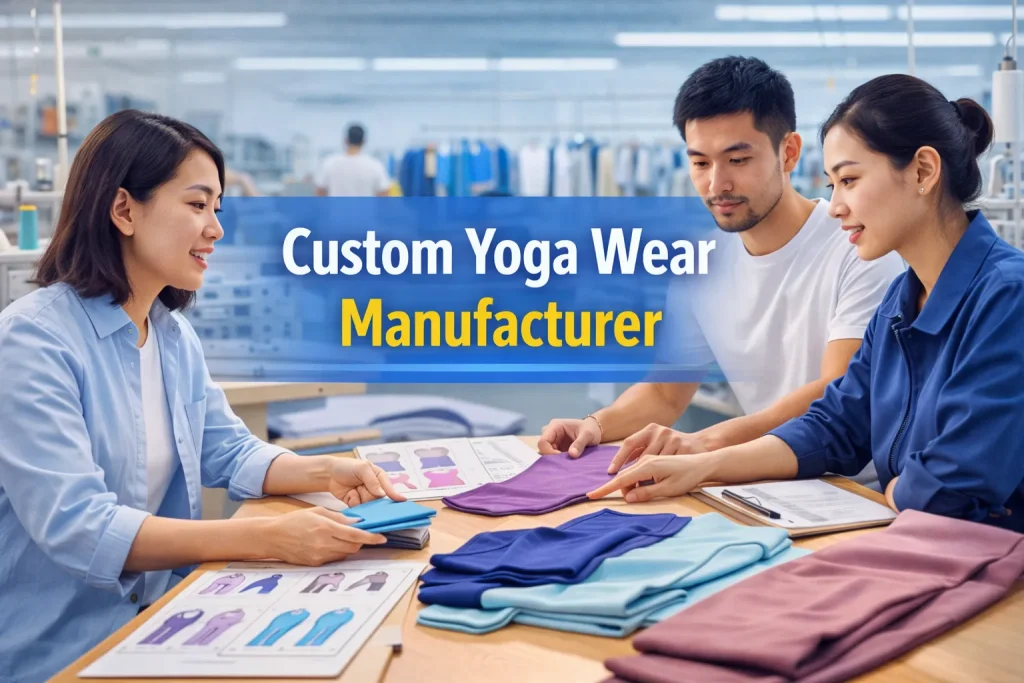
A custom yoga wear manufacturer is a factory that produces yoga clothing such as leggings, sports bras, yoga tops, and activewear sets for brands.
These manufacturers typically provide services including:
- private label yoga wear production
- custom logo printing or embroidery
- fabric sourcing and product development
- OEM and ODM manufacturing
Many activewear startups and fitness brands work with custom yoga wear manufacturers to develop unique product collections without building their own factories.
What Is Custom Yoga Wear Manufacturing?
Custom yoga wear manufacturing refers to the design, development, and production of yoga apparel tailored to a brand’s specifications.
Typical products include:
- yoga leggings
- sports bras
- yoga tops
- seamless activewear sets
- gym and training apparel
Unlike regular clothing, yoga wear must meet higher performance standards such as:
- 4-way stretch fabric
- moisture-wicking capability
- breathability
- squat-proof fabric durability
Brands that understand the manufacturing process can better control product quality, production costs, and delivery schedules.
You may also find these guides helpful:
- How to Start an Activewear Brand (Internal Link)
- Best Fabrics for Sportswear Manufacturing (Internal Link)
- Sportswear Production Process Explained (Internal Link)
Key Factors When Choosing a Custom Yoga Wear Manufacturer
Before starting production, brands should evaluate several key factors.
1. Fabric Quality and Performance
Yoga wear relies heavily on performance fabrics.
Common yoga wear fabrics include:
| Fabric | Features | Best For |
|---|---|---|
| Nylon + Spandex | Soft, durable, high stretch | Premium yoga leggings |
| Polyester + Spandex | Lightweight, moisture-wicking | Fitness apparel |
| Seamless knit fabric | Smooth and flexible | Seamless yoga sets |
| Recycled polyester | Sustainable option | Eco-friendly brands |
Organizations such as Textile Exchange report increasing demand for sustainable and recycled fabrics in activewear manufacturing, especially among new fitness brands.
2. Manufacturing Experience
An experienced yoga wear manufacturer can prevent common problems such as:
- poor garment fit
- weak stitching
- inconsistent color shades
- fabric transparency during stretching
Factories specializing in activewear, sportswear, and yoga apparel production usually have better technical expertise.
3. MOQ and Production Capacity
MOQ varies depending on customization level.
Example MOQ for yoga wear production:
| Product | Typical MOQ |
|---|---|
| Yoga leggings | 150–300 pcs |
| Sports bras | 150–300 pcs |
| Yoga tops | 100–200 pcs |
| Seamless sets | 300–500 pcs |
Lower MOQs may be possible for startup brands but can affect pricing.
Step-by-Step Guide: How Custom Yoga Wear Is Manufactured
Understanding the manufacturing workflow helps brands communicate effectively with suppliers.
Step 1: Design Development
The process begins with product design.
Brands usually provide:
- design sketches
- logo artwork
- color references
- size charts
These details are compiled into a tech pack, which guides the production process.
Step 2: Fabric Selection
The manufacturer selects suitable performance fabrics based on the design.
Key testing factors include:
- elasticity and recovery
- moisture management
- color fastness
- durability after washing
Many manufacturers follow international testing standards established by organizations such as ISO – International Organization for Standardization.
Step 3: Pattern Making
Pattern makers create precise garment templates based on the design.
This step determines:
- garment fit
- stretch performance
- movement comfort
Professional activewear factories often optimize patterns for body contouring and athletic performance.
Step 4: Sampling
Before bulk production, a sample garment is produced.
The brand reviews the sample for:
- fabric feel
- fit accuracy
- logo placement
- overall design
Sampling typically takes 7–15 days.
Step 5: Fabric Cutting
After sample approval, fabric is cut using industrial cutting machines to ensure consistent sizing.
Step 6: Sewing and Assembly
Garment pieces are stitched together using specialized sewing techniques.
Common yoga wear sewing techniques include:
- flatlock seams for comfort
- double stitching for durability
- elastic waistband construction
Step 7: Logo Printing or Branding
Brand identity is added using methods such as:
- screen printing
- heat transfer logos
- silicone printing
- embroidery
These techniques allow brands to create distinctive private label products.
Step 8: Quality Control
Professional manufacturers conduct quality inspections during production.
Inspection checks include:
- size measurement accuracy
- stitching quality
- logo placement
- fabric defects
Many export factories use AQL quality control standards to ensure consistent product quality.
Step 9: Packaging and Shipping
After final inspection, garments are packed according to client requirements.
Typical packaging options include:
- polybag packaging
- branded labels
- carton export packing
Production time for custom yoga wear generally ranges from 25–40 days depending on order quantity.
Common Mistakes Brands Make When Sourcing Yoga Wear
Many new activewear brands face production issues due to avoidable mistakes.
1. Choosing Manufacturers Only Based on Price
Low prices often mean lower quality or production delays.
2. Skipping the Sampling Stage
Skipping samples increases the risk of design errors or poor fit.
3. Ignoring Fabric Testing
Yoga wear requires high stretch and durability, so fabric testing is essential.
4. Not Understanding MOQ and Lead Time
Production timelines can vary depending on order size and customization complexity.
Conclusion
Custom yoga wear manufacturing involves several technical steps, from design and fabric sourcing to stitching and quality control.
By understanding the yoga wear production process, brands can:
- reduce manufacturing risks
- maintain product quality
- build reliable supplier relationships
Working with an experienced custom yoga wear manufacturer can significantly improve the efficiency and success of your activewear business.
You can explore our product collection here:
👉 Custom Yoga Wear Product Page (Internal Link to product page)
FAQ: Custom Yoga Wear Manufacturing
1. What is the MOQ for custom yoga wear?
Most manufacturers require 150–300 pieces per style, depending on customization level.
2. How long does yoga wear production take?
Typical timeline:
- Sampling: 7–15 days
- Bulk production: 25–40 days
3. What fabric is best for yoga leggings?
High-quality yoga leggings usually use nylon-spandex or polyester-spandex blends for stretch and durability.
4. Can startups produce private label yoga wear?
Yes. Many manufacturers now offer low MOQ private label yoga wear production for emerging brands.
5. What printing method is best for yoga wear logos?
Heat transfer, silicone printing, and embroidery are commonly used for durable branding.
Industry Data
- Global yoga apparel market continues to expand due to the rising popularity of wellness lifestyles.
- Sustainable activewear fabrics such as recycled polyester are growing rapidly.
- Demand for private label yoga wear manufacturing is increasing among startup fitness brands.
Sources:
Related Articles
- How to Choose a Sportswear Manufacturer
- Best Fabrics for Activewear Production
- Sportswear Production Process Guide
About the Author
Yunenx Sportswear Team is a professional manufacturer specializing in custom sportswear, teamwear and swimwear for global brands and sports clubs.
If you are looking for a reliable custom sportswear manufacturer,
our factory specializes in sportswear, swimwear and activewear production for growing brands.
Feel free to contact us for sampling or quotation. Connect on LinkedIn | Email | www.yunenx.com