
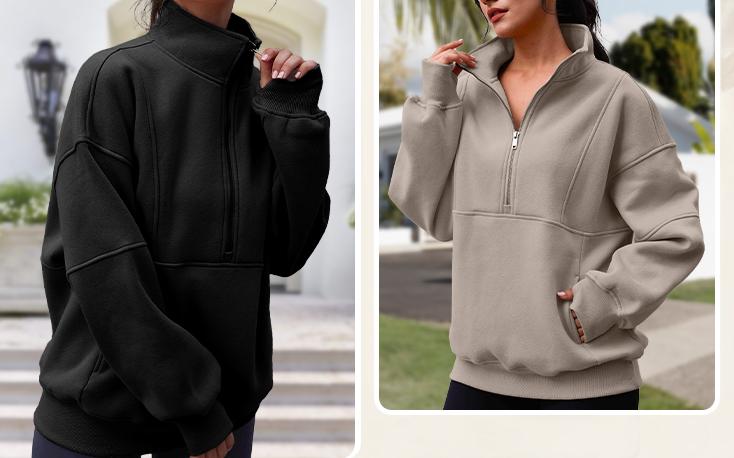
By Yunenx Product Development Team | Connect on LinkedIn | Email | www.yunenx.com
Updated: February 2026 | Reading Time: 11 minutes
Air layer fabric is a double-knit material widely used in sportswear and outerwear for its structure, warmth, and clean silhouette.
The Trench Coat That Wouldn’t Stand Up
- A young London-based designer found me.
She was a Central Saint Martins grad. Three years as a buyer. Finally launching her own brand.
Her debut piece? A trench coat. No lining. No wool. Had to be crisp but not heavy. Warm but not bulky.
I recommended air layer fabric.
When the sample arrived, she touched it and immediately sent a voice message:
“This is it. This is exactly what I’ve been imagining for six months.”
Then she asked:
“Can we do 380 GSM? I feel like heavier = better quality.”
I spent 20 minutes explaining: air layer fabric doesn’t keep you warm through weight. It keeps you warm through the air pocket in the middle. Go over 320 GSM, and the fabric’s own weight crushes that pocket. You lose the loft. You lose the crispness.
She paused.
“But my buyer says 380 GSM feels more substantial.”
We made 380 GSM.
When the bulk arrived in London, she sent me a video.
The trench coats hung on racks like curtains. The A-line silhouette was gone. That beautiful “stand-away” collar? Flattened.
She didn’t blame me. She blamed herself.
“I should have listened. You told me.”
That order taught me a rule I’ve never broken since:
For trench coats and outerwear? 320 GSM is the ceiling. Not because we can’t make it heavier. Because it shouldn’t be.
1. Air Layer Isn’t “One” Fabric. It’s Three Layers Negotiating With Each Other.
Most people hear “air layer” and think: “Oh, that slightly puffy sweatshirt material.”
Yes. But also: not even close.
The real name is double-knit bird’s eye structure. Two faces of fabric, connected by tuck stitches, forming a 1-2mm hollow core in the middle.
It’s not warmth you stuff in. It’s warmth you knit in.
This structure dictates three things:
| Layer | Function | What Usually Goes Wrong |
|---|---|---|
| Face | Determines hand feel, color, abrasion resistance | Too much cotton → wrinkles; too much polyester → pilling |
| Middle (air pocket) | Warmth, loft, rebound | GSM too high → air pocket crushed, loft gone |
| Back | Skin comfort, moisture wicking | Too synthetic → stuffy; too much cotton → dries slowly |
So choosing air layer fabric isn’t choosing “a fabric.” It’s choosing the outcome of a three-way negotiation.
Want crispness? Add polyester. Want softness? Add cotton or modal. Want warmth? Air layer thickness matters. GSM is just a number.
There is no perfect ratio. Only the right ratio for the right job.
2. What Is Air Layer Actually Good For? A 50-Brand, 10-Year Scorecard.
Let me save you the trial and error:
| Category | Recommendation | Sweet Spot (GSM) | What I’ve Learned |
|---|---|---|---|
| Women’s outerwear (coats/trench) | ⭐⭐⭐⭐⭐ | 280-320g | This is air layer’s “birth purpose.” Replaces interfaced woven fabrics beautifully. |
| A-line dresses/skirts | ⭐⭐⭐⭐⭐ | 250-280g | Holds shape without clinging. Doesn’t need a slip. |
| Athletic hoodies/pullovers | ⭐⭐⭐⭐ | 260-300g | Sturdier than French terry, lighter than fleece. |
| Varsity jackets/school uniforms | ⭐⭐⭐⭐ | 280-310g | Takes printing well. Abrasion-resistant. |
| Kids’ outerwear | ⭐⭐⭐⭐ | 240-280g | Light, warm, doesn’t restrict movement. |
| Pants/joggers | ⭐⭐⭐ | 260-300g | Knee bagging is a real risk. Spandex helps, but doesn’t cure. |
| Loungewear | ⭐⭐ | 220-260g | It works. But pure cotton is still more skin-friendly. |
🟢 Where It Shines: Outerwear & Silhouette-Driven Pieces
Air layer’s superpower isn’t warmth. It’s “bones.”
Unlike jersey, it doesn’t droop. Unlike woven fabrics, it doesn’t need interfacing to stand up. It’s a knitted fabric with built-in structure.
2023. A Hangzhou-based womenswear brand wanted a “no-iron” coat.
Their customer: 25-35, office workers. Needed to look polished on the commute. Needed to survive the washing machine.
We tested five fabrics:
- Wool blend: crisp, but dry-clean only ❌
- Polyester imitation wool: washable, but that plastic sheen ❌
- 320 GSM air layer: machine washable, wrinkles relax after 48 hours on a hanger ✅
That coat sold 8,000+ units. Return rate: 1.8%.
Air layer isn’t a wool replacement. It’s an alternative for people who don’t want to babysit wool, but also don’t want to dress like they’re going hiking.
🟡 Where It Works Well: Activewear & School Uniforms
Here’s something most people don’t know: Many private schools in Japan use air layer for their blazers.
Why?
- Crisp — Students look sharp. Not slouchy like hoodies.
- Durable — Backpack straps rubbing against underarms? Air layer outlasts fleece.
- Print-friendly — School crests, class numbers. Heat transfers adhere cleanly. Edges don’t curl.
2024. A Guangzhou school uniform supplier came to us with a pain point:
“Our French terry uniforms look worn out after 20 washes. Collars stretch. Pocket edges fray.”
We switched them to 280 GSM air layer (65/32/3 cotton/poly/spandex):
- Same printing process
- Same laundry cycle
- After 30 washes: collar integrity measured 2 full grades higher than French terry.
Now their “premium line” defaults to air layer.
🔴 Where It Struggles: Pants & High-Stretch Applications
This is air layer’s Achilles’ heel.
Air layer keeps its shape by NOT stretching much.
If you’re making yoga pants. Leggings. Even just wide-leg trousers with some recovery?
Air layer will disappoint you.
2022. An Australian activewear brand wanted “crisp but stretchy” training pants.
We tried:
- Spandex up to 8% → Better recovery. Still bagged at the knees.
- GSM down to 240 → Less bagging. Also less drape.
- Mechanical stretch finishing → Cost up 30%. Client shook their head.
We eventually told them: “Air layer isn’t right for pants.”
They switched to Roma jersey. Problem solved.
Some fabrics are all-rounders. Air layer isn’t one of them. Its job is to STAND UP, not BEND OVER.
3. Five Truths About Air Layer (That Most Suppliers Won’t Tell You)
Truth 1: Yes, It’s Warm. No, Don’t Compare It to a Down Jacket.
Air layer traps still air. Same physics as down. Same physics as fleece.
But the air pocket is 1-2mm. Thermal resistance caps out at about 0.5-0.7 clo.
Translation:
- Basic long-sleeve tee: 0.3 clo
- Air layer jacket: 0.6 clo
- Lightweight down jacket: 1.2 clo
So air layer is for that 5-15°C zone. “Need a jacket, but don’t want to look like the Michelin Man.”
Below 10°C? By itself, it’s not enough. It’s not a down substitute. It’s a trench coat substitute.
Truth 2: It Doesn’t Wrinkle Easily. But Once It Does? Good Luck.
Air layer’s wrinkle resistance comes from polyester’s heat-set properties.
But if you really crease it — say, packed at the bottom of a suitcase for a week — those creases are surprisingly hard to iron out.
Why?
Because air layer is three layers. You iron the face flat? The middle layer is still creased. You steam the middle layer open? The back layer is still缩着.
Our internal trick:
Customer complains about “suitcase creases”?
- Hang it in the bathroom. Run a hot shower. Let the steam relax the fibers for 20 minutes.
- Don’t put an iron directly on it. Use a steamer, 15cm away.
- Still there? GSM was probably too high.
Truth 3: Dark Colors Always Look “Slightly Washed Out.” This Is Physics.
This is not a defect. It’s the structure.
Air layer’s surface is knitted loops. Light hits those uneven loops and diffuses — instead of reflecting straight back like a woven fabric.
Same black color:
- Wool coating: Glossy black
- Air layer: Matte black. Slightly grayish.
Some brands call this “premium understated.”
Some brands call this “looks faded.”
Neither is wrong. It’s aesthetic. But you need to know this before you sample, not after.
Truth 4: Pilling Isn’t the Fabric’s Fault. It’s the Ratio’s Fault.
Air layer pills for one reason: too much short-staple polyester.
We ran a comparison:
| Blend | Martindale Pilling Grade | Hand Feel |
|---|---|---|
| 100% polyester | 2-3 | Crisp, but scratchy |
| 65% poly / 35% cotton | 3-4 | Balanced |
| 50% poly / 45% cotton / 5% spandex | 4 | Soft, but less crisp |
Our rule of thumb:
- Need durability + crispness? Use filament polyester, not spun. Spun = fuzz.
- Need soft + no pilling? Accept that crispness will drop.
- Want both? Doesn’t exist.
Truth 5: “Machine Washable” Doesn’t Mean “Comes Out Looking Brand New.”
Every wash reduces air layer thickness by 10-20%.
Physics again: Water pressure + centrifugal force = compressed air pocket.
How to restore it:
- Tumble dry LOW heat (not high heat)
- Or line dry + hand fluff
When it WON’T restore:
- GSM > 320
- Dryer temp > 60°C
- Left sitting wet in the machine for hours
4. So How Do You Choose? (An Executable Checklist for Designers & Buyers)
Tear this page out:
✅ Step 1: Lock Your GSM
| End Use | Recommended GSM | My Notes |
|---|---|---|
| Spring/fall light jacket | 250-280g | Replaces light woven with interfacing |
| Winter coat | 280-320g | 320 is the ceiling. I mean it. |
| Hoodie/pullover | 260-300g | Crisper than French terry |
| Kids’ wear | 220-260g | Lighter = happier kids |
| Dress/skirt | 240-280g | A-line silhouette loves this range |
✅ Step 2: Lock Your Blend
| Priority | Recommended Blend | Trade-Off |
|---|---|---|
| Crispness first | 80%+ poly / 0-20% cotton | Less skin-friendly |
| Softness first | 50%+ cotton / 30-50% poly | Less crisp, wrinkles easier |
| Balanced | 65% poly / 30% cotton / 5% spandex | Safest. Rarely wrong. |
| EU export | OEKO-TEX required | Azo dyes banned |
✅ Step 3: Lock Your Finishing
| Need | Recommended Finish | Cost Add |
|---|---|---|
| Anti-pilling | Shearing/cropping | +5-8% |
| Anti-static | Conductive yarn inlay | +8-12% |
| Stain-resistant | Teflon/3-in-1 finish | +10-15% |
| Deep black | Double dye cycle | +15-20% |
5. Final Honesty
Air layer is one of my favorite fabrics.
It’s not perfect. It pills. It lint-attracts. Dark colors look muted. It doesn’t belong in pants.
But for “stand where it should stand, warm where it should warm, light where it should light”? There’s almost nothing else like it.
2024. That London designer came back.
Same trench coat. Same air layer fabric.
This time she said: “GSM is yours. Whatever you recommend.”
We made 300g.
1,200 units. Zero complaints.
She told me it became their best-selling silhouette that season.
Same fabric. Different outcome.
The difference wasn’t the material. It was the expectation.
If you treat air layer as “cheap fleece,” it will disappoint you.
If you treat it as “washable wool alternative,” it will surprise you.
It doesn’t need to be perfect.
It just needs to be placed right.
📎 Email us for the air layer spec comparison chart, supplier audit checklist, and GSM-blend decision tree: [email protected]
📘 This is Part 6 of the “Sportswear Startup Supply Chain Playbook” series.
Previous installments:
- “That Faded Neck Label Made Your $80 Top Look Like an $8 Rag”
- “I Lost $40,000 on This Print”: A Factory Sales Director’s Practical Guide to Sportswear Printing
- 10 Steps on How To Start a Sportswear Clothing Line
- Why 92% of Best-Selling Sportswear is Polyester: The Science I Learned From 50,000 Fabric Selections
- 2026 Sportswear Trends: The 5 Shifts That Actually Matter (And How to Act on Them)
💬 If you’re agonizing over air layer specs for an order — send us your design file and priorities.
Connect on LinkedIn | Email | www.yunenx.com
Data Sources: Yunenx internal fabric test database (2018-2026), post-mortem analysis of 50+ brands, third-party Martindale pilling test reports
Case Authorization: All client cases anonymized or redacted
Last Updated: February 2026